Gluttonous dogs: when homemade food goes haywire
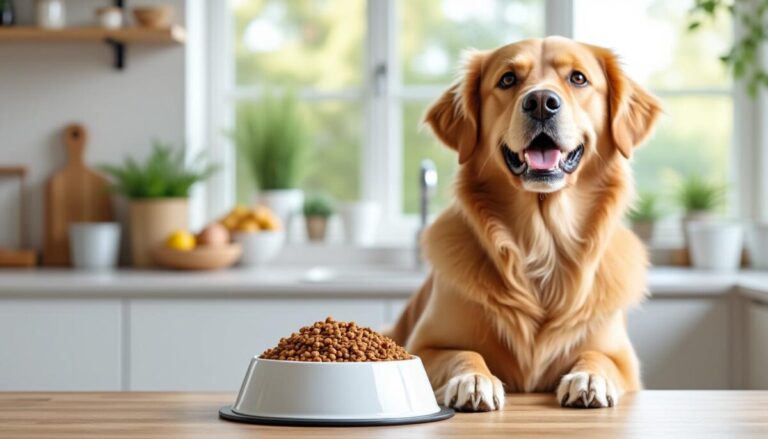
Hi, it’s Judith. If your dog eats too fast, often gulping down his entire bowl in seconds, the best way to help him is to divide his meals into smaller portions and use slow-feeder bowls, especially if you prepare homemade meals. Indeed, homemade food, while healthy, can disrupt their eating habits if it’s too palatable or poorly portioned. This type of feeding requires careful supervision to prevent your dog from becoming overly voracious and developing digestive problems, or even weight gain that could harm his health. Understand why your dog is greedy and what to do and discover practical tips for managing this behavior here.
Why can homemade food disrupt a dog’s diet?
Homemade food is appealing because it reassures owners about nutritional quality. However, it often disrupts a dog’s eating rhythm and habits. Preparing highly palatable meals encourages some dogs to rush to their bowls, gulping down their food without chewing. This excessive speed compromises digestion and promotes digestive problems, sometimes resulting in vomiting or diarrhea.
Furthermore, if homemade meals are given too irregularly or in large quantities, this can cause food stress. Your dog may then become greedy out of fear of going hungry, especially if it shares the home with other dogs. The balance is delicate: a balanced diet relies above all on regularity and a quantity well-suited to the animal’s energy needs.
To do immediately
- Divide the daily ration into 2 to 4 small meals depending on the size and metabolism of your dog.
- Invest in a slow-feeder bowl that is the right size for your pet to slow down the eating speed.
- Offer food-dispensing toys to mentally stimulate the dog while it eats.
- Choose homemade kibble or ingredients with a good fiber content for better satiety.
- Maintain a calm place where your pet is comfortable eating without stress.
The risks associated with the eating behavior of gluttonous dogs
Eating too quickly isn’t just a bad habit; it jeopardizes your pet’s health. By swallowing large mouthfuls without chewing, dogs also ingest a lot of air, increasing the risk of bloating or even gastric dilatation-volvulus (GDV), a serious veterinary emergency, especially in large breeds.
Cyclical digestive problems, such as post-meal vomiting or frequent diarrhea, can be early warning signs. Not to mention being overweight, often exacerbated by poor food distribution and an overly rich diet. This excess weight, in turn, increases the risk of chronic diseases such as diabetes or joint problems.
3 steps to correct a gluttonous dog’s eating behavior
- Assess the situation Observe when and how your dog eats. Note the times, duration, presence of other animals during the meal, and its behavior (coughing, regurgitation).
- Adapt the dietary framework : divide meals, select an anti-gulping bowl, invite your dog to eat in a quiet place, without external stimulation.
- To stimulate mentally and physically : use treat-dispensing balls, complemented by regular physical activity to channel energy and reduce stress.
Quick case: If you have several dogs
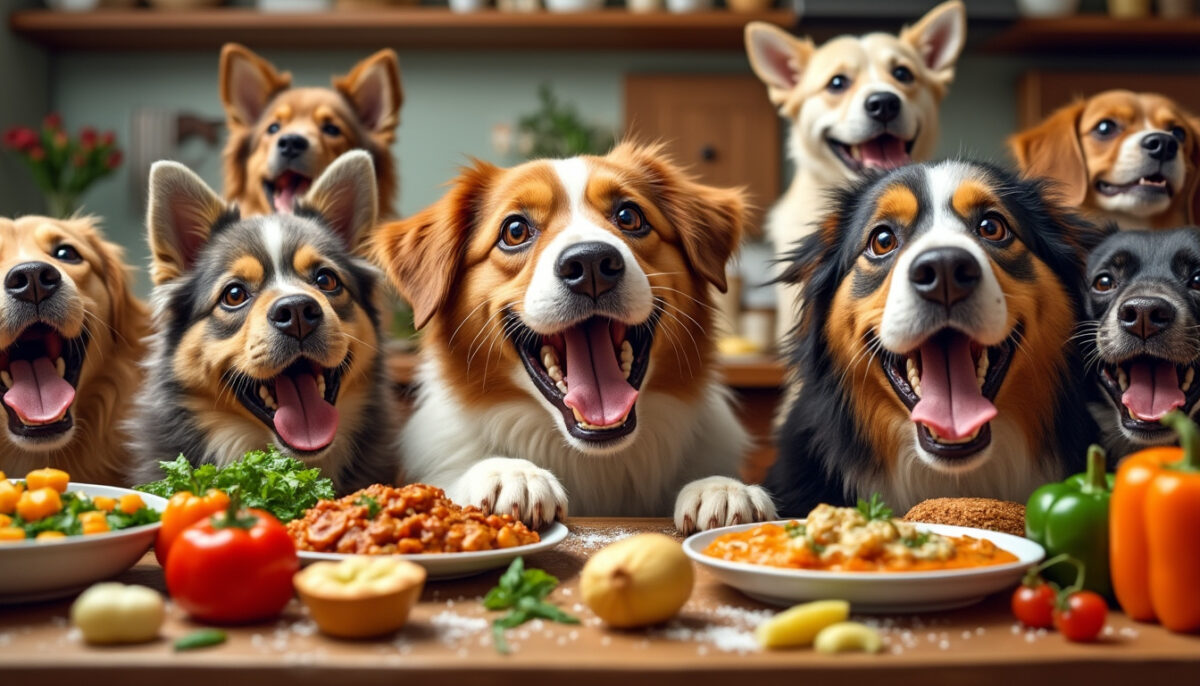
They sometimes eat too fast to compete. Feed them in separate rooms. Homemade food might encourage less competition if each dog receives its portion in a suitable bowl.
Quick case study: If your dog eats better with kibble
Try the size of the kibble. Larger kibble forces your pet to chew more and slows down their eating. A simple idea that’s often underestimated.
Slow-feeder bowls and homemade alternatives: slowing down to digest better
A slow-feeder bowl is a key accessory: it incorporates raised sections that force the dog to take smaller bites. To start, a bowl costing €10-30 is sufficient. The impact on behavior is often noticeable from the first few meals. If you want an even more economical solution, place a clean ball or a large object in the bowl to encourage your dog to eat around the obstacle and more slowly.
Another option is treat-dispensing toys that release food slowly, encouraging smaller, more frequent meals while providing mental stimulation. This is especially helpful if you prepare meals yourself, to compensate for the strong appeal of homemade food.
How to choose a balanced homemade diet to avoid overeating
Homemade doesn’t necessarily mean “healthier” if it’s poorly prepared. Make sure the diet Contains fiber, protein and fat in the right balance. Too rich in protein or too palatable, a meal can excite your dog and cause overeating.
Don’t hesitate to consult a canine nutritionist or refer to reliable sources. A poorly balanced diet leads to an unsatisfied dog, who will wake up at every meal excessively hungry. Regularity is also crucial: feed your dog at fixed times, in a calm environment.
| Appearance | Recommendation | Avoid |
|---|---|---|
| Meal frequency | 2 to 4 times a day | Unique and irregular meals |
| Kibble size | Adjust to jaw size | Kibble that’s too small or quick treats |
| Food composition | Balance of protein, fiber, and fat | Excess protein or isolated fat |
| Food environment | Quiet place, no competition | Demands or stress at mealtimes |
| Homemade food | Balanced meals prepared with care | Sudden changes or highly palatable, unmeasured foods |
To learn more, you can consult Why homemade food may not satisfy your dog or learn Whether offal is essential or risky in a dog’s diet.
How can I tell if my dog is really greedy?
A gluttonous dog swallows its food very quickly, in a few seconds, sometimes coughing or vomiting. It may also eagerly call for its meal or show restlessness around the food bowl.
Can I give homemade food to a gluttonous dog?
Yes, but with caution: divide its meals, use suitable bowls and ensure a strict nutritional balance to avoid gluttony.
Which food bowl is the most effective against overeating?
Slow-feeder bowls with raised sections are often the most effective at slowing down food intake, combined with a calm environment and a regular routine.
Is homemade food better for animal health?
Homemade food offers control over ingredients but requires a strict balance. If poorly prepared, it can encourage overeating and weight gain, which is detrimental to animal health.
What should you do if you experience frequent vomiting after meals?
Consult a veterinarian to rule out any underlying medical problems. Adjust the eating rate by dividing meals into smaller portions and using slow-feeder bowls.
Thank you for your interest, Judith. It would be kind of you to leave a comment at the end of the article. Thank you all.