Dogs: Why changing too quickly disrupts their food bowl
Hi, it’s Judith. A sudden change in a dog’s diet can disrupt their eating habits because it upsets their digestive system and can cause stress. To avoid this, you need to make a gradual transition, slowly introducing the new kibble or wet food.
- Observe your dog’s behavior around the food bowl.
- Never change your diet too abruptly.
- Place the food bowl in a quiet and stable location.
- Check the freshness and cleanliness of the food bowl.
- Monitor digestive signs: bowel movements, vomiting, appetite.
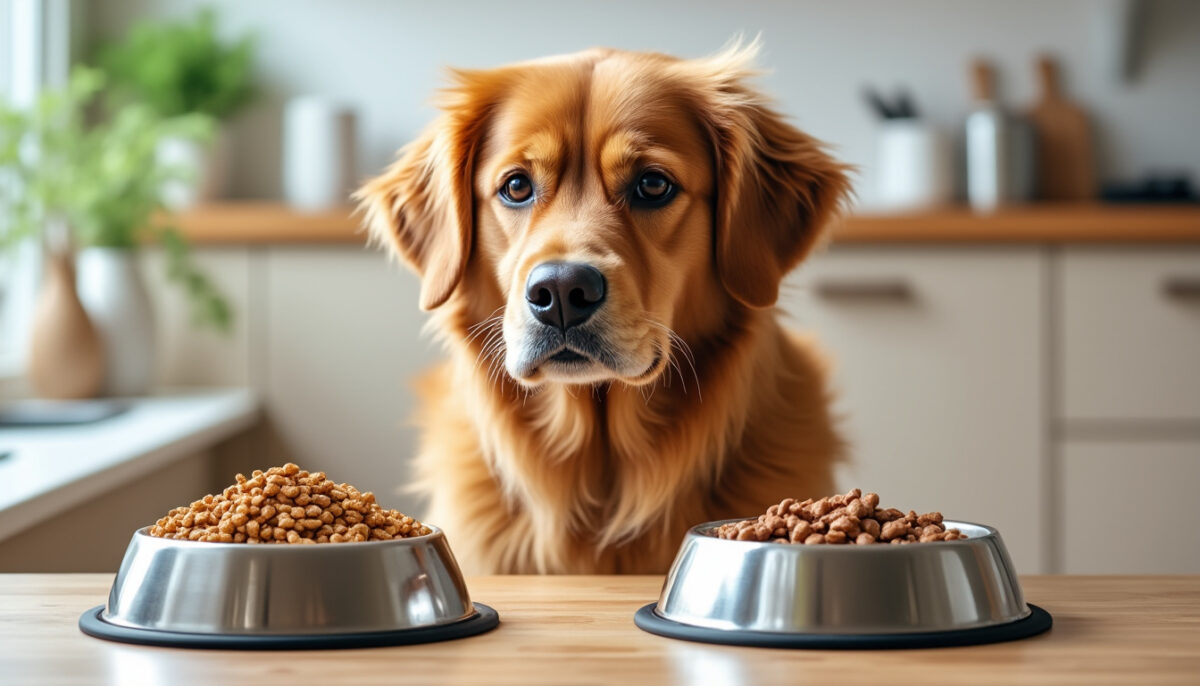
Often, a sudden change in diet or an abrupt shift in your dog’s routine leads to a loss of appetite, digestive upset, or food refusal. The dog might sniff its food bowl and then abandon it, stressed by the change. This is a clear sign that its digestion and routine have been disrupted. To better understand this phenomenon, it’s helpful to learn about food psychology and how it reflects a dog’s inner state. You can also learn more about The reasons why a dog refuses its food bowl and on the reasons why Dogs sometimes knock over their food bowls..
Too rapid a change in diet: a real disruption for the food bowl
When you quickly change your dog’s food, their digestive system may not be able to keep up. A dog’s gut flora adapts gradually to new ingredients, their textures, and compositions. A sudden switch from chicken to grains or from kibble to a rich wet food can disrupt digestion, causing vomiting, diarrhea, or simply a refusal to eat. This disruption is amplified if you make multiple changes in a short period, without allowing time for adjustment.
Everyone should keep in mind that a dog’s diet can’t be changed overnight. The transition affects both the dog’s physiology and mental state. Too rapid a change can quickly lead to stress and a loss of confidence in mealtimes. A dog may then refuse its food, move it around, or become anxious before or during meals.
Stress, a key factor in eating disorders
Changing a dog’s diet too quickly also disrupts its routine. Mealtime is a reassuring moment for them. It establishes a routine that stabilizes their system. The stress caused by rapid change can alter their appetite and lead to a real blockage. Furthermore, some dogs are particularly sensitive to their environment and changes: a new place, noise, or even the texture of the kibble can all play a role.
The most common mistakes to avoid
- Changing the type of kibble without a gradual transition.
- Give treats to compensate for the refusal of the main food.
- Leaving the food bowl available for self-service without a regular schedule.
- Ignoring digestive signals (loose stools, vomiting).
- Changing food several times in a few days, thinking that a problem can be solved quickly.
A simple procedure for a successful dietary transition
| Stage | Action | For what |
|---|---|---|
| Step 1 | Start by mixing 25% of the new food with 75% of the old food. | Allows the digestive system to adjust gently. |
| Step 2 | Gradually increase the proportion to 50%, then 75% over 7 to 10 days. | Avoid digestive problems related to sudden changes. |
| Step 3 | Only give the new food once the full dosage has been reached. | It consolidates adaptation and stabilizes digestion. |
Establish habits that promote good digestion
The importance of a feeding routine is often underestimated. Placing the food bowl in the same spot, at the same time each day, in a quiet location will be a great support for your dog. A clean, non-slip bowl also makes eating easier. Avoiding stress around the food bowl reduces spitting up and the behaviors of moving or tipping food, which are common in dogs who feel disturbed.
What to do if your dog is still refusing his food?
Observe: if he sulks but remains lively, don’t panic. However, prolonged refusal, fatigue, or digestive signs should raise concern. You should then consult a veterinarian to rule out a physical problem.
Table of symptoms to watch for during a too rapid change in diet
| Symptom | Interpretation | Recommended action |
|---|---|---|
| Temporary refusal of the food bowl | Digestive adjustment, mild stress | Continue gradual transition |
| Repeated vomiting | Intolerance or significant stress | Consult a veterinarian |
| Prolonged diarrhea | Disrupted gut flora | Reduce changes, give probiotics according to professional advice |
| Mood swings, lethargy | Possible general discomfort | Emergency veterinary intervention |
| Persistent search for alternative food | Disrupted satiety, selective appetite | Limit extras, stabilize ration |
Whether it’s a young puppy or an older dog…
For a puppy, an even more gradual adaptation is necessary because its digestive system is fragile. For a senior dog, transitions must be smooth and monitored, with attention paid to signs of pain or digestive upset. In these cases, the food bowl is a key indicator of well-being.
If your dog sulks after a move or sudden change
In this case, the imbalance is not only digestive but also emotional. It is important to stabilize mealtimes, provide a familiar dining area, and reduce overall stress to quickly restore appetite.
Why is my dog refusing his food after a change?
Too rapid a change disrupts his digestion and creates stress which manifests as a refusal to eat.
How long should a dietary transition last?
In general, a transition should last between 7 and 10 days depending on the dog’s sensitivity and the nature of the change.
Is it a problem if my dog moves or knocks over his food bowl?
This gesture often reflects stress or a need for attention; it is not necessarily serious, but one must pay attention to the environment and the dog’s condition.
Can I mix kibble and wet food during the transition?
Yes, this can help make the meal more attractive, but the total quantity must remain balanced.
What if the problem persists despite the transition?
A veterinarian should be consulted to rule out any deeper health or behavioral problems.
Thank you for your interest, Judith. It would be kind of you to leave a comment at the end of the article. Thank you all.