Homemade food: why natural isn’t enough
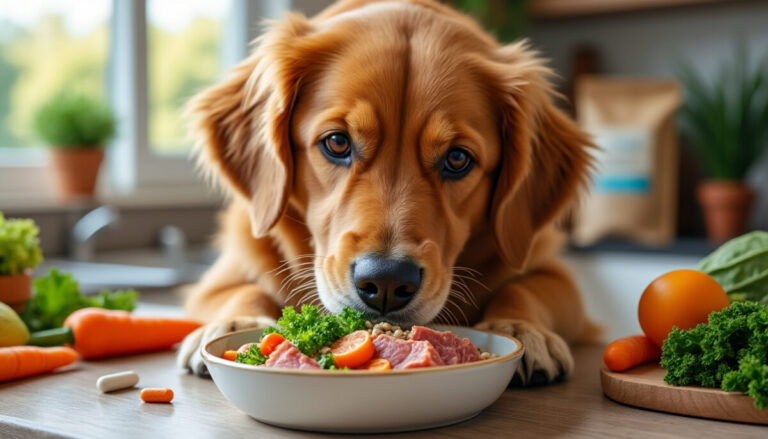
Hi, I’m Judith. To feed your pet at home, natural ingredients aren’t enough: you need a complete diet suited to its species and approved by a veterinarian. Meat, vegetables, or fresh ingredients may seem healthy, but they don’t always meet animals’ nutritional needs. The best approach is to check the nutritional balance before changing its food.
What to do right away
- Note your companion’s species, age, weight, and activity level.
- Don’t replace its usual meals with a recipe you found at random.
- Ask a veterinarian for advice before adding vitamins and minerals.
- Keep a list of the ingredients and amounts given each day.
- Monitor its weight, stools, energy, and appetite after making a change.
A homemade diet needs to be considered as a whole: protein intake matters, as do fats, minerals, and vitamins. To better identify the pitfalls of preparing food at home, see these tips on the possible risks of homemade pet food and this explanation of a common mistake that can quickly tire out a dog.
Homemade pet food: natural doesn’t guarantee balance
A natural diet can be made with fresh, high-quality ingredients and still not be suitable for every animal. The right recipe depends in particular on the species, age, size, activity level, and health status.
A common pitfall is to focus on meat and vegetables while overlooking less obvious elements. A tasty meal may be lacking in certain nutrients or provide too much of them. Nutritional deficiencies can develop gradually, even if the animal initially seems to be in excellent health.
Animals’ nutritional needs can’t be guessed
Dogs and cats don’t have the same needs. A recipe that’s suitable for a dog shouldn’t therefore be used as is for a cat. Even within the same species, a young animal, a senior, or an unwell companion may need a different diet.
Variety is useful, but it doesn’t replace calculating nutrient intake. As with a human diet, varying foods can provide multiple sources of nutrients; for an animal, however, this variety must still be appropriate and balanced.
| What to check | Why it matters | Practical tip |
|---|---|---|
| Protein | The amount and quality should match the animal’s profile. | Have the source and portion in the recipe approved. |
| Vitamins and minerals | A homemade meal may contain too little or too much. | Don’t add supplements without veterinary advice. |
| Daily amounts | A portion that’s too large or too small can affect weight. | Weigh portions and track changes in the animal. |
| Ingredients | Some common foods aren’t suitable for animals. | Check every ingredient before serving it. |
Changing your pet’s food therefore calls for a little planning. A “natural” recipe isn’t automatically complete, and a supplement chosen at random won’t necessarily correct an imbalance.
Homemade diet: three steps to avoid mistakes
You can make the change straightforwardly without guessing at proportions. These three steps can help you prepare for the transition more safely.
- Step 1: Gather the relevant information: species, age, weight, activity level, medical history, and current diet. Also note treats, which are often forgotten in the calculations.
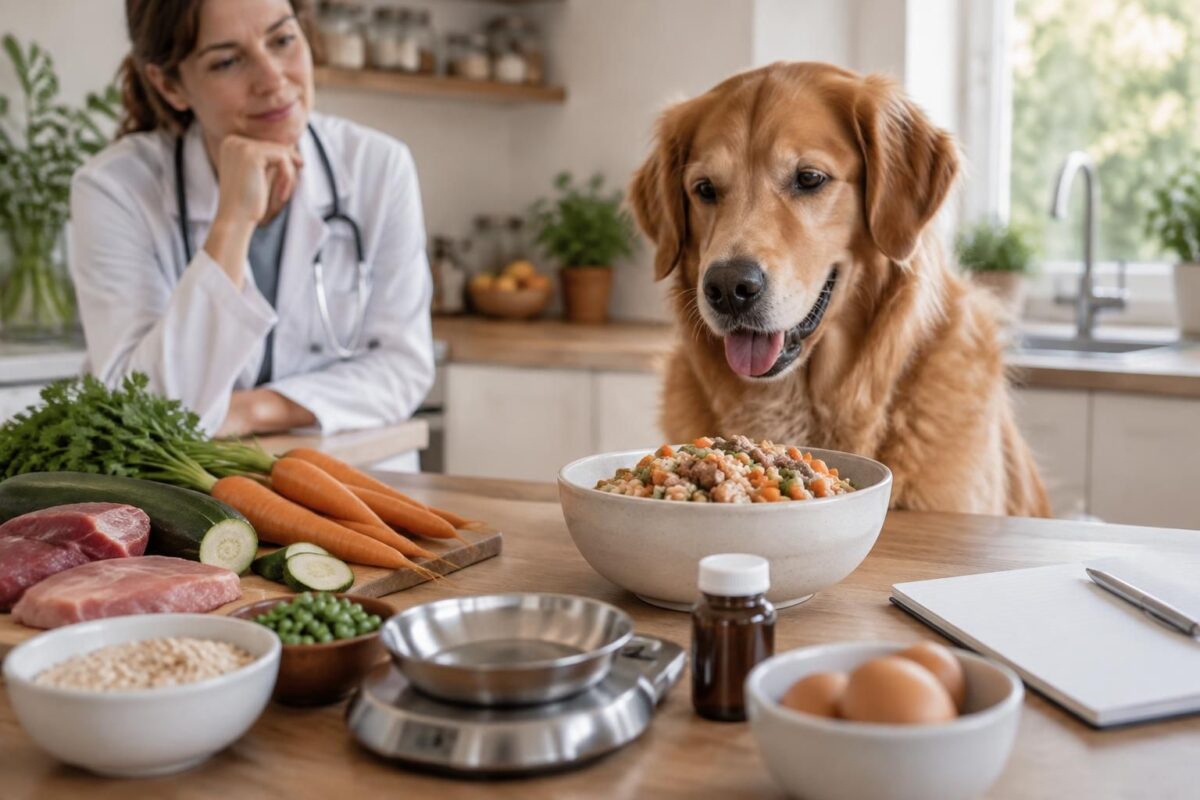
- Step 2: Ask a veterinarian, ideally one with training in nutrition, for a complete recipe. Have them specify the ingredients, amounts, preparation, and any supplements needed.
- Step 3: Introduce the new diet gradually, following the advice you received. Monitor appetite, digestion, and weight; if anything unusual occurs, contact the veterinarian.
The detail that makes all the difference? Weighing portions instead of relying on a visual estimate. A heaped spoonful can vary from one day to the next and throw off nutrient intake.
Two situations where veterinary advice is especially valuable
If it’s a healthy dog… a homemade diet may be an option, provided the diet is formulated for that dog and monitored over time.
If it’s a cat, an older animal, or an unwell companion… avoid experimenting without guidance. Its needs may be more specific; seek professional advice before making any dietary transition.
Dog food: signs to watch for after a change
An animal that eats enthusiastically isn’t necessarily being fed a balanced diet. Instead, observe several indicators over the course of a few weeks: weight changes, energy, stool quality, coat condition, and appetite.
These observations alone can’t diagnose a deficiency. However, they provide useful information to share with the veterinarian, especially if a change persists or is accompanied by low energy.
In 2026, as in the past, veterinary advice remains the best way to tailor a diet to a specific animal. Natural food can have its place, but it’s the complete nutritional composition and ongoing monitoring that make the difference.
Is homemade feeding necessarily better for an animal?
No. It may be suitable, but only if the recipe meets the animal’s needs and the amounts are appropriate. Fresh ingredients alone don’t guarantee nutritional balance.
Can I give my dog and cat the same homemade diet?
No. Their nutritional needs differ. A recipe designed for a dog shouldn’t be used as is for a cat.
Should vitamins and minerals be added to a homemade diet?
Not automatically. A supplement must be appropriate for the recipe and the animal’s profile; ask a veterinarian for advice before giving one.
How can I tell if the new diet is suitable?
Monitor weight, appetite, energy, and digestion, then share your observations with the veterinarian. These signs are useful indicators, not a diagnosis.
Thank you for your interest; Judith. I’d appreciate it if you could leave me a comment at the end of the article. Thank you all.