Dog food: this seemingly good meal comes at a high price
Hi, it’s Judith. The meal that seems economical — table scraps — can be costly if it unbalances your dog’s diet or contains an ingredient that is toxic to dogs. To protect your dog’s health, it’s best to choose a complete, appropriate dog food and keep an eye on portions. A few pointers are enough to avoid the most common feeding mistakes.
Things to do right away
- Make a note of your dog’s weight, age, and activity level.
- Check that the food is labeled complete and appropriate for your dog’s life stage.
- Avoid regularly replacing your dog’s meal with table scraps.
- Include treats in your dog’s daily food allowance.
- If you’re unsure about an ingredient or symptom, ask a veterinarian for advice.
Scraps may seem free, but their fat content and inconsistent composition make portion control more difficult. To spot other feeding mistakes linked to excess weight and put together a safer menu, also check out these tips for making your dog’s diet safer.
The meal that only seems like a good idea: scraps that unbalance your dog’s diet
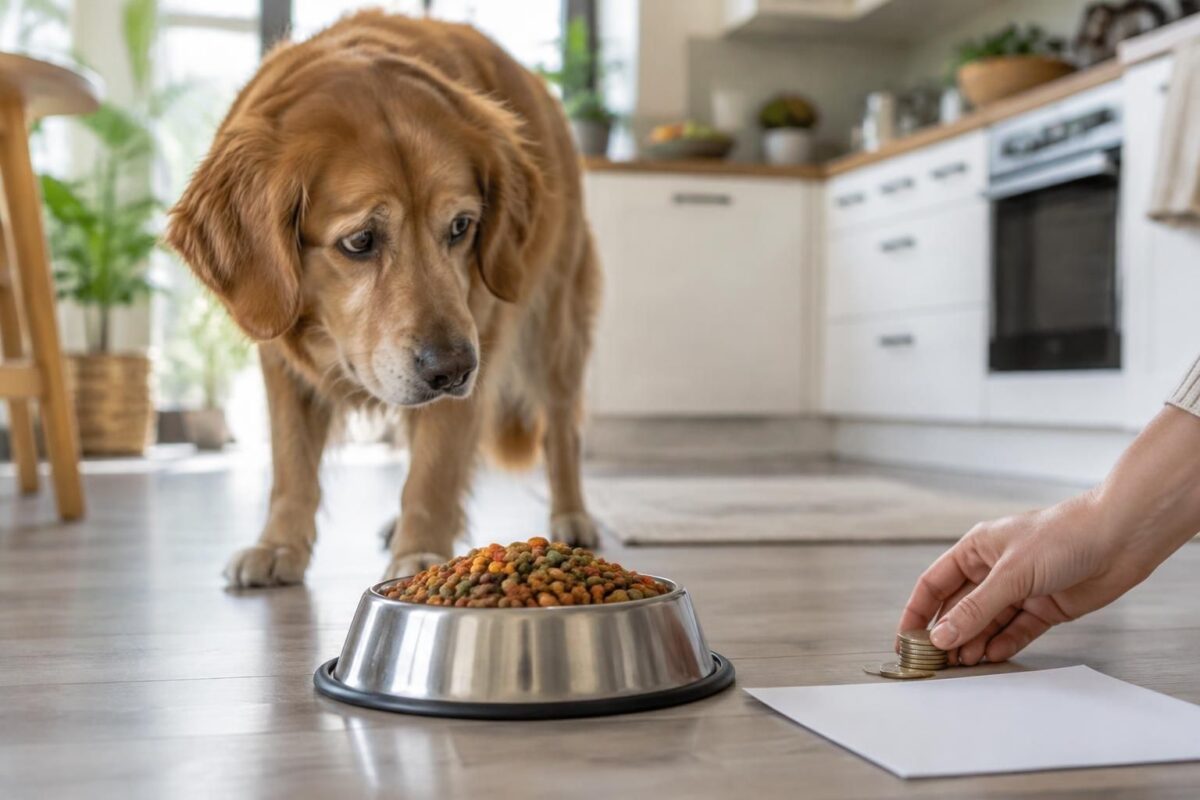
A piece of meat, some cheese, or the last of a dish can sometimes seem more appetizing than a regular serving. But a meal prepared for people doesn’t necessarily provide the right nutrients in the right proportions, and it may be too fatty or too salty for a dog.
Some foods are dangerous, even in small amounts. Chocolate, grapes, onion, and garlic are among the foods that are toxic to dogs: if your dog eats any of them, contact a veterinarian promptly rather than waiting for worrying signs to appear.
The hidden cost of an improvised meal
An improvised diet can also make it harder to monitor calories. If your dog gains weight, begs for more food, or has larger stools, their meals’ composition or quantity should be reassessed with a professional.
Animal welfare doesn’t depend on buying expensive food at all costs. It starts with a complete diet, an appropriate amount, and a gradual transition when you change your dog’s food.
Kibble, fresh meals, or scraps: comparing the real cost
Price per kilo isn’t enough to compare foods. Fresh meals often cost two to three times more per kilo than kibble, but they contain fewer calories per gram: around 120 to 145 kcal per 100 g, compared with 350 to 380 kcal per 100 g of kibble. So you need to serve a larger volume.
For a 10 kg dog, available estimates put the annual cost at around €480 to €600 for premium kibble and €700 to €900 for fresh meals, including welcome discounts. Depending on the dog’s size and the brands, the actual annual difference may be around 30 to 50%; large breeds can cost two to three times more than a 10 kg dog.
| Type of meal | Annual cost estimate for a 10 kg dog | Key points |
|---|---|---|
| Premium kibble | About €480 to €600 | Easy to portion; compare the ingredients and daily serving size. |
| Fresh meals | About €700 to €900 | More expensive per kilo and served in larger amounts. |
| Mixed diet | Varies depending on the proportions chosen | Replacing 20 to 30% of the diet with fresh food can help keep costs down. |
| Table scraps | Sometimes low immediate cost | Uncertain composition; risk of an unbalanced diet or toxic ingredients. |
These figures are estimates: appetite, activity, health needs, and brand prices all affect the cost of feeding your dog. Supermarket kibble may meet energy requirements, but its quality and digestibility vary. Always check that the product is complete, then keep an eye on your companion’s weight, coat, and stools.
A practical compromise for dog nutrition
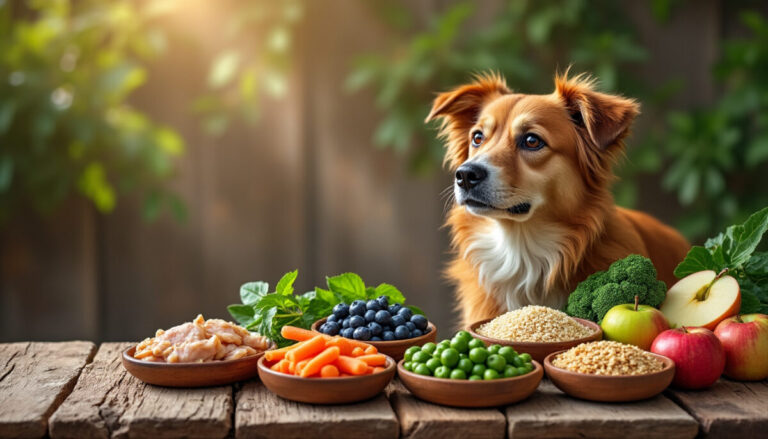
To reduce costs without improvising, some households choose a mixed diet: a base of complete dog kibble, with a portion of fresh food calculated as part of the total serving. This doesn’t mean adding another portion to the usual meal, but replacing part of it to avoid extra calories.
Wet dog food can also be included in a diet, provided you check whether it’s complete or complementary and adjust the quantities. Whatever the format, don’t change your dog’s food abruptly: a transition over several days often helps them adjust.
The three-step method
- Work out the base amount. Start with the feeding guidelines on the packaging, then adjust with your veterinarian based on your dog’s weight and activity level.
- Replace, don’t add. If you add fresh meals or wet food, reduce the corresponding portion of kibble according to the manufacturer’s or veterinarian’s recommendations.
- Monitor and adjust. Keep an eye on your dog’s weight, appetite, and stools for a few weeks. Any weight gain or loss is a reason to review the serving size.
A more expensive meal isn’t automatically better, and a free meal isn’t necessarily a saving. The best option is one that meets your dog’s needs, fits your budget, and supports their health over the long term.
Practical questions about dog meals
Are fresh meals always more expensive than kibble?
They generally cost more per kilo, but they have a lower calorie density. For a 10 kg dog, annual estimates are around €700 to €900 for fresh food, compared with €480 to €600 for premium kibble.
Can you give your dog table scraps?
It’s best to avoid making them a regular meal: scraps may be too fatty, too salty, or unbalanced. Some ingredients, such as chocolate, grapes, onion, and garlic, are toxic to dogs.
Is a mixed diet a good solution?
It can be a budget-friendly way to add variety if the fresh portion replaces part of the regular serving rather than being added to it. The total diet must remain complete and appropriate for the dog.
How should you change your dog’s food?
Introduce the new food gradually over several days, adjusting portions rather than combining both full servings. If digestive problems persist or your dog is ill, ask a veterinarian for advice.
Thanks for taking the time to read this, Judith. If you have an experience to share, I’d be happy to read your comment.