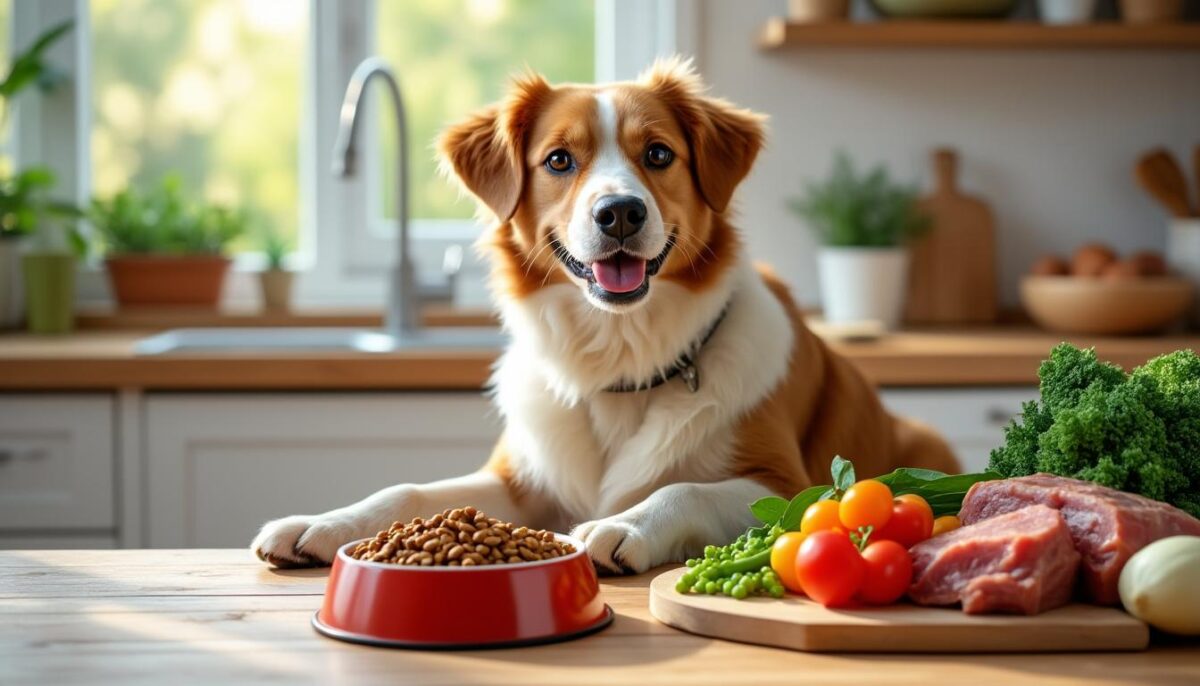
Hi, it’s Judith. To switch your dog to homemade meals without any problems, you need to plan a gradual transition by slowly mixing the new food with the old food over 7 to 10 days. This gradual introduction prevents digestive upsets and food refusals, giving your dog time to get used to the new flavors and textures while maintaining their nutritional balance. This approach, combined with a good understanding of your dog’s specific needs, is the key to a smooth and successful dietary change.
To do immediately
- Prepare a 7-10 day food transition plan, gradually increasing the proportion of homemade food.
- Choose balanced recipes adapted to your dog’s age, weight and activity level.
- Avoid toxic ingredients such as chocolate, onion, garlic, grapes or avocado.
- Always offer fresh water to accompany homemade meals.
- Observe digestive and behavioral reactions carefully during the transition.
A dog accustomed to kibble often needs time to accept the texture and taste of homemade food, hence the importance of a food transition progressive. Planning must take into account the specific needs of each animal, otherwise you risk facing a food blockageIn many cases, adapting recipes to the dog’s preferences and reactions makes success easier and avoids stress. To learn more about homemade dog nutrition, discover a… A complete guide to homemade dog food which details how to compose balanced meals. For another perspective, this practical guide to home preparation It also offers excellent ideas and useful advice.
Understanding the needs to succeed in the food transition
Each dog has its own specific needs depending on its age, breed, activity level, and health. A puppy requires more protein and calcium, while a senior dog prefers lower-calorie, high-fiber meals. It’s also important to remember that the quality of the ingredients and their proper cooking significantly impact digestion and flavor. High-quality proteins like chicken or fish, complex carbohydrates like brown rice or sweet potato, and steamed vegetables form the ideal base. Adhering to these fundamentals helps prevent health problems that often contribute to… food blockage.
For example, if your dog is sensitive to carbohydrates, focus more on protein and easily digestible vegetables. If your dog is athletic, slightly increase the fat content for efficient energy intake. This kind of adjustment often makes all the difference in helping your companion adapt to their new diet. homemade food with pleasure and energy.
Table of permitted and prohibited ingredients
| Category | Suitable Ingredients | To avoid | Precautions |
|---|---|---|---|
| Proteins | Lean chicken, turkey, fish, eggs, offal (liver, heart) | Fatty meat, chicken skin | Cook thoroughly and remove the skin |
| Carbohydrates | Brown rice, sweet potato, quinoa, oats | White bread, sugar, uncooked pasta | Full cooking required |
| Vegetables | Carrots, broccoli, courgettes, spinach | Onion, garlic, leek | Wash thoroughly and steam. |
| Fruits | Seedless apples, bananas, blueberries | Grapes, avocado | In small quantities only |
A 3-step procedure for a successful, smooth transition
- Step 1: Start by mixing 25% homemade food with 75% of the old food for 2 days.
- Step 2: Increase to 50%/50% on days 3 and 4, monitoring for any signs of digestive upset or refusal.
- Step 3: It goes from 75% homemade and 25% old food before reaching 100% from day 7.
If your dog shows signs of discomfort (diarrhea, vomiting), slow down the transition. Some dogs need two weeks or more; it’s nothing dramatic. gradual adaptation reduces the chances of frustration or food blockage.
Tips for balancing homemade dog nutrition
A well-planned homemade diet includes the correct amounts of protein, fat, carbohydrates, vitamins, and minerals. An imbalance can cause fatigue, digestive problems, or a dull coat. It’s best to consult a veterinary nutritionist to precisely tailor the ration. Here are a few easy rules to keep in mind:
- Vary your complex carbohydrates and vegetables to diversify your intake.
- Avoid spices, salt, sugar or any seasonings.
- Regularly provide oils rich in omega-3.
- Under monitors possible allergic reactions to the introduction of new foods.
A frequently recounted anecdote: a dog that initially refused to eat homemade food eventually changed its mind when its owner increased the portion of chicken and reduced the rice. Observation and adaptation remain key to overcoming any potential resistance.
Trusting reliable information helps you avoid pitfalls.
The internet is full of advice, but much of it is unreliable or fails to consider specific needs and risks. Regular consultation with recognized veterinary resources and canine nutrition specialists is recommended. For example, platforms like Santevet Or Animal Advice They provide verified and up-to-date information to help you manage the transition to homemade food without food blocks.
Quick FAQ for switching to homemade meals with your dog
How long does the transition to home-cooked meals take?
Generally, it takes between 7 and 10 days, sometimes a little longer depending on your dog’s digestive and behavioral adaptation.
Which foods are toxic to dogs when fed a homemade diet?
Chocolate, onion, garlic, grapes, avocado, xylitol and macadamia nuts are strictly prohibited.
Can you give raw vegetables to a dog?
It is best to steam them to facilitate digestion and avoid digestive discomfort.
Is it always necessary to consult a veterinarian before changing a pet’s diet?
Yes, especially in the case of specific medical conditions or allergies, a consultation is highly recommended.
How to encourage a dog that refuses homemade food?
Introduce new flavors gradually, adjust recipes according to their preferences, and ensure a smooth transition.
Thank you for your interest, Judith. It would be kind of you to leave a comment at the end of the article. Thank you all.