My cat has stopped eating at night: should I be worried?
Hi, it’s Judith. If your cat has stopped eating at night, don’t panic just yet, but this behavior can be an important sign of their health. Generally, refusing to eat at night isn’t serious if your cat has eaten normally during the day. However, if it lasts for several nights or is accompanied by other signs (fatigue, weakness, change in behavior), you should act quickly. A veterinary consultation then becomes essential to detect any potential health problems or hidden stress.
To do immediately
- Observe their eating behavior over 24 hours, noting the times and quantity of food consumed.
- Check the quality and appearance of his food; sometimes a sudden change of kibble can upset his appetite.
- Provide him with a calm environment during meals; a quiet corner often helps to restore his appetite.
- Try putting a little moisture on his kibble or warm food to stimulate his sense of smell.
- Contact a veterinarian immediately if your cat has not eaten at all for more than 24 hours.
Your vigilance is key, especially at night when cats are generally most active. Sometimes they eat less at night simply because they prefer to rest, but this sudden change deserves attention. Here are some tips to help you understand loss of appetite And when to really worry.
Why is my cat no longer eating at night? Causes and signs to watch for
Cats are often nocturnal, but that doesn’t necessarily mean they’ll be nibbling at night. Not eating at night might simply be part of a change in their routine. However, in many cases, it can indicate stress, a dietary problem, or even illness.
A cat that stops eating at night can perfectly well compensate during the day. However, repeated loss of appetite at night may mean:
- A change in his routine or environment : arrival of a baby, moving house, presence of another animal, noise that disturbs him.
- A health problem : dental pain, infection, parasites, digestive problems or even kidney failure.
- Undetected stress or anxiety, often overlooked by owners but very common.
- An unsuitable diet : poor food transition, sudden change of brand, food that is too cold or has little odor.
- A natural feline behavior : each cat has its own rhythm, some eat more during the day and less at night.
A fairly common example: a cat that refused its food at night because it was too cold. Sometimes, simply warming it for a few seconds is enough to rekindle its interest.
Monitor for signs that reveal a serious animal health problem
A cat that stops eating at night and also during the day should be a cause for immediate concern. The following signs are clear indicators that should not be ignored:
| Symptoms | Possible meaning | Recommended action |
|---|---|---|
| Fatigue and weakness | compromised general health, risk of weakened immune system | Urgent veterinary consultation |
| Rapid weight loss | Possible hepatic lipidosis, a serious illness linked to prolonged fasting | Immediate monitoring and medical care |
| Total refusal of food for more than 24 hours | Indicates pain, infection or serious disorders | Veterinary consultation without delay |
| Vomiting or diarrhea | Parasites, poisoning or digestive problems | Veterinary treatment required |
| Behavioral changes (aggression, isolation) | Intense stress or hidden pain | Behavioral and medical assessment |
One simple step not to forget: properly assess eating behavior
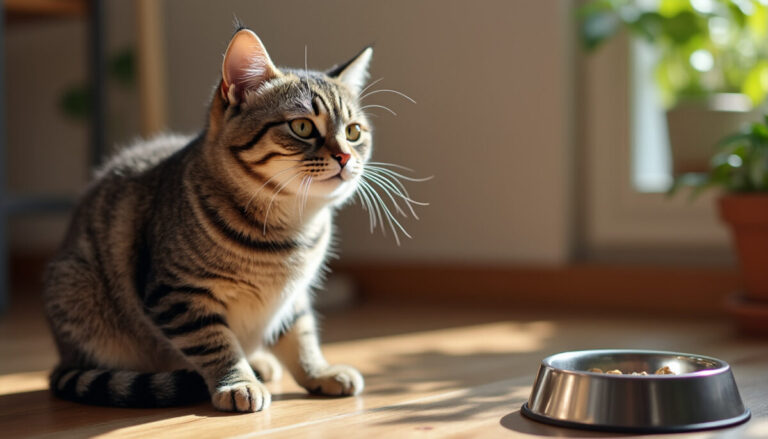
The vet often relies on your careful observation. Note whether your cat approaches the food bowl, sniffs the food without eating it, or accepts treats. This small detail greatly influences the diagnosis. For example, if your cat refuses food while growling, it could be dental pain rather than just being picky.
3 steps to help your cat who has stopped eating at night
- Step 1: Optimize your environment — Place its food bowl in a quiet place, away from noises or other animals, often the key to restoring nighttime appetite.
- Step 2: Improve the food — Warm the wet food a little or moisten the kibble, offer fragrant foods (tuna, chicken), and test several textures to see what he prefers.
- Step 3: Consult a veterinarian — If the situation lasts more than 24 hours, especially if accompanied by symptoms, a consultation is necessary for a serious and appropriate diagnosis.
A helpful tip: a stressed cat often won’t eat at night. Introducing a pheromone diffuser or maintaining a calm environment can help. It will never replace a medical diagnosis, but it can provide significant relief.
FAQ – Quick information about a cat that stops eating at night
My cat no longer eats at night but eats well during the day, should I be worried?
If your cat maintains a good overall appetite, there’s often no cause for alarm. Monitor its behavior throughout the day and make sure it stays active. If you have any doubts, a veterinary opinion is always reassuring.
Why don’t some cats eat at night?
Cats have very different natural rhythms. Some prefer to eat during the day and sleep at night, especially indoor cats. Disturbances or stress can also alter this behavior.
What should I do if my cat has refused to eat for more than 24 hours?
A prolonged loss of appetite is a sign that you should consult a veterinarian quickly. This behavior can rapidly impact your pet’s health, especially if there are underlying medical conditions.
How to recognize dental problems in a cat?
A cat that avoids eating, sniffs its food without eating, or lowers its head during meals may be suffering from dental pain. In this case, a veterinary examination is essential.
Can I change my cat’s food if he stops eating?
It is best to proceed slowly. A gradual food transition over 10-15 days avoids the sudden rejection of the new food, which is often the cause of food refusal.
Thank you for your interest, Judith. It would be kind of you to leave a comment at the end of the article. Thank you all.