
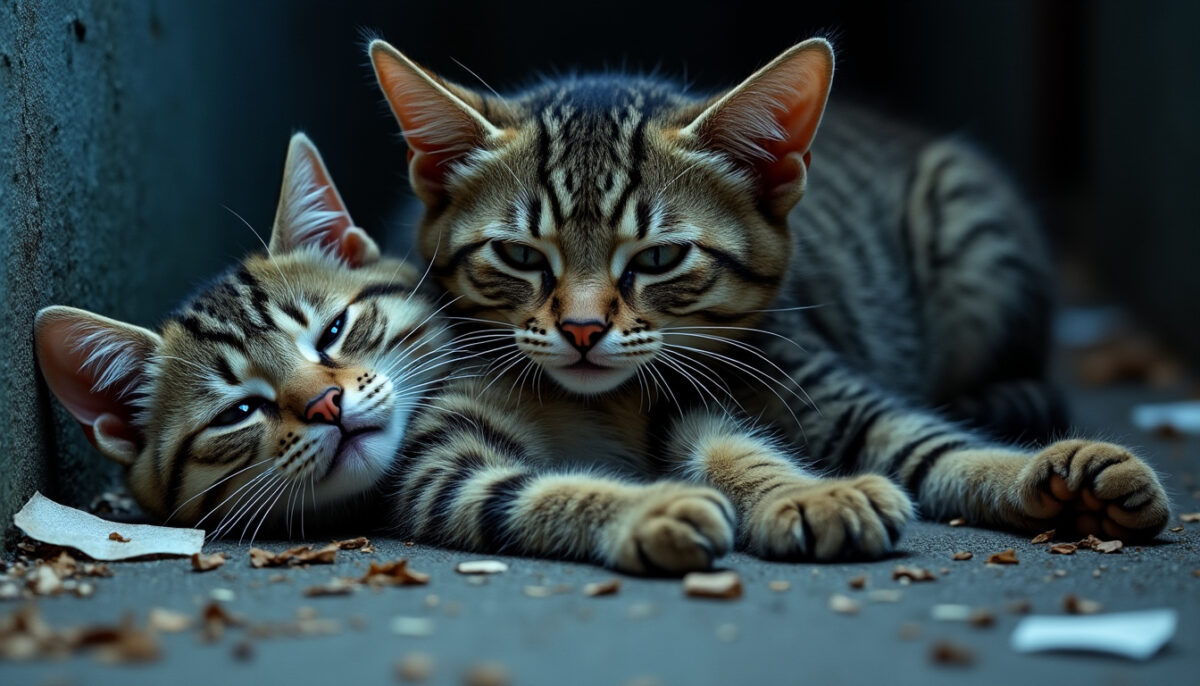
Injured cats: this false cuddle sometimes delays help
Hi, it’s Judith. When an injured cat seems to be seeking cuddles, this apparent gentleness can actually be hiding deep pain or discomfort, making quick and appropriate help more difficult. The tender gesture can be a false sign, a deceptive hug which sometimes delays urgent care essential.
To do immediately
- Observe any changes in behavior carefully and note them down.
- Do not force petting if your cat becomes avoidant or shows irritation.
- Make an appointment with a veterinarian as soon as you detect any signs of injury or discomfort.
- Prepare a quiet and safe place to receive your injured cat.
- Learn about emergency procedures in case of cat injuries so as not to waste time.
Understanding this behavior isn’t easy, but you should never underestimate a sudden refusal of cuddles. It’s a crucial signal that explains very well This article is about feline behavior and cuddling. and the right reflexes to adopt. Furthermore, This veterinary guide explains how to react to an injured cat. is a useful resource that will help you prevent a delay in intervention and its consequences.
When a hug is a trap: understanding the false sign of appeasement
A cat that suddenly tries to cuddle with you while injured may be showing what is called a deceptive hugThis behavior often blends a need for comfort with hidden pain. This apparent gentleness is, in fact, a defense mechanism; the cat is trying to mask its vulnerability while seeking your attention. But behind this apparent sweetness, pain lurks, and it’s crucial to act quickly and not rely solely on appearances.
In many cases, an injured cat will show hypersensitivity in specific areas: its back, limbs, or belly. Attempting contact in these areas can then trigger sudden reactions such as swipes or bites, a protective reflex that should not be mistaken for gratuitous aggression.
5 signs not to ignore in an injured cat
- Brutal refusal or flight when a helping hand is extended.
- Reduced or neglected grooming that changes the appearance of the coat.
- Unusual meows or quiet whining.
- Tense posture, stiff gait or difficulty jumping.
- Signs of irritability such as pinned ears or a twitching tail.
Finding the right balance: respecting the cat while acting quickly
The idea isn’t to guess the source of the problem on your own, but to be vigilant and respectful. Never force contact if the cat refuses; this won’t improve its situation. Instead, create a gentle and reassuring environment and discreetly observe its reactions. Forget the idea of a “toy cat”—an injured feline needs autonomy to feel safe.
Here is a simple procedure for intervention:
- Step 1: Identify signs of pain or discomfort, without insisting on physical contact.
- Step 2: Prepare a safe transport, without stressing or startling the cat.
- Step 3: Consult a veterinarian promptly for diagnosis and appropriate treatment.
Sensitive areas to cuddle, pitfalls to avoid
| Body area | Probability of rejection or biting |
|---|---|
| Forehead, cheeks, chin | Weak |
| Belly, lower back, hind legs | High |
Reserving petting for less sensitive areas and at chosen times will prevent harsh reactions. To learn to recognize these signals, even subtle ones, you can refer to resources such as this guide on the limits of cuddling in cats.
Adopt active vigilance in the face of warning signs
A withdrawal of hugs or sudden distant behavior should neither be underestimated nor overestimated. It’s often a silent cry that warns of something. unhappiness or an injury. In this case, it is best to anticipate and quickly schedule a veterinary consultationPrevention is key. The earlier an injury is detected and treated, the better the chances of recovery.
In some cases, a simple brushing routine or careful observation of movement can save a cat from an unseen deterioration. This also means being sensitive to what the cat’s silence is telling us, without forcing interaction or ignoring it.
Quick cases for better management
- If the cat runs away from your hands: This could indicate serious pain; apply emergency measures and arrange a veterinary visit as a priority.
- If the cat lets you approach but bites afterwards:
Protecting an injured cat means quickly providing it with an environment that facilitates access to care. Even simple first aid measures can make all the difference. A poorly planned rescue or a feline rescue Improvisation can worsen the situation. Always prioritize calm, gentleness, and speed of transport.
Remember that the key is in perceiving the signals and the ability to let feline body language speak in order to act in time.
How can I tell if my cat is injured despite being cuddled?
If your cat suddenly refuses certain contacts, limps or shows signs of irritability, these are often signs of injury or pain, even if it is otherwise affectionate.
What should I do if my cat bites during cuddles?
This could be a sign of sensory overload or pain. Stop petting him, let him calm down, and avoid sensitive areas in the future.
When should you consult a veterinarian?
As soon as you observe a persistent change in behavior, difficulty moving, or a complete refusal of cuddles, a prompt consultation is recommended.
Why might an injured cat seek cuddles?
A cat may need comfort while experiencing pain. This behavior is a mixture of a need for reassurance and an expression of vulnerability.
How to transport an injured cat without stressing them out?
Use a towel or soft blanket to wrap the cat, restrain it carefully and ensure a quiet space in the carrier.
Thank you for your interest, Judith. It would be kind of you to leave a comment at the end of the article. Thank you all.