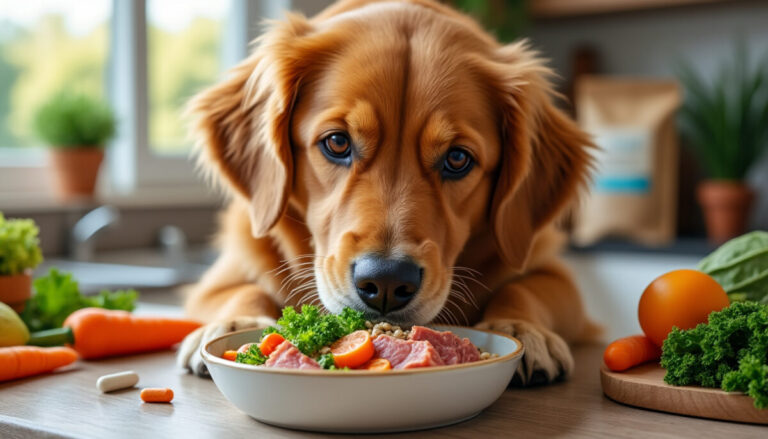

Natural feeding for dogs: a good instinct or a real mistake
Hi, it’s Judith. Switching to a natural diet for dogs is often a good instinct for their health, but if poorly managed, it can quickly become a real nutritional mistake. Providing a balanced ration, rich in animal proteins and well adapted, remains the key to avoiding deficiencies and boosting your companion’s energy. In a natural approach, you must learn to compose the bowl well and monitor indicators such as coat and digestion, often overlooked but revealing a real state of health.
- Check the composition of the dry food: the meat must be the first ingredient.
- Calculate the daily ration based on your dog’s weight and activity.
- Gradually introduce the new feeding over 7 to 14 days.
- Prefer minimally processed ingredients for a natural diet.
- Consult a veterinary-nutritionist to balance the home-made ration.
The choice of natural feeding rests on three practical and very widespread modes: premium kibble, BARF (raw feeding) and cooked home-made ration. Each has its advantages and constraints, depending on budget, available time, and the animal’s health. For example, BARF provides instinctive satisfaction and better dental hygiene but requires vigilance about bacterial risk. Meanwhile, the home-made ration allows fine personalization, ideal for fragile dogs, but requires more preparation and an accessible mineral–vitamin supplement. What to remember: natural canine nutrition must always respect the needs for animal proteins (25-30%), essential fats (10-15%), and digestible carbohydrates (30-50% cooked). To help you, here are two resources to deepen these good practices adapted canine nutrition and practical advice in natural feeding.
Natural dog nutrition: the fundamentals of animal health to follow
Your dog’s health is directly affected by its daily bowl. A glossy coat, steady energy, and regular digestion are the first signs of a healthy, balanced diet. Caution, a dull coat or soft stools often signal a nutritional fault. According to a recent study, dogs fed mainly with fresh foods have 30% fewer chronic diseases. This figure underscores the obvious value of a well-planned natural regime.
Animal proteins make up about 25 to 30% of the ration: chicken, beef, fish. They are better assimilated than plant proteins. Fats, notably omega-3 and omega-6, improve skin quality and coat shine. Cooked carbohydrates, such as sweet potato or rice, provide energy and fiber for the transit. Vitamins A, D, E, K, and minerals like calcium and zinc must be present in good amounts. Finally, fresh water must always be accessible.
Risks of common mistakes to avoid in a natural diet
One common mistake is confusing a natural diet with an improvised regimen based on scraps or poorly balanced ingredients. Calcium deficiency is a very frequent problem that can lead to serious bone disorders, especially in puppies. Moreover, some toxic foods like chocolate, onion, grapes, or cooked bones must be absolutely avoided. Finally, abruptly changing the diet can cause major digestive disorders. A progressive transition is mandatory.
Three steps to successfully transition to a healthy natural diet
- Step 1 : Over about 3 to 7 days, mix roughly 25% of the new food with 75% of the old to acclimate the stomach.
- Step 2 : Gradually increase the share of the new ration over a week to reach 100%.
- Step 3 : Observe the stools and overall condition — slow the transition if persistent digestive disturbances.
Crunchies vs natural feeding: understanding to choose wisely
Kibble remains the most practical format, with long shelf life and a nutrition balance often guaranteed by premium ranges. Nevertheless, their composition varies greatly, influencing the animal’s health. Low-quality kibble often contains cereals and by-products in large quantities, which can harm digestion and well-being.
BARF and the cooked home ration offer higher quality ingredients, closer to the dog’s original natural regime. But beware, BARF requires strict sourcing control to avoid health risks. The home-made ration is ideal for finely tailoring the offering to specific needs, but takes time and must imperatively be supplemented with a vitamin supplement.
| Criterion | Premium kibble | BARF (raw) | Cooked home-made ration |
|---|---|---|---|
| Monthly cost (dog 15-20 kg) | 40-70 € | 80-120 € | 60-100 € |
| Preparation time | none | 15-20 min/day | 20-30 min/day |
| Quality of ingredients | Medium to good | Excellent | Excellent |
| Health risk | low | moderate | low |
| Palatability | medium | very high | high |
| Nutritional balance | Guaranteed (premium ranges) | variable (depends on preparation) | variable (requires supplementation) |
The final decision should take into account your lifestyle and your dog’s specific needs. For example, if you have little time, favor natural kibble. If you want to favor a highly personalized natural diet, the home-made ration is the best option. Don’t forget that mistakes such as a ration too poor or too high in fat can easily arise without precise knowledge, which is why I recommend following a reliable guide like the one offered by lecoinanimal.fr.
The natural foods to prioritize for a successful bowl
- Proteins : chicken, beef, fish, offal in small proportion
- Vegetables : carrots, zucchini, well-cooked green beans
- Carbohydrates : sweet potato, well-cooked rice
- Oils : salmon oil, flaxseed oil for omega-3
- Avoid : chocolate, onion, grapes, avocado, cooked bones
Natural dog feeding: steps to avoid common pitfalls
To avoid turning your good habit into a real mistake, here are five tips to apply immediately:
- Never feed a dog fatty, overly salty, or sugary leftovers.
- Never give cooked bones, due to the risk of splintering and perforation.
- Ensure the meat is fresh and free of chemical additives.
- Ensure fresh water is always available, especially on a dry diet.
- Do not neglect mineral and vitamin supplementation in home-made rations.
Best practices depending on your dog’s age
For puppies, favor a protein-rich diet (28-30%) with several divided meals. Adult dogs generally need two meals per day adapted to their activity. For seniors, a higher intake of high-quality proteins and fewer calories help preserve muscle mass and prevent obesity.
If it’s a puppy…
Ensure slow growth and monitor supplementation to avoid bone problems. Split the ration into 3-4 meals and avoid any overfeeding that could be dangerous for large breeds.
If it’s a senior dog…
Reduce energy intake by 15 to 20% without losing nutritional density. Include joint supplements to support mobility over the years.
For a complete overview on this topic and to deepen your knowledge of natural feeding while avoiding classic mistakes, visit our guide alimentaire dédié.
What is a natural diet for dogs?
It is a diet based on minimally processed ingredients, primarily animal proteins, supplemented by cooked vegetables, digestible carbohydrates, omega-rich oils, and a balance of essential vitamins and minerals.
What are the risks if the dietary transition is too rapid?
A sudden change can cause diarrhea, vomiting, and loss of appetite. It is inevitably necessary to make a gradual transition over 7 to 14 days for a good adaptation.
Is BARF suitable for all dogs?
This raw diet suits many dogs but requires rigor, perfect hygiene, and respecting calcium/phosphorus ratios to avoid deficiencies or health risks.
How to recognize a high-quality kibble?
The meat or fish should appear as the first ingredient, carbohydrates should be less than 30%, and you should avoid chemical preservatives like BHA or ethoxyquin.
Which natural foods are toxic for dogs?
Chocolate, grapes, garlic, onion, avocado, cooked bones are to be absolutely avoided to prevent serious or fatal poisonings.
Thank you for your interest; Judith. Please feel free to leave a comment at the end of the article. Thank you all