Home-cooked food: why some dogs lose weight
Hello, it’s Judith.
A dog can lose weight on a homemade diet if the food provides too little energy or is unbalanced, but an illness or parasites could also be to blame.
Meat and rice alone are not enough to meet a dog’s nutritional needs. To understand a dog’s weight loss, you need to look at their diet, how it has changed, and their overall health.
What to do if your dog is losing weight
- Weigh your dog under the same conditions each time and record the results.
- Measure their food and keep track of the ingredients, quantities, and extras.
- Monitor their stools, appetite, thirst, and energy level.
- Avoid making sudden changes to their menu or adding supplements without professional advice.
- Ask a veterinarian for advice if the weight loss is unexplained, persists, or is accompanied by other symptoms.
A common pitfall is to give more food without checking its composition: this can increase the amount of food while still leaving nutritional deficiencies. To better assess quantities and composition, also check out these tips on choosing the right portion for your dog and signs that a homemade diet is incomplete.
Homemade diets: when the food doesn’t meet your dog’s needs
A home-prepared diet should be calculated according to your dog’s weight, age, activity level, and health. If it contains too little energy, your dog may lose weight even if they eagerly finish their bowl.
The amount of food alone is not enough to determine whether a dog’s diet is balanced. A recipe made mostly of meat and starchy foods may lack minerals, vitamins, or essential fatty acids. These imbalances cannot always be corrected simply by adding another serving.
A homemade recipe needs to be carefully formulated
A dog’s nutritional needs change throughout their life and according to their activity level. A recipe suited to a sedentary adult dog may not be suitable for a puppy, an athletic dog, or an animal that is ill.
A veterinarian with training in nutrition can check the ingredients, portions, and necessary supplements. This is a useful way to maintain a balanced diet without improvising or piling on supplements.
Why a dog can lose weight despite having a good appetite
Weight loss isn’t always caused by what’s in the food bowl. Intestinal parasites, a digestive disorder, or an illness that interferes with nutrient absorption can explain why a dog eats normally—or even more than usual—while still losing weight.
Soft or bulky stools, vomiting, increased thirst, or unusual tiredness are all things to report to your veterinarian. Your dog’s digestive health may be affected, but only an examination can identify the cause.
| What you notice | Possible causes | What to do |
|---|---|---|
| They eat well but lose weight | Food that is too low in energy, parasites, or a nutrient absorption problem | Note the portions and ask your veterinarian for advice |
| Soft stools or a lasting change in their stools | A change in diet or a digestive disorder | Avoid repeated changes and discuss it with your veterinarian |
| Tiredness, vomiting, or unusual thirst | A possible health problem | Contact a veterinary clinic promptly |
| Rapid or significant weight loss | A dietary or medical cause that needs to be identified | Don’t wait to get professional advice |
Nala’s case: a full food bowl, but an incomplete diet
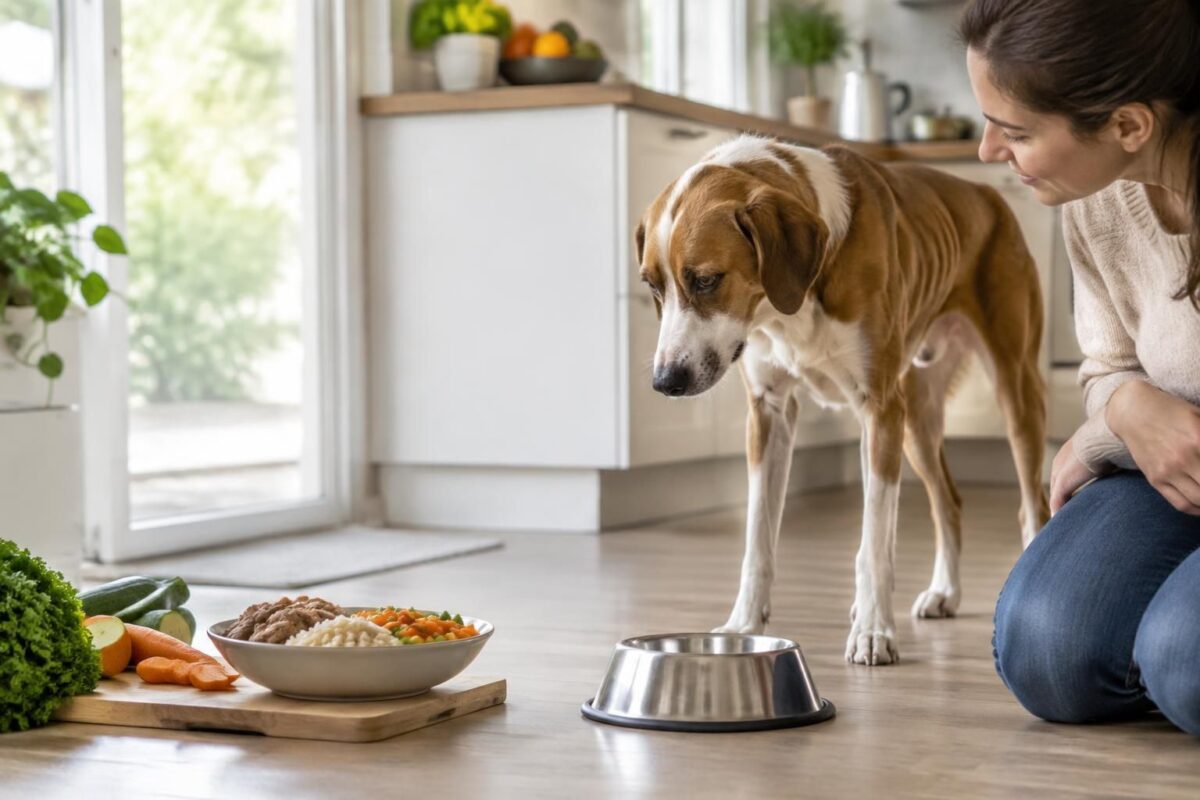
Nala, a fictional young, very active dog, gets a generous homemade meal made with meat and rice. Yet she is getting thinner: the portion doesn’t match her energy needs, and the recipe doesn’t provide all the nutrients she needs.
This example is a reminder that an appetizing meal guarantees neither sufficient energy nor a complete diet. If the recipe is balanced but your dog continues to lose weight, a medical cause should also be investigated.
What to do if your dog is losing weight
- Check how things are changing. Note their weight, portions, treats, and any recent changes to the recipe. Also take their activity level and any symptoms into account.
- Have their diet and health assessed. Your veterinarian can examine your dog and decide whether tests or other examinations are needed. Don’t give deworming medication or supplements at random.
- Make a plan with a professional. Depending on the cause, the solution may involve adjusting the diet, treatment, or further tests. Afterward, monitor weight changes with regular weigh-ins.
Rapid weight loss, severe weakness, repeated vomiting, or refusing to eat are reasons to contact a veterinarian promptly. Even without dramatic symptoms, persistent weight loss warrants an assessment: early treatment can prevent the problem from becoming established.
Preventing deficiencies and monitoring your dog’s weight
A homemade diet can be suitable for a dog, provided its composition is carefully calculated and monitored. Weigh the ingredients, follow the established recipe, and ask for advice before making any substitutions, since replacing an ingredient can alter the balance of the diet.
Weighing your dog periodically can help you spot a trend, especially when combined with monitoring their body shape and behavior. The goal isn’t to track every tiny fluctuation, but to detect a lasting change and respond methodically.
Frequently asked questions about weight loss and homemade diets
Can a dog lose weight while eating normally?
Yes. Food that is too low in energy, parasites, or a problem with digestion and nutrient absorption can lead to weight loss even if the dog still has an appetite. A veterinary examination can help identify the cause.
Do meat and rice make a complete home-prepared diet?
Not on their own. A home-prepared diet must meet a dog’s nutritional needs for energy, protein, minerals, vitamins, and other nutrients, with quantities suited to the individual animal.
When should you consult a veterinarian about a dog that is losing weight?
Ask your veterinarian for advice if the weight loss persists, speeds up, or is accompanied by tiredness, vomiting, abnormal stools, increased thirst, or a reduced appetite.
Should you increase the amount of food as soon as your dog loses weight?
Not without checking the diet and investigating a medical cause. Increasing an unbalanced recipe may not solve the problem and could worsen nutritional imbalances.
Take good care of your companion, and feel free to share your observations in the comments. — Judith