
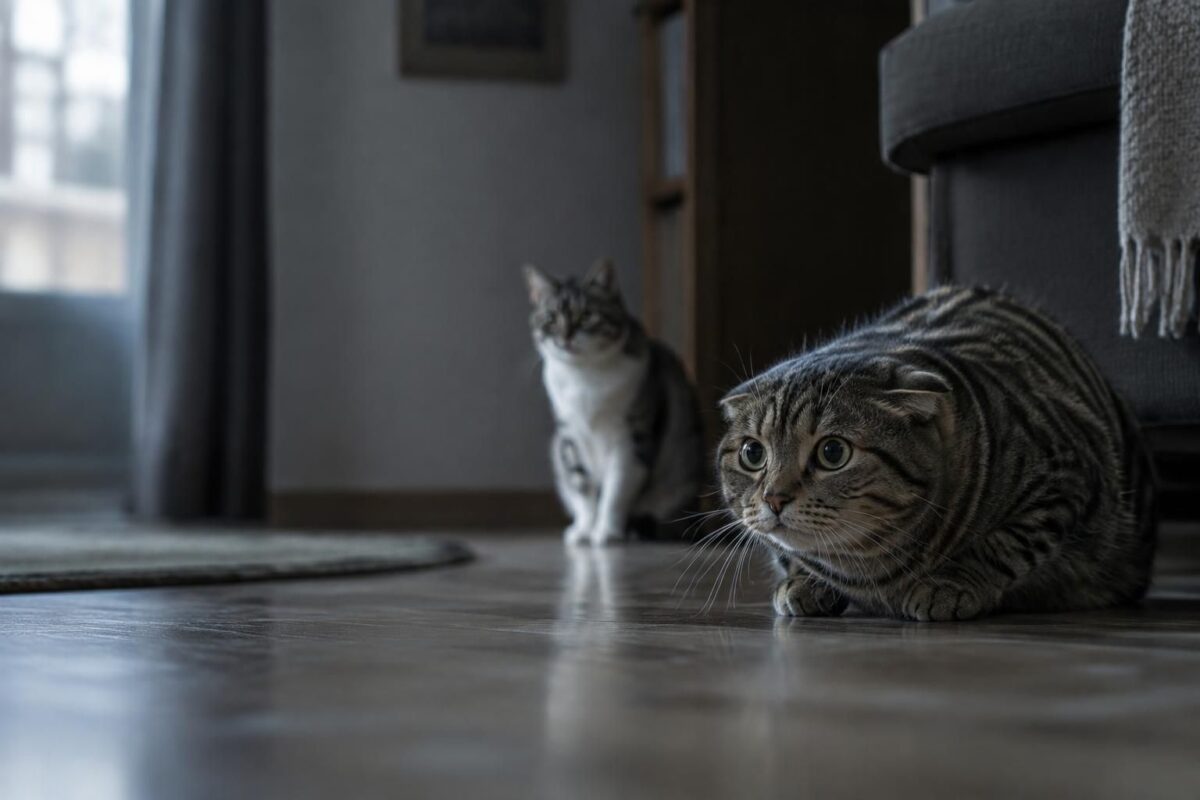
Cats: silence after the shock is never neutral
Hello, Judith here. After an accident, a cat’s silence should be taken seriously: it may signal pain, fear, or shock and requires prompt veterinary assessment. An animal that hides or stops responding as usual isn’t necessarily “sulking.” If in doubt, observe your cat without disturbing them and contact a veterinarian.
What to do immediately
- Settle your cat in a quiet place, away from children and other animals.
- Limit their movement and don’t force them to get up or let you handle them.
- Observe their breathing, balance, alertness, and the color of their gums.
- Don’t give them any human medication or force them to drink or eat.
- Call a veterinarian promptly, especially after a fall, collision, or bite.
After a fall or accident, a cat may seem merely quiet even though they have an injury that isn’t visible. You can also read these guides on refusing to eat after an accident and useful steps to take before calling the veterinarian.
Cat silent after an accident: what this change may indicate
Feline behavior often changes when an animal is in pain or stressed. Hiding, staying still, avoiding contact, or no longer vocalizing are signs to watch for, but none of them alone can determine the severity of an injury.
Silence is therefore no proof that everything is fine. Cats sometimes hide their vulnerability; after an accident, an internal injury may be present even if no wound is visible. Animal welfare then depends on calm observation and professional advice, not on waiting for a dramatic sign.
If your cat stays calm but responds normally
A cat may seek solitude because they’ve been frightened. If they’re breathing without difficulty, remain conscious, and move as usual, give them a quiet space and monitor them for any changes without constantly disturbing them.
If their silence is accompanied by other signs
Rapid or difficult breathing, very pale or bluish gums, marked weakness, collapse, bleeding, or difficulty walking require urgent veterinary care. After a serious accident, don’t wait for symptoms to appear before seeking advice.
| What you observe | What you can do |
|---|---|
| They’re hiding, but breathing normally and alert | Keep them calm and call the veterinarian to explain what happened. |
| They’re limping, groaning, or refusing to move | Limit their movement and promptly seek veterinary advice. |
| They’re having trouble breathing, collapsing, or have pale gums | Contact an emergency veterinary service immediately. |
How to respond without making them more afraid
Approach them slowly, speak softly, and avoid sudden movements. An injured cat may react out of fear, even toward someone they know; don’t pick them up if it seems painful or unsafe.
If they need to be transported, prepare a sturdy carrier and move them as little as possible. If you’re unsure how to handle them, ask the veterinarian for instructions over the phone: attempting treatment without guidance can make some injuries worse.
After the accident: a simple three-step process
- Make the environment safe. Remove sources of noise, keep other animals at a distance, and avoid moving your cat unnecessarily.
- Observe without delaying the call. Note the time and circumstances of the accident, then check their breathing, mobility, and alertness.
- Contact a veterinarian. Describe what happened and follow their instructions for transport or monitoring. If your cat’s condition worsens, let them know immediately.
Unusual silence after an accident deserves attention, even if the cat seems to simply want to be left alone. Animal communication also comes through changes in posture, activity, and responsiveness: noticing them early, without jumping to conclusions, helps protect your cat’s health.
Frequently asked questions about a cat’s silence after an accident
Should a cat who is silent after a fall see a veterinarian?
Yes, especially if the fall was serious or their behavior has changed. Some injuries aren’t immediately visible; call a veterinarian to find out what to do.
How can I tell if my cat is in shock?
Severe weakness, collapse, abnormal breathing, pale gums, or reduced alertness are emergency signs. Only a veterinarian can assess their condition.
Can I give my cat a human painkiller?
No. Many medications intended for humans are dangerous for cats. Don’t give them any medication without veterinary instructions.
What should I do if my cat hides after something has frightened them?
Give them a quiet refuge and observe their behavior without forcing them to come out. If the change persists, worsens, or is accompanied by a physical sign, contact a veterinarian.
Thanks for reading, Judith. If this topic resonates with you, please feel free to leave me a comment below the article.