Cats: the sudden refusal to wake up is not unusual
Hi, this is Judith. Your cat’s sudden refusal upon waking can often hide a sign of stress or a health issue, and acting quickly is crucial to prevent the situation from worsening. This unusual feline behavior is not simply a whim, but rather a form of animal communication that demands your attention. Understanding these morning habits will help you respond better to what your companion is experiencing and improve your relationship.
What to do right away
- Observe your cat’s behavior as soon as they wake up to detect any sign of distress.
- Check its environment to reduce any potential sources of stress.
- Avoid responding immediately to its meows to prevent reinforcing the ritual.
- Plan a veterinary consultation if this refusal persists or is accompanied by concerning symptoms.
- Gradually introduce evening play to tire out your cat and delay its morning requests.
This refusal upon waking is not insignificant. It often reflects a modified state of alert, a sense of insecurity, or a dull pain in your animal. The cat has a very precise internal clock, aligned with your daily routine. As soon as something deviates from the norm, it may express its stress by a change in the way it interacts in the morning.
The cat’s sleep needs and their impact on its habits can help you better understand these changes. Additionally, if it becomes distant or suddenly refuses contact upon waking, it is useful to read how to interpret this behavior to act effectively.
Understanding the sudden refusal upon waking
Cats are crepuscular animals; their peak activity is often at dawn. This instinctive behavior expresses itself as a phase of intense alertness. If your cat refuses to come at wake-up, this can reflect several concrete causes:
- Pain or discomfort : often an issue related to arthritis or physical discomfort that goes unnoticed.
- Stress or anxiety : changes in the home, a new family member, or unusual noise.
- Change in routine : time shift due to changes in your schedule or lighting.
- Sensory problems : aging, hearing or vision loss that may alter its behavior.
- Unmet need : hunger, thirst, or insufficient playtime the previous day.
3-step procedure to help your cat upon waking
- Step 1: Listen and observe. Note any unusual changes in its behavior, appetite, or mobility.
- Step 2: Adjust the routine. End the day with more intense play and a light meal before bedtime to reduce its morning solicitations.
- Step 3: Consult a veterinarian. If the refusal persists or is accompanied by worrying symptoms, a medical check-up is essential.
Common traps to avoid
A common mistake is to give in to the cat’s morning demand for fear of the behavior escalating. Yet, regularly offering food or attention upon waking reinforces this reflex. The trick is to ignore its nighttime calls completely until a reasonable hour.
If your cat shows this sudden refusal upon waking when it had been affectionate until now, it is important not to underestimate signs of distress. Sometimes a simple change such as joint pain or a mild infection can alter its behavior and signal deep discomfort. In some cases, the altered state of alertness can even indicate a cognitive disorder, especially in older cats. Discovering the causes and solutions will give you relevant leads to act.
Table: Specific signs and recommended actions for morning refusal
| Observed Sign | Possible Cause | Recommended Action |
|---|---|---|
| Refusal to get out of its basket on waking | Joint pain or fatigue | Veterinary consultation, adjust sleeping arrangement |
| plaintive meows on waking | Stress or anxiety | Reduce stressful stimuli, environmental enrichment |
| Lack of appetite in the morning | Digestive or medical problem | Assessment and prompt veterinary follow-up |
| General avoidance of contact | Discomfort or cognitive disorder | Medical examination, behavioral support |
| Excessive sleep or aggression | Pain or neurological disorder | Urgent veterinary consultation |
Some concrete cases to better understand
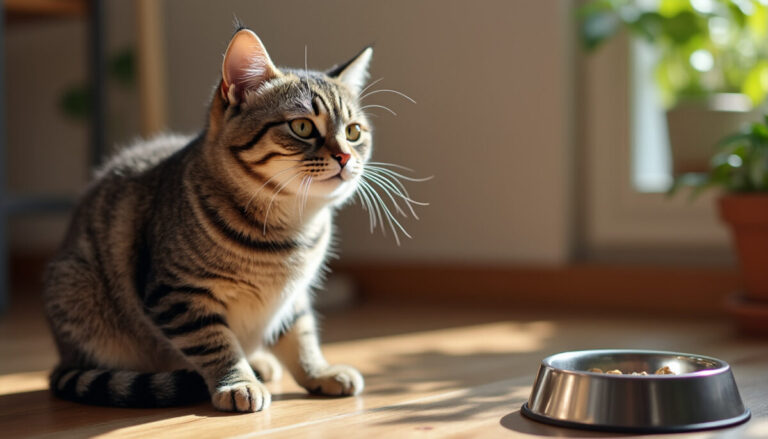
If it’s hunger, your cat associates waking with the distribution of kibble. The solution is often to adopt an automatic feeder or an interactive toy to shift this moment. Thus, the morning alert becomes less dependent on your presence.
If it’s a sign of stress, the sudden refusal upon waking may be accompanied by distant or aggressive behavior. Bring more stability to its environment, with regular routines and a calm space so it feels safe.
Morning habits that strengthen the bond
Cats are creatures of routine. Respecting and understanding their cycles allows you to turn waking into a moment of gentleness. Even if your cat shows signs of refusal, patience and consistency in care and attention foster mutual trust. This owner-pet relationship then becomes a peaceful space of exchange where everyone knows what behavior to expect.
Don’t forget that behind every sudden refusal upon waking lies an authentic expression of a need or discomfort to decode. The important thing is to stay attentive, adjust your response, and discuss its state with a professional if needed.
Why does my cat suddenly refuse contact upon waking?
This refusal may signal physical discomfort, pain, or stress. A veterinary consultation is advised to identify the cause.
How to differentiate a whim from a real problem in a cat?
Careful observation of other signs, such as loss of appetite, aggression, or changes in habits, helps identify a serious problem.
What to do if my cat meows a lot upon waking?
Avoid giving in to its demands immediately, play with him in the evening, and use an automatic feeder to feed the cat—these are options to test.
My cat sleeps a lot more than before, is that normal?
Excessive sleep can indicate illness or arthritis. A veterinary examination is recommended to rule out these causes.
How to improve my cat’s sleep and avoid this refusal upon waking?
Fostering a calm environment, daytime stimulation and a satisfying evening meal can help regulate the sleep cycle and waking behavior.
Thank you for your interest; Judith. It would be kind to leave me a comment at the end of the article; thank you all