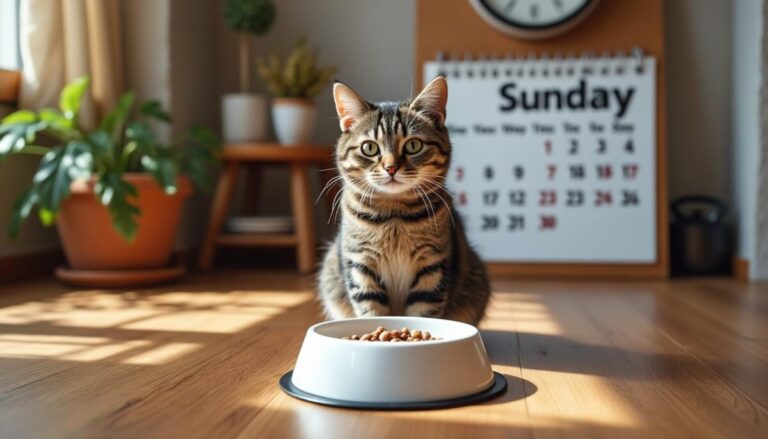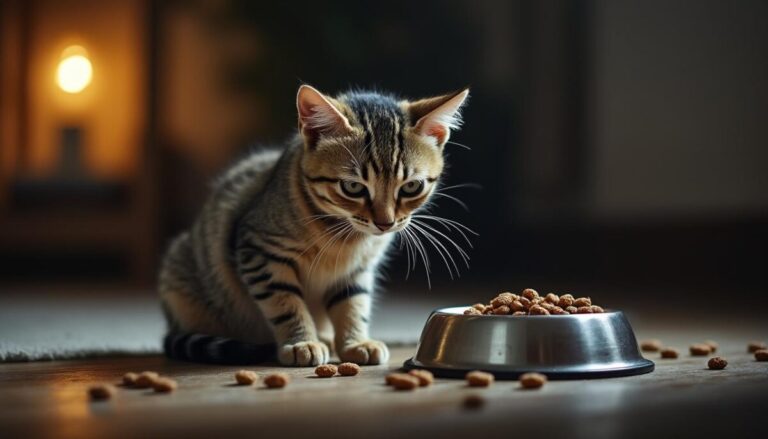
My cat eats little and then nothing: the turning point to watch
Hi, it’s Judith. If your cat eats very little and then completely refuses food, it’s often a sign of a problem that shouldn’t be taken lightly. Act quickly, because this change can indicate serious issues, particularly digestive or dental problems, that require veterinary attention.
To do immediately
- Observe his behavior carefully, and note how long he has been eating less.
- Offer him moist and appetizing food, such as cooked chicken or warmed pâté.
- Monitor for associated signs: vomiting, diarrhea, lethargy, or visible pain.
- Do not let him fast for more than 24 to 48 hours or there is a risk of serious hepatic lipidosis.
- Consult a veterinarian quickly, or take advantage of a veterinary teleconsultation service if the journey proves complicated.
Whether your cat eats little or not at all, it’s always a strong signal from its body. This message could reveal simple stress or point to a more serious condition, such as a digestive problem or dental pain. To better understand this behavior, it’s helpful to learn about the mechanisms of feline anorexia and observe the early signs before consulting a professional. Also, discover practical advice on… How to react to a cat that eats little and not to succumb to unnecessary panic.
Understanding why your cat eats little and then nothing
When a cat suddenly starts eating less, it’s often because it’s in pain, even if it doesn’t show it. In cats, pain often goes unnoticed: they hide, continue grooming, and may even purr while suffering. Refusal to eat is then a survival mechanism. There are two main categories to distinguish:
- True anorexia – The cat simply doesn’t want to eat, often because of a general illness, stress or internal pain.
- Pseudo-anorexia – The cat wants to eat but cannot, its mouth or jaw hurts, or something is blocking the food intake.
If your cat sniffs its food bowl, backs away, or meows while trying to eat, consider the possibility of dental pain or a mechanical issue. This distinction is crucial for acting quickly and effectively.
Common causes of loss of appetite in cats
There are several reasons why a cat might eat little before refusing to eat altogether:
- Dental or oral problems: Tartar, gingivitis, stomatitis or broken teeth make chewing painful.
- Digestive problems: gastritis, intestinal foreign body, chronic inflammation.
- Chronic diseases: kidney failure, diabetes, liver disease, hyperthyroidism.
- Pain or stress: Osteoarthritis, injuries, environmental changes, anxiety.
- External factors: sudden change in diet, unusual smells or unsuitable food bowl.
3-step procedure for quick action
- Precise observation – Note the duration of the loss of appetite, the amount he eats, whether he drinks, vomits or has other symptoms.
- Improved palatability – Gently offer moist, lukewarm food, and avoid sudden changes. Avoid dry food if oral pain is suspected.
- Adapted veterinary consultation – Make an in-person appointment or use a teleconsultation service to get a quick diagnosis and avoid serious complications.
Practical tips to get your cat to eat again
- Gently warm the food to develop the aromas.
- Change the texture: paste, mousse or small pieces.
- Distracts from stress: creates a calm and familiar corner.
- Place the food bowl away from the litter box and noisy areas.
- Clean his food bowl regularly; a dirty bowl can discourage his appetite.
Table of causes and signs to watch for
| Possible cause | Associated signs | Recommended action |
|---|---|---|
| Dental problems | Sudden refusal, drooling, withdrawal, head shaking, leaving food | Consultation for oral examination, wet food |
| Digestive diseases | Vomiting, diarrhea, abdominal pain, lethargy | Do not delay, urgent veterinary examination |
| Stress/environment | Isolation, excessive licking, change of routine | Comfort, pheromones, stable routine |
| Chronic diseases | Weight loss, increased thirst, lethargy | Regular veterinary checkups, blood tests |
| Hepatic lipidosis (complication) | Fasting for more than 48 hours, yellowing of the mucous membranes, extreme fatigue | Immediate veterinary emergency |
How can we distinguish between stress and a health emergency?
Cats are sensitive creatures. Sometimes a change in routine is enough to cause them to miss a meal, but the real danger comes from the symptoms that develop: prolonged refusal to eat, frequent vomiting, lethargy. The fear is not acting quickly enough, but in cats, 24 to 48 hours without food can jeopardize their health. If the animal shows visible pain, has changed its behavior, or if you observe dehydration, it’s time to call the veterinarian.
The key role of veterinary consultation, whether traditional or remote
A veterinarian can quickly identify the cause of food refusal, whether it’s dental, bacterial, viral, or stress-related. Modern teleconsultation services now allow for professional advice without having to move the stressed animal. In some cases, a home visit from a veterinarian will be recommended for a complete examination.
A real-life example: a cat that stopped eating after a change in kibble revealed a hidden, severe gingivitis. It was a detail its owner hadn’t noticed, but it made all the difference after a veterinary examination. Thanks to prompt intervention, its appetite returned within a few days.
Quick list of common causes and their solutions
- Mouth pain : favor moist foods, consult for dental care.
- Stress : calming with pheromones, stable routine, safe corner, teleconsultation possible.
- Digestive problems : monitor for vomiting and diarrhea, seek urgent medical attention if symptoms persist.
- Chronic diseases : regular assessments from age 7, tailored follow-up.
- Dietary changes : gradual transition over 10 to 15 days, test different textures.
My cat is refusing his food but doesn’t seem sick, what should I do?
Try offering him some lukewarm food, and observe his behavior for 24 hours. If he continues to refuse it, a veterinary consultation is recommended.
How long can a cat safely go without eating?
In general, no more than 24 to 48 hours to avoid hepatic lipidosis, a serious liver disease.
Can stress really make a cat stop eating?
Yes, cats are very sensitive to changes in their environment or the appearance of new elements, which can cause a temporary loss of appetite.
Why is my cat eating less kibble but still consuming wet food?
The kibble may be difficult to chew or less palatable if he has dental pain or a loss of smell.
When should you consult a veterinarian urgently?
If your cat has not eaten for more than 24 hours, is projectile vomiting, has difficulty breathing, is very lethargic, or has yellow gums, consult a veterinarian immediately.
Thank you for your interest, Judith. It would be kind of you to leave a comment at the end of the article. Thank you all.