
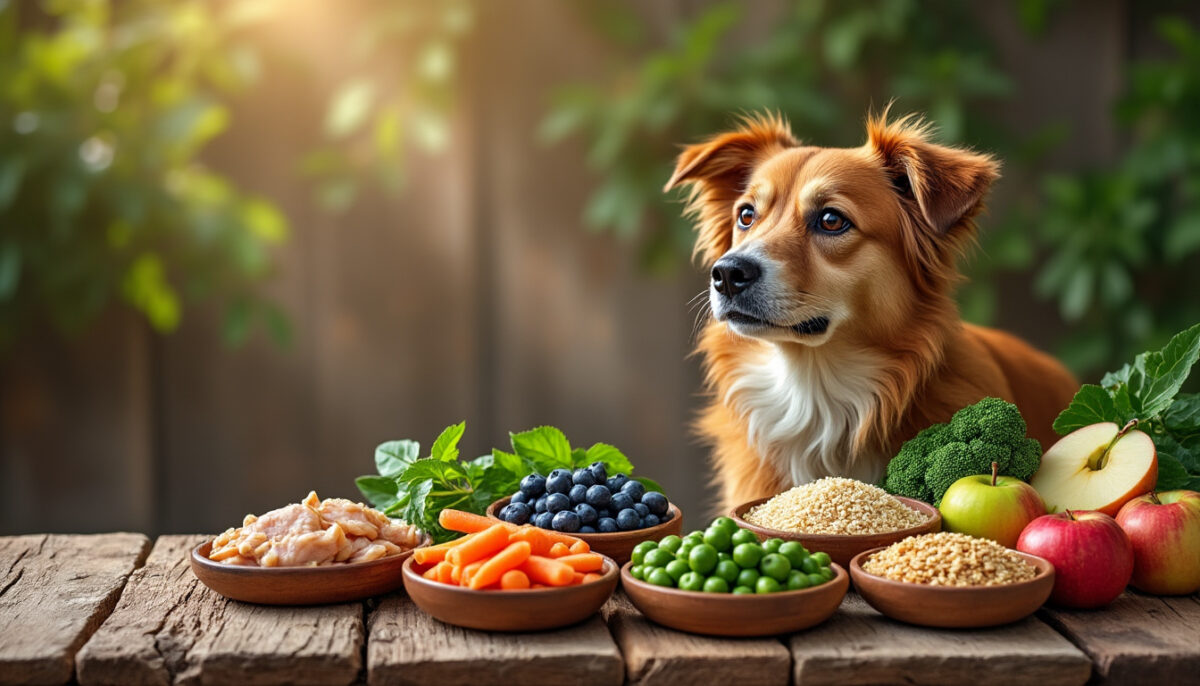
Dog food: how to vary it without upsetting their stomach
Hi, it’s Judith. To vary your dog’s diet without upsetting their stomach, you need to change it slowly, following a gradual transition over a week, while choosing suitable foods rich in probiotics for dogs. This pace protects their sensitive stomach and ensures a balanced diet.
To do immediately
- Introduce the new food gradually over 7 days, mixing it with the old food.
- Vary your protein sources (chicken, fish, lamb) to avoid allergies and deficiencies.
- Complete with fresh, unseasoned cooked foods, such as green beans or courgette.
- Add dog probiotics to strengthen the intestinal flora.
- Observe digestive reactions: bowel movements, appetite, vomiting or itching.
A well-executed variation prevents digestive problems and food boredom. Discover more here how to vary your diet without risk and advice for a balanced dog diet in the long term.
Why vary your dog’s diet without risking digestive problems?
Develop the dog nutrition is essential to avoid deficiencies and maintain health. However, the key is the dog food variation Be careful: too rapid a change can upset the stomach. Appropriate dog food provides fiber and nutrients that aid digestion and prevent digestive problems, especially if your dog has a sensitive stomach.
Varying protein sources limits the development of food allergies, which are often triggered by repetition. Dogs often enjoy a more varied diet, which reduces boredom at mealtimes and stimulates their appetite. Furthermore, certain ingredients rich in antioxidants strengthen their immune system.
The basics of a balanced dog diet with controlled variation
- Varied proteins: Chicken, beef, fish or lamb, rotated every 2-3 weeks.
- Cooked vegetables: Courgettes, green beans, carrots for gentle fibers.
- Natural supplements: Fish oils rich in omega-3, probiotics for dogs.
- Smooth transition: gradual mixing to prepare the intestinal flora.
- Hypoallergenic foods: for intolerant or sensitive dogs.
Once this framework is in place, diversity becomes a real health booster.
Keep an eye on key moments to modify your dog’s diet.
Nutritional needs change depending on life stage and health. A puppy requires a rich diet for growth, while a senior pet will benefit from a lower-fat diet enriched with antioxidants. Pregnant or lactating females have increased energy requirements. To find out what’s suitable for your pet’s stage of life, explore the advice of a [veterinarian/expert/etc.]. optimal canine nutrition.
| Life stage | Nutritional needs | Recommended brands or types |
|---|---|---|
| Puppy | High in protein, calcium and essential fatty acids for growth | Royal Canin, Hill’s Science Plan |
| Adult | Energy balance adapted to the activity | Purina Pro Plan, Edgard & Cooper |
| Senior | Less fat, more antioxidants and vitamins | |
| Pregnant/Breastfeeding | Hill’s Science Plan, Royal Canin |
A 3-step procedure to ensure a successful food transition without upsetting a dog’s sensitive stomach
- Step 1: Start by mixing 75% of the old food with 25% of the new food for 3 days.
- Step 2: Next, a half-and-half balance for 2 days to get the digestive system used to it.
- Step 3: Finish with 75% of the new food over 2 days before switching completely.
During this phase, carefully observe the reaction: normal bowel movements and a stable appetite are good signs. If diarrhea or vomiting occurs, slow down the transition.
Practical tips to avoid common mistakes when changing your diet
In recent years, many owners have seen their dogs suffer from unnecessary health problems. A common mistake is to abruptly change their dog’s food or introduce new foods too quickly. Others forget about canine probiotics, which are essential for maintaining a healthy gut flora.
To minimize risks, always prioritize food quality. Certain ingredients like garlic, onion, chocolate, and grapes should be strictly avoided. Also, introducing new foods gradually helps prevent digestive upset.
An anecdote: a dog I know started refusing his meals when his owner suddenly introduced a new type of kibble. A gentler transition was enough to resolve the problem quickly.
A well-thought-out variety in the service of physical and mental health
Varying the tastes and textures of your dog’s food helps maintain their interest and can prevent behaviors related to boredom or anxiety. Occasionally adding wet food, carefully selected fruits, or vegetables promotes a richer, more stimulating diet while remaining easily digestible.
Natural supplements such as omega-3 and probiotics for dogs strengthen the skin, coat and immune system.
A detailed list of actions to remember for a varied and safe diet
- Introduce the new feature gradually over several days.
- Alternate protein sources every 2-3 weeks.
- Add vegetables suitable for digestive fiber.
- Offer food without additives or seasonings.
- Supplement with dog probiotics for intestinal health.
How long does the dietary transition last?
It usually takes a week, but can last longer depending on your dog’s sensitivity. The key is to observe their behavior and digestive system.
Which foods should be absolutely avoided?
Toxic foods such as garlic, onion, chocolate, and grapes should be avoided, as well as unsuitable raw vegetables.
Is it important to vary the proteins?
Yes, it helps prevent allergies and provides a full spectrum of essential amino acids.
How can I tell if the food is suitable for my dog?
A good balance can be seen in appetite, regular stools, a shiny coat and a dynamic behavior.
Which natural supplements are recommended?
Oils rich in omega-3 and probiotics are particularly beneficial.
Thank you for your interest, Judith. It would be kind of you to leave a comment at the end of the article. Thank you all.


