
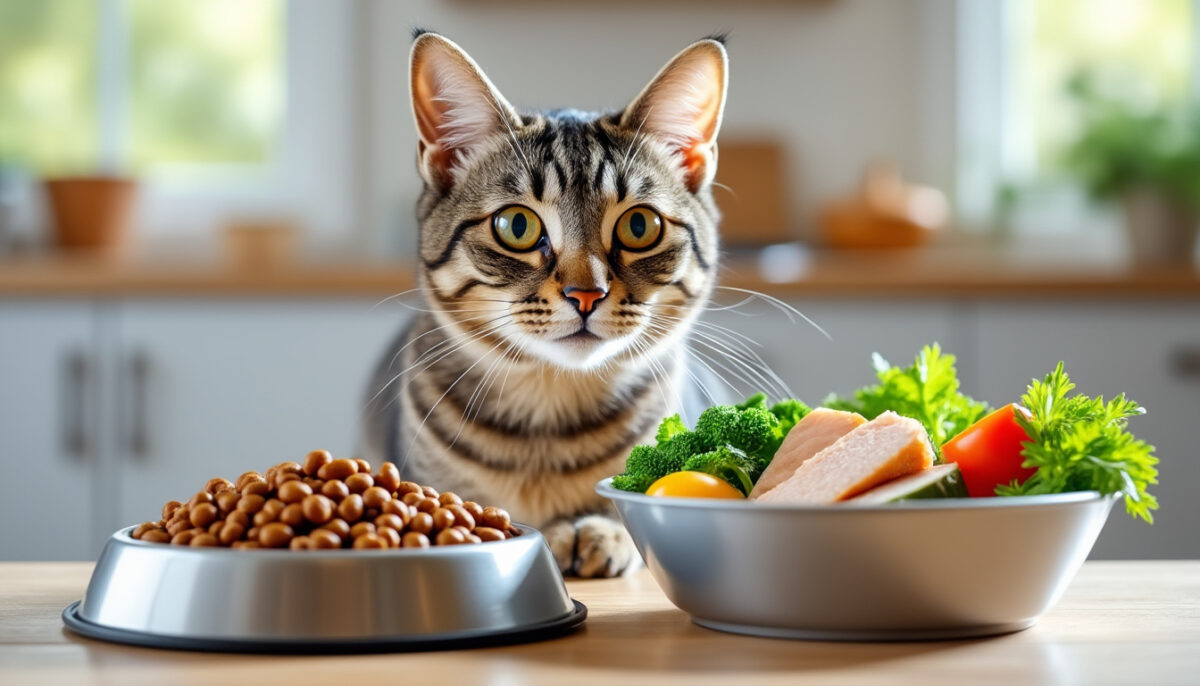
Cats: Should we offer a different diet or avoid making the mistake?
Hi, it’s Judith. It’s important to diversify your cat’s diet by combining dry and wet food to avoid the mistake of feeding them only one type of food. This dual-feeding approach respects their water needs and their strict carnivore digestion. Feeding your cat isn’t just about taste; it’s about ensuring their long-term health. Providing variety and quality in their food bowl helps prevent weight gain and urinary problems, two common issues these days. What should I feed a cat? And Feeding your cat in 2025 offer clear paths to take effective action.
To do immediately
- Add a portion of wet food each day to naturally hydrate your cat.
- Choose kibble that is appropriate for your child’s age and health condition.
- Avoid sudden dietary changes; opt for a gradual transition.
- Monitor your weight to prevent overweight, which often goes unnoticed.
- Consult a veterinary nutritionist for a personalized diet if you opt for homemade meals.
Why avoid the mistake of monotonous feeding in cats?
Cats are obligate carnivores, with a digestive system adapted to a diet rich in animal protein. Offering only dry food, despite its convenience, can lead to low water intake. The fact that cats naturally drink little increases the risk of dehydration, which weakens their kidneys and increases the risk of urinary problems. Hence the importance of wet food like pâté, which supplements hydration and contributes to a good nutritional balance. A common mistake when feeding cats invites us to question this habit.
Another key point is that a cat’s gut flora is very sensitive. A sudden change in diet, or a single-food diet, can lead to digestive upset and poor nutrient absorption. This is all the more reason to successfully introduce a gradual and varied diet to ensure your cat’s health and vitality.
The tangible benefits of a diverse diet
- Improved hydration and reduced urinary problems.
- Better weight management through a complete and balanced diet.
- Strengthening of the intestinal flora and the immune system.
- Stimulating appetite and reducing food neophobia in picky cats.
- Prevention of long-term nutritional deficiencies.
How to successfully transition to a varied diet?
It’s not enough to simply change habits abruptly. The dietary transition must be gradual, respecting your cat’s digestive and behavioral sensitivities. This prevents stress, vomiting, or refusal to eat. Here is a practical guide to doing it right.
| Clear action | Objective | |
|---|---|---|
| Step 1 | Introduce a small amount of the new food (e.g., a spoonful of wet food mixed with the usual kibble). | Accustom the cat to the taste and smell without rushing it |
| Gradually increase the amount of the new food over several days. | Allowing the gut flora to adapt | |
| Step 3 | Offer the new food in its entirety once tolerance is established. | Successful transition and balanced diet |
If your cat is sensitive to change, being particularly patient is key. If it’s a fussy eater, stimulating its appetite with probiotics can improve its digestion.
Natural foods are an option to consider, but with caution.
Homemade meals often offer a significant nutritional advantage, with fresh meats and appropriate ingredients. This trend is expected to grow among owners concerned about their feline health in 2026. However, without expertise and veterinary supervision, there is a very real risk of dietary errors and deficiencies.
Choosing natural foods therefore requires rigorous monitoring. Dialogue with an animal nutritionist or veterinarian remains essential to guarantee a complete balance of protein, calcium, phosphorus, and vitamins.
Avoiding overweight will be a priority in cat nutrition by 2026.
Today, nearly one in two cats in France is overweight. The most common mistake is offering too much kibble or high-calorie food without adjusting the portion size according to the cat’s activity level. This situation promotes the development of diseases such as diabetes, particularly in neutered and less active cats.
Preventing excess weight involves:
- Strict control of daily portion sizes.
- Adopting “light” food or food specially formulated for neutered cats.
- The integration of regular, adapted physical activities.
If you have a cat that lives indoors, be aware of the risk of inactivity and adjust its diet accordingly to avoid common mistakes. The best alternatives to a traditional diet complement these tips.
Why shouldn’t you feed a cat only kibble?
Because dry food contains little water, a cat fed exclusively on dry food can suffer from dehydration and urinary problems. Combining it with wet food helps optimize its hydration.
How to make a safe dietary transition?
Introduce the new food gradually over several days to weeks, mixing the old and new rations, gradually increasing the amount of the new food.
What mistakes should you avoid when preparing homemade food?
Do not improvise without veterinary or nutritionist advice, as an imbalance in minerals or vitamins can cause serious health problems.
My cat is overweight, how can I adjust its diet?
Switch to food specifically formulated for neutered or light cats, reduce portion sizes and encourage physical activity to prevent diabetes and heart problems.
Are probiotics helpful for my cat when changing its food?
Yes, they help to stabilize the intestinal flora and facilitate digestion during the dietary transition.
Thank you for your interest, Judith. It would be kind of you to leave a comment at the end of the article. Thank you all.


