First Aid: This Paw Care Step Is Often Done Wrong
Hello, Judith here.
For a paw injury, the step people often get wrong is rubbing or disinfecting too vigorously: rinse gently, then apply direct pressure to the wound if it’s bleeding.
An injured paw can be alarming, especially when a dog or cat is limping or struggling. By staying calm, you can limit the pain and avoid making the injury worse before getting advice from a vet.
What to do right away
- Move the animal away from danger and approach without making any sudden movements.
- If possible, ask someone else to hold the animal calmly. An animal in pain may bite, even if it is usually gentle.
- If there is bleeding, place a clean compress on the wound and maintain continuous pressure.
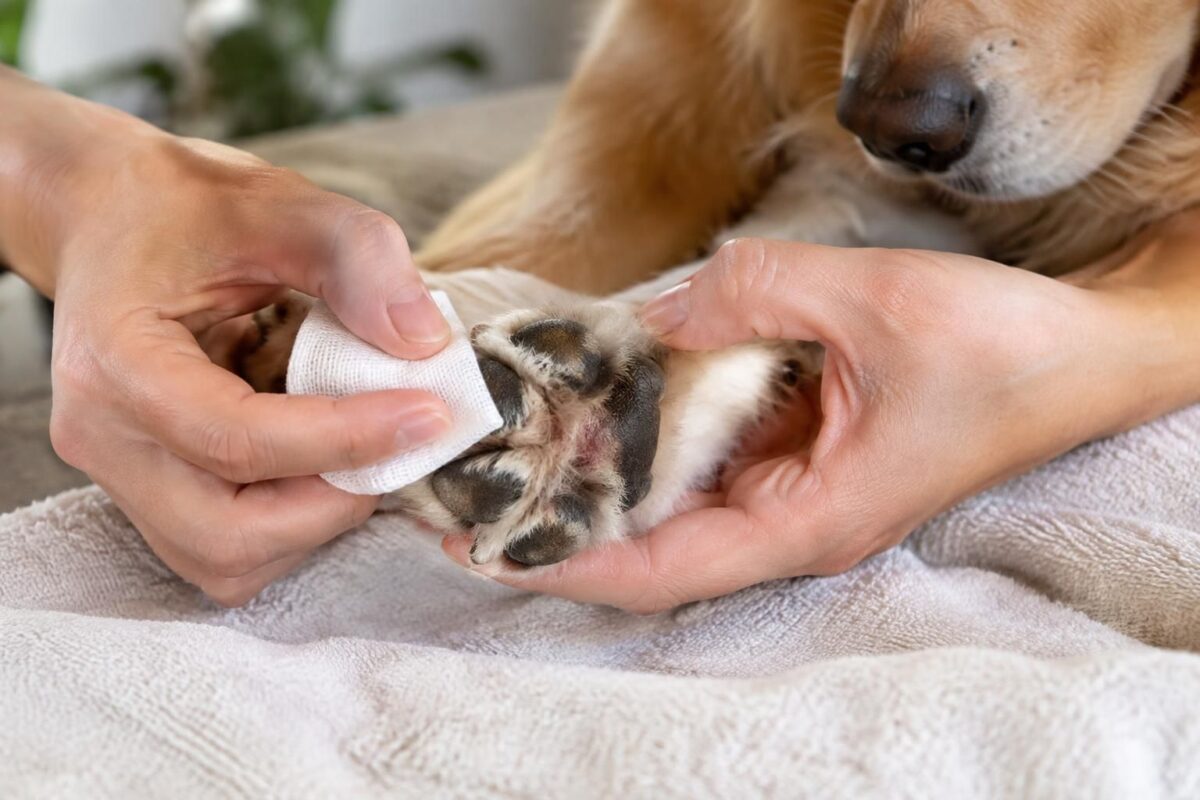
- Rinse away dirt with saline solution or clean water, without rubbing.
- Call an emergency vet if the wound is deep, the bleeding continues, or the animal can no longer put weight on the paw.
First aid for animals starts with a calm approach and simple actions. To better remember the right order of steps, read this guide to first aid for animals and these tips for treating an injured paw.
A common pitfall: trying to clean or bandage it too quickly
When faced with an injury, you may be tempted to rub the wound to remove every grain of dirt, or pour alcohol or hydrogen peroxide on it. These actions may irritate the tissue and cause the animal more pain: the wound should be disinfected with a suitable product recommended by a vet.
Another mistake is wrapping a bandage tightly so it stays in place. A bandage that is too tight can restrict circulation and cause swelling. If you apply a temporary veterinary bandage, it should stay clean and be loose enough; ask the clinic for advice on keeping it in place safely.
Identify the type of paw injury
| What you observe | Safe action | When to call |
|---|---|---|
| Small scrape, with no significant bleeding | Rinse gently and prevent licking | If the area becomes red, swells, or seems painful |
| Bleeding paw | Apply pressure to the wound with a clean compress | If blood soaks through the compress or does not stop |
| Embedded object, deep wound, or badly cut paw pad | Do not remove the object and limit movement | Contact an emergency vet promptly |
| Marked limping or a deformed paw | Do not manipulate the joint | Have the animal assessed right away |
A walk can leave a thorn in a paw pad or a small cut between the toes. Paw pad care requires a careful examination: if a foreign object is deeply embedded, pulling it out could make the injury worse. For both dog health and cat health, it’s best to let the vet intervene.
Clean and protect a paw without making the wound worse
Before touching the injury, settle the animal somewhere quiet and well lit. If pain makes the animal anxious, don’t force an examination: everyone’s safety matters during first aid, too.
A simple 3-step procedure
- Look without pulling on the paw. Locate the injury, assess its size, and check for any objects. If the animal reacts strongly, stop and call the veterinary clinic.
- Rinse and apply pressure if needed. Use saline solution or clean water to remove surface dirt. If there is bleeding, apply firm, continuous pressure with a compress for several minutes, without repeatedly lifting it to check.
- Protect the paw and seek advice. Keep the paw clean, limit movement, and prevent licking. Don’t apply human medication or ointment without veterinary advice; a professional can tell you whether a bandage or an appointment is needed.
If the bleeding continues despite applying pressure, the wound is gaping, or the animal is lethargic, don’t waste time trying multiple home treatments. Call the vet and follow their instructions while you’re on your way.
When a paw injury becomes a veterinary emergency
A small scratch is not as serious as a deep wound or heavy bleeding. Prompt veterinary attention is also needed if a paw pad is torn, a nail has been ripped off, the paw is very swollen, or the animal refuses to walk.
Don’t give pain medication intended for humans: some are dangerous for animals, even in small doses. If in doubt, call the clinic to find out whether the animal needs to be examined immediately.
How long should you apply pressure to a bleeding wound?
Maintain continuous pressure with a clean compress for several minutes, without removing it to check repeatedly. If the bleeding continues or soaks through the compress, call a vet promptly.
Can you disinfect a paw with alcohol?
No. Alcohol and some irritating products can cause pain and damage tissue. Instead, rinse with saline solution or clean water, then ask for advice before applying an antiseptic.
Should you remove a thorn stuck in the paw?
If it is superficial and comes out easily without causing significant pain, careful removal may be considered. If it is deeply embedded or the animal is struggling, do not pull it out and contact a vet.
Is a bandage always necessary?
No. A poorly applied or overly tight bandage can impair circulation. Protect the paw temporarily if needed, and ask the vet how to cover it and when to change the bandage.
Thank you for reading, Judith. If this topic resonates with you, please feel free to leave me a comment at the bottom of the article.