
Animal First Aid: What You Should Never Give
Hi, it’s Judith. Never give human medicines to your pet, here is the golden rule to ensure secure care and avoid the toxicity fatal or poisoningThis unfortunately common practice can worsen the situation and lead to a critical veterinary emergency. Vigilance is essential to avoid confusing human remedies with appropriate treatment for domestic animals.
To do immediately
- Never give your pet paracetamol, ibuprofen or aspirin.
- If a suspicious substance is ingested, contact a veterinarian immediately.
- Get yourself a first aid kit suitable for pets.
- Keep the emergency veterinary and poison control center numbers handy.
- Educate yourself on first aid techniques specific to animals.
These precautions are essential, but it’s also important to know what to absolutely avoid. To learn more about appropriate first aid procedures, consult… this practical guide and discover the Good wound management and emergency care.
Products and foods that should be absolutely avoided for domestic animals
Our kindness sometimes leads us to want to share what brings us relief, forgetting that some products are dangerous for our pets. Chocolate, onions, garlic, alcohol, as well as sugary or caffeinated drinks have high toxicity. They can cause vomiting, diarrhea, or even severe heart problems.
Similarly, some human medications, even in small doses, can cause irreversible liver or kidney damage. Paracetamol and ibuprofen are prime examples that should never be given. Their toxicity is so large that even a small tablet can cause irreparable damage.
Practical case:
If your dog has swallowed a piece of chocolate, you must call a veterinarian immediately instead of trying to make him vomit yourself, a gesture that is often poorly controlled and risky.
Why human medicines are a prohibition strict first aid for animals
Domestic animals have a metabolism that differs greatly from ours. What is beneficial or neutral for humans can be poisonous to them. This pharmacological incompatibility is a major reason why it is crucial to avoid all human medications. In an emergency, only treatments prescribed by a veterinarian can be safely administered.
A common mistake is administering paracetamol to reduce fever in animals. However, this medication can cause rapid liver damage in cats and lead to hemolysis in dogs. Professional advice should always be sought before giving any medication.
Precautions in case of poisoning
If you suspect poisoning, do not attempt to induce vomiting in your pet without veterinary advice to avoid worsening its condition. Obtaining a sample or an exact description of the ingested substance will facilitate prompt and appropriate treatment by a professional.
Equipment and safe techniques for effective animal first aid
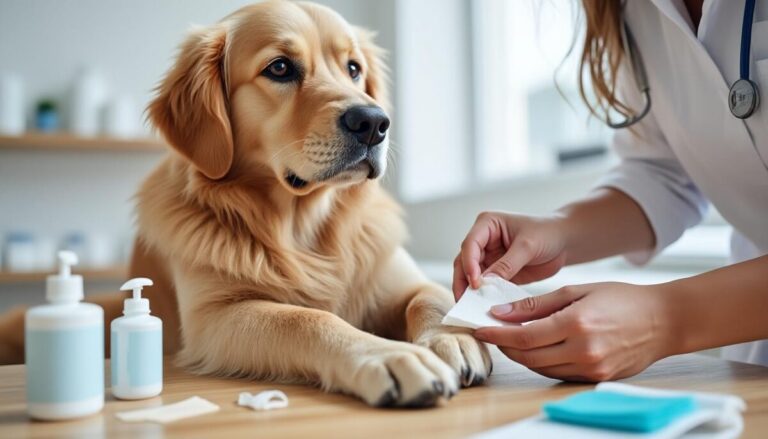
In addition to prohibiting hazardous products, preparing a suitable first aid kit is essential. This kit should contain sterile compresses, saline solution, alcohol-free disinfectant, bandages, a digital thermometer, and protective equipment such as muzzles or Elizabethan collars. This kit will allow you to take quick and appropriate action in case of a veterinary emergency.
In the event of a wound, the first step is always gentle disinfection before protecting it with a sterile dressing. many casesIt is best to protect the wound by avoiding chemical irritants or unsuitable products. Cleaning with lukewarm water or saline solution is often the safest option.
Quick 3-step procedure for an apparent wound:
- Clean the wound gently with a saline solution.
- Apply gentle pressure with a compress to stop any bleeding.
- Protect the wound with a sterile dressing and consult a veterinarian promptly.
To learn more about preparing for animal first aid, consult the comprehensive advice available on The Animal Mag is a good resource.
Summary table of products to never give to your pet
| Product or medication | Potential hazards | Recommended action |
|---|---|---|
| Paracetamol | Severe liver damage, fatal poisoning | Never administer, consult a veterinarian immediately |
| Ibuprofen | Kidney failure, gastrointestinal bleeding | Contact an animal health professional urgently |
| Chocolate | Cardiac and nervous system toxicity | Call a veterinarian; do not induce vomiting yourself. |
| Onions and garlic | Anemia, severe digestive problems | Avoid any introduction of food, increased vigilance |
| Alcohol | Nervous system depression, coma | Never give to a veterinarian; contact them immediately if ingested. |
Some essential steps to avoid critical situations
- Always monitor what your pet ingests, especially during walks.
- Learn the signs of poisoning: vomiting, excessive salivation, seizures.
- Always keep the numbers of a specialized animal poison control center handy.
- Keep an eye on his behavior to detect any unusual lethargy or agitation.
- Never improvise with medications not prescribed by a professional.
Which human medications are particularly dangerous for animals?
Anti-inflammatory drugs such as ibuprofen and paracetamol are highly toxic, and can cause serious organ failure or even death.
What should I do if my pet has ingested a toxic product?
Contact a veterinarian or poison control center immediately; do not attempt to make your pet vomit without medical advice.
How do I prepare a first aid kit suitable for my pet?
It should include sterile compresses, mild antiseptics, saline solution, bandages, a digital thermometer and protective equipment such as muzzles.
Can I disinfect a wound directly with a human product?
It is best to use a specific antiseptic or a mild saline solution to avoid any irritation or complications.
Why is it important to take a first aid course for animals?
This allows you to be prepared to react effectively in an emergency, avoid mistakes and ensure safe care for your companion.
Thank you for your interest, Judith. It would be kind of you to leave a comment at the end of the article. Thank you all.