Animal feed: these dangerous foods that are often overlooked
Hi, it’s Judith. Some everyday foods, although seemingly harmless, can cause animal poisoning serious. In 2026, to protect our companions, it is essential to identify and eliminate these dangerous foods of their environment. Vigilance is the first step towards a animal health reinforced.
To do immediately
- Immediately remove foods known to be toxic, such as chocolate or alcohol, from your pet’s reach.
- Stay informed regularly by consulting reliable sources about the food toxicity frequently updated by expert institutions.
- Learn to recognize the first signs of poisoning so you can act quickly in case of accidental ingestion.
- Avoid giving table scraps, which are often unsuitable and potentially dangerous.
- Consult a veterinarian quickly if you have any doubt about a food consumed by your pet.
To better understand the food risks related to certain foods, it is helpful to consult specialized resources such as Foods that are toxic to our animals and the guide to Purina InstituteThese links provide a clear overview of the foods to avoid absolutely to prevent poisoning and guarantee a food safety optimal for our companions.
What dangerous foods are they hiding in our homes?
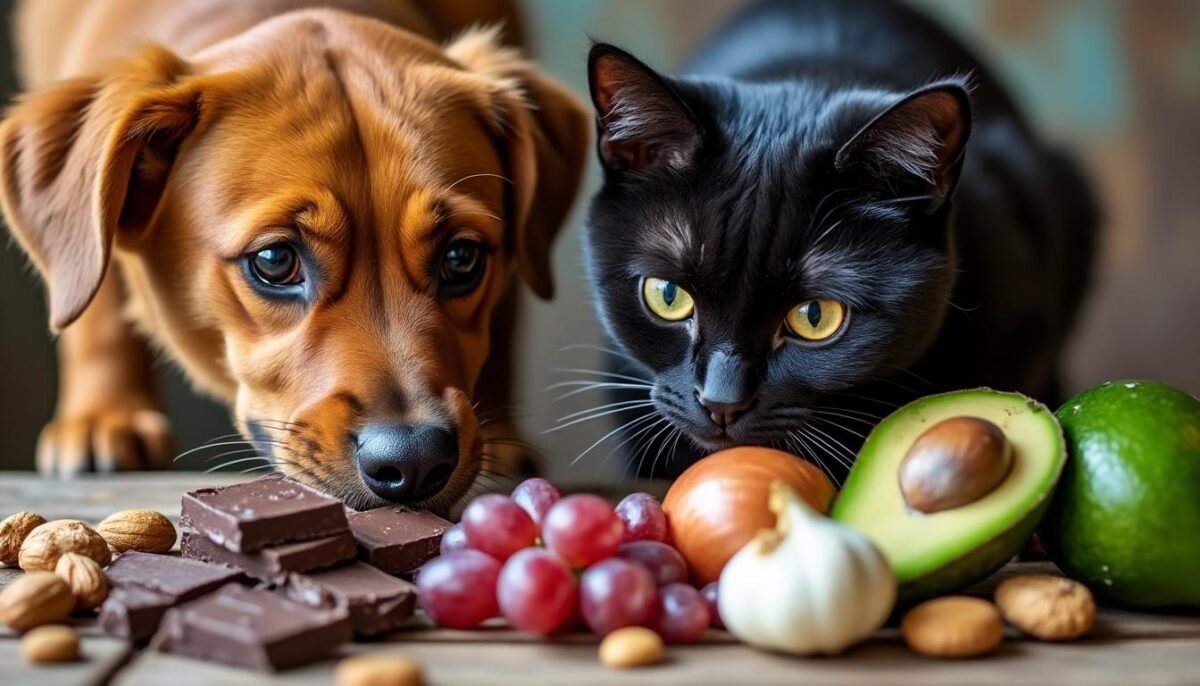
Many common foods in our homes can become deadly traps for our furry friends. For example, chocolate is often mentioned, but few know that some fruits like grapes or processed foods sometimes contain alcohol, which is poisonous to dogs and cats.
A common scenario is when an animal grabs a sweet piece of fruit left on the table; it may contain alcohol in toxic quantities. If it’s your dog, keep a close eye on it. If it’s your cat, the signs will be subtly different: lethargy, vomiting, or nervousness.
Here is a non-exhaustive but essential list to remember:
- Chocolate toxic to the heart and nervous system
- Grapes and raisins cause kidney failure
- Onions and garlic : destroy red blood cells
- Alcohol : causes central nervous system depression
- Xylitol (sweetener): severe hypoglycemia and liver damage
This list is a key tool for the poisoning preventionIt is also necessary to understand that inadequate preservation Improper storage of food can compromise its safety. Even initially safe foods can develop toxins, a point often emphasized. Animarvo in its articles.
Recognizing poisoning and how to act effectively
The key to dealing with poisoning is speed. Many owners forget the simple but crucial warning signs: sudden lethargy, vomiting, diarrhea, tremors, or difficulty breathing. Never underestimate these signs.
3-step emergency procedure
- Step 1: Identify the food ingested and the approximate quantity.
- Step 2: Contact a veterinarian immediately and follow their recommendations.
- Step 3: Never attempt to induce vomiting without medical advice; this can worsen the situation.
A common mistake is believing that a small amount can’t do any harm. However, for some animals, even small doses can have serious consequences. Prevention is better than cure, especially when you know that every minute counts.
Table of main dangerous foods, effects and advice
| Food | Main danger | Effects on the animal | Practical advice |
|---|---|---|---|
| Chocolate | Abnormal nerve stimulation | Tremors, convulsions, cardiac arrest | Keep out of reach, clean up any traces |
| Grapes | Kidney failure | Vomiting, lethargy, abdominal pain | Never give them away, keep an eye on the recycling centers |
| Onions and garlic | Destruction of red blood cells | Weakness, anemia, dark urine | Avoid all contact with food |
| Alcohol | Drowsiness, coma, or even death | Never leave fermented drinks or foods lying around. | |
| Xylitol | Hypoglycemia | Weakness, tremors, seizures | Check the labels, beware of artificial treats |
Some foods often go unnoticed in pet bowls due to a lack of information. Raising awareness is therefore essential to keep our little ones safe from harm. Establish your monitoring routine based on reliable sources such as those from [website/organization name].Handles, the agency that is committed to animal and food safety.
FAQs to better protect your pet
Is it safe for my cat to eat table scraps?
Table scraps should be avoided as they often contain dangerous foods or foods that are unsuitable for the specific nutritional needs of cats.
What should I do if my dog has eaten chocolate?
Do all dogs react the same way to toxic foods?
No, toxicity varies depending on the size, breed, and health of the animal. Some are more sensitive than others.
Why is xylitol dangerous for animals?
Xylitol causes a rapid drop in blood sugar and can lead to serious liver damage, which justifies vigilance regarding sugary products.
How can I properly store my pet’s food?
Store it in a cool, dry place, away from moisture and insects to prevent the development of toxins.
Thank you for your interest, Judith. It would be kind of you to leave a comment at the end of the article. Thank you all.