
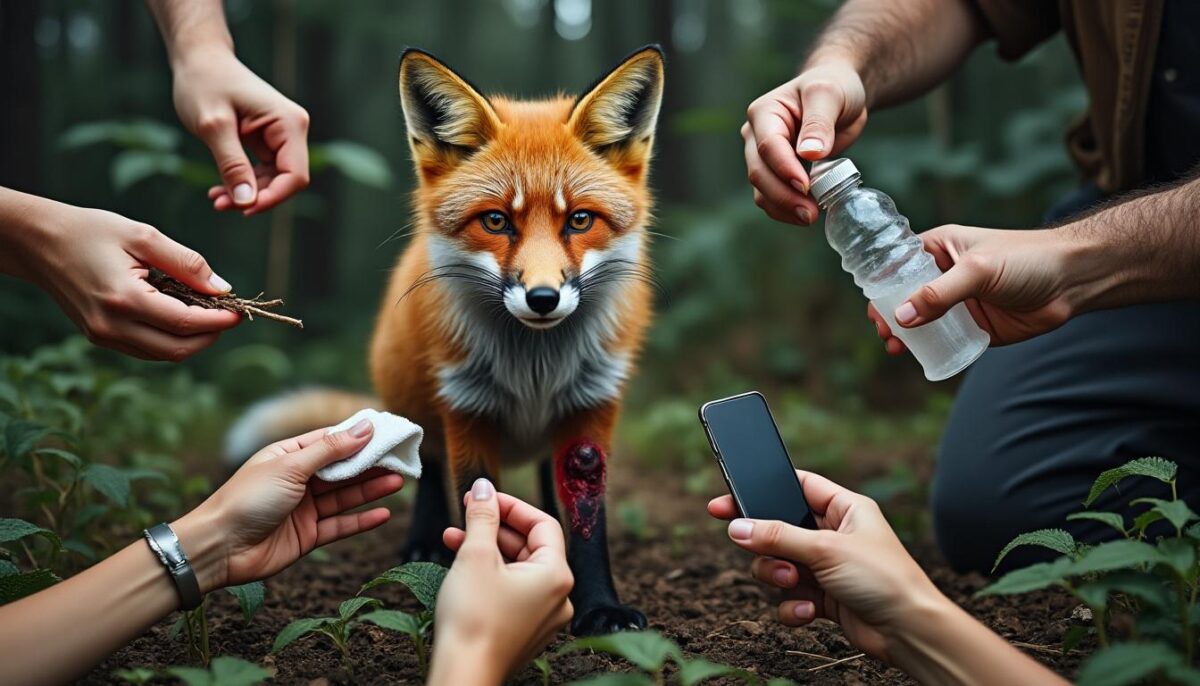
Injured wild animal: 5 useful steps before calling for help
Hi, it’s Judith. If you encounter an injured wild animal, the five key steps before calling a professional are: ensure your own safety, identify the animal, avoid feeding it, calm it without moving it, and contact the appropriate emergency service for the species. These quick actions can save lives while respecting the animal’s fragile nature.
To do immediately
- Turn on your hazard lights, park safely and put on your vest before getting out.
- Observe the animal without approaching it to identify its species and condition.
- Do not give him food or water, this may worsen his condition.
- If you can, cover him with a cloth to calm him without moving him.
- Call the appropriate center or structure depending on the species (OFB, gendarmerie, care center).
These reflexes guarantee your safety and that of the animal. To learn more, you can consult the advice for rescue an injured animal or discover who the right contacts are on Who to call for an injured wild animal.
Prioritize your safety above all else to act effectively.
Safety is the first priority. Before even thinking about the animal, get yourself out of the danger zone. Turn on your hazard lights, pull over to the side of the road, and put on a high-visibility vest. Place a warning triangle at least 30 meters ahead to alert other drivers. This helps prevent chain-reaction accidents. An injured animal can run into traffic or react violently out of fear. Calm and caution are essential.
Once your area is secure, you can observe the animal from a distance to assess the severity of the situation and anticipate your actions. This is already a great help to the animal.
A concrete example
A walker found an injured deer on the side of the road. He followed the proper procedure, thus avoiding putting himself in danger. He then called emergency services, who responded quickly, proving that your safety is essential for everyone’s survival.
Identifying the species: key to legal proceedings and proper contact
Each type of wild animal is treated differently by law and requires a specific response. For example, a hedgehog or a bird of prey is protected and must be quickly entrusted to an approved center without being moved just anywhere. For these species, contact the French Office for Biodiversity or a wildlife rehabilitation center first.
Conversely, a roe deer or a wild boar, known as “big game,” are subject to hunting regulations. It is forbidden to collect or transport them. In this case, the gendarmerie should be contacted, and they will then liaise with the relevant authorities.
| Type of animal | Legal status | Who to contact | Authorized transportation | Penalties for non-compliance |
|---|---|---|---|---|
| Protected species (birds of prey, hedgehogs) | Full protection | OFB or care center | Tolerated only in emergencies | Until €150,000 fine and 3 years from prison |
| Big game (deer, wild boar) | Hunting law | Gendarmerie or hunting federation | Prohibited without authorization | €1500 fine (5th class offence) |
| Common, unprotected species | General diet | Care center or veterinarian | Tolerated towards center | No specific sanction |
Why should you never feed an injured wild animal?
This seemingly natural action can be fatal. An animal in shock or hypothermia should neither eat nor drink. Feeding or forcing an animal to drink often causes it to choke (aspiration), which leads to fatal pneumonia. Furthermore, its digestive system is shut down, so it cannot assimilate food. The best help is to provide a passive source of heat, such as a hot water bottle wrapped in a cloth.
In the Sierra de France, several experts emphasize that rapid transport to a specialized center is the most effective rescue measure, not home-cooked meals. Remembering this idea can truly save lives.
How to handle an injured bird without hurting it or yourself
Catching a wild bird requires method and calmness. Always wear thick gloves; this is non-negotiable: some birds, like birds of prey, have dangerous talons. Cover the bird with a towel or jacket to calm it by plunging it into darkness. Then, gently restrain its wings by pressing them against its body to avoid breaking them. For species with dangerous beaks or feet (wading birds, birds of prey), hold the head and legs. Then place the bird in a cardboard box with ventilation holes, never in a cage, which could injure it.
This restraint technique is recognized by professionals and essential to preserve the chances of rescue.
3-step procedure to follow
- Step 1: Assess the situation Secure the road remotely, and identify the species.
- Step 2: Never feedCalm the animal with a cloth, avoid moving it unless there is a proven emergency.
- Step 3: Contact the appropriate person according to the table above for professional support.
Common questions to answer quickly and effectively
An injured animal is running away, should I chase after it?
No, this increases his stress and could worsen his injuries. Observe him from a distance and contact a medical center.
Is it safe to transport an injured wild animal to a veterinarian?
It is prohibited except in emergencies involving an approved care center, particularly for protected species.
What first aid should be given to an injured hedgehog?
Calm him under a cloth, place him in a ventilated box with a passive heat source, without giving him food or water, and call a specialist center.
Is it useful to contact the fire department?
They are not always trained to deal with wildlife. It is best to call the police or a specialized center, depending on the species.
Thank you for your interest, Judith. It would be kind of you to leave a comment at the end of the article. Thank you all.