My cat has stopped eating and is hiding: what should I think?
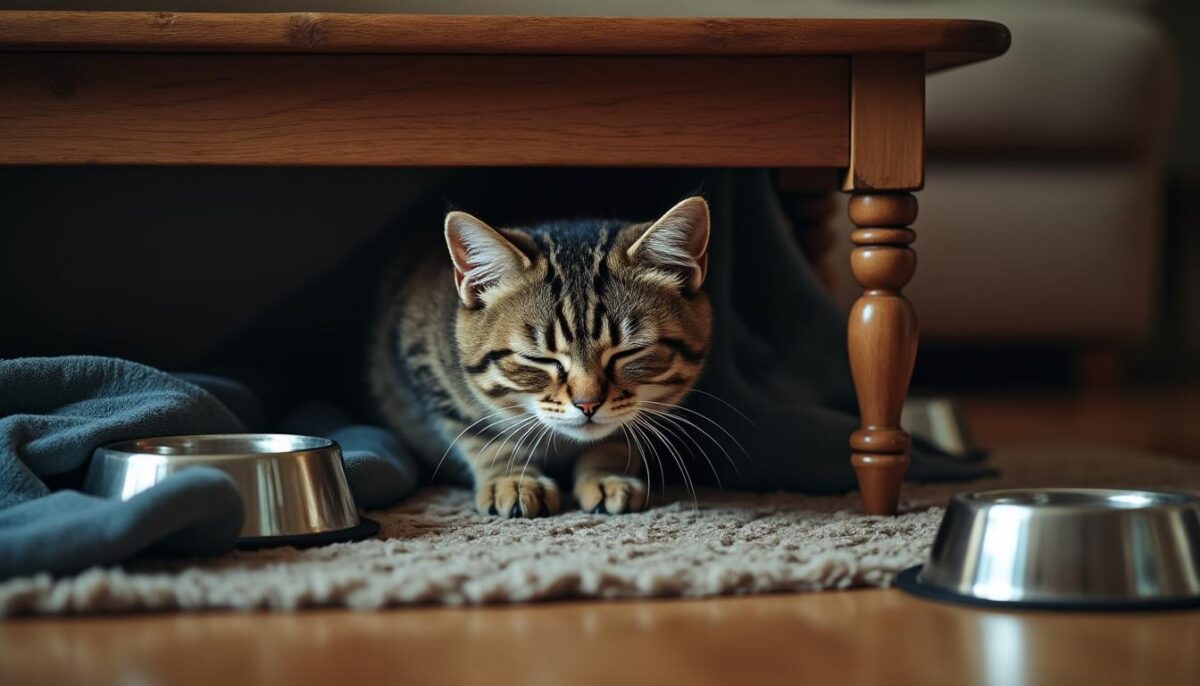
Hi, it’s Judith. If your cat stops eating and hides, it’s often a warning sign that it’s in pain or stressed: you need to act quickly, because its condition can deteriorate rapidly. This behavior often reveals a deep-seated problem, whether physical or emotional, and requires immediate attention to avoid serious complications, particularly hepatic lipidosis.
To do immediately
- Offers several types of food, warm and appetizing, to stimulate its desire to eat.
- Change the location of its food bowl, away from the noise and the litter box.
- Check the condition of your mouth to detect any possible dental pain.
- Observe its general behavior: does it drink, urinate, vomit?
- Consult a veterinarian if the anorexia lasts longer than 24-48 hours or if other symptoms are present.
To learn more about possible causes and urgent actions, consult this practical guide and also explore solutions to revive appetite.
Why does a sick cat hide and refuse to eat?
Feline behavior is very subtle. A cat that refuses to eat and hides is often showing signs of deep distress. It may be suffering from pain (dental pain, arthritis), an infectious disease, a toxic change in its environment, or significant stress. Cats are animals that instinctively conceal their weaknesses to avoid attracting predators. This withdrawal often masks anxiety, stress, or a feeling of vulnerability.
Not eating and social isolation are therefore signs that should not be ignored: loss of appetite can quickly become serious. In cats, fasting for more than 24 to 48 hours can lead to hepatic lipidosis, a potentially fatal liver disease.
The main causes of an apathetic cat that stops eating
Here is a table of common causes to evaluate to understand why your cat is exhibiting this behavior:
| Cause | Associated symptoms | Impact |
|---|---|---|
| Dental problems (FORL, gingivitis) | Jaw pain, refusal to eat kibble, excessive salivation | Pain that blocks the appetite |
| Kidney or liver disease | Fatigue, excessive thirst, frequent urination, jaundice | Nausea, loss of appetite |
| Stress or change of environment | Hiding, reduced interactions | Psychological shock, psychogenic anorexia |
| Infections (feline coryza, feline leukemia) | Fever, discharge, lethargy | A disease that weakens the appetite |
| Presence of a foreign body or constipation | Abdominal pain, vomiting, constipation | Food blockage or indigestion |
What can be done quickly to help a cat that is hiding and refusing to eat?
Acting quickly and effectively can make all the difference. Every minute counts. Here’s a simple three-step method:
- Step 1: Offers a small variety of warmed, very fragrant foods such as natural tuna or a little unsalted chicken, to stimulate its sense of smell, which is often impaired by stress or illness.
- Step 2: Create a calm and safe space, away from noise and the litter box, to reduce anxiety in the cat and encourage it to come out of its hiding place.
- Step 3: Make an appointment with a veterinarian without delay if the loss of appetite persists or if symptoms such as vomiting, lethargy, or difficulty breathing appear.
Two cases that should absolutely not be ignored
If your cat hasn’t eaten for more than 24 hoursThis is an emergency. A veterinary visit is necessary to prevent hepatic lipidosis and other serious complications. This condition can quickly become fatal if left untreated.
If your cat stays hidden but continues to drinkThis is still worrying, as it could signal an underlying problem, such as pain or intense stress. Keep a close eye on her behavior and don’t delay in seeking medical advice.
Stress in cats: a common cause of loss of appetite
A cat experiencing a change in diet or environment, the arrival of a new pet, or home renovations can suffer significant stress. This stress often manifests as a loss of appetite and withdrawal. Keep in mind that even a sudden change in food or food type can trigger this behavior.
If you think stress is the cause, try to reassure your cat with a calm presence, toys, and a stable routine. Sometimes, a calming pheromone diffuser helps. More practical advice on this topic is available on [website/platform name]. This page is dedicated to loss of appetite related to stress..
Recognizing the alarming symptoms in an apathetic cat
- Total loss of appetite over 24 hours or more
- Lack of fluids or, conversely, extreme thirst
- Prolonged isolation in a hiding place
- Frequent vomiting or diarrhea
- Signs of pain (moaning, aggression, excessive licking)
Veterinary care and follow-up in 2026
The veterinarian will begin with a complete examination, including the cat’s mouth, abdomen, and blood work. Further tests such as an ultrasound or X-rays may be necessary. Treatment will be tailored to the cause (assisted feeding, medication, treatment of the underlying disease).
Today, in 2026, we observe that the use of early markers in blood tests helps even faster to determine kidney failure or liver disease. Prompt intervention remains key to saving your cat.
Common mistakes to avoid
- Waiting without doing anything when a cat hasn’t eaten for more than 24 hours
- Giving unsuitable milk or food can worsen digestive problems.
- Changing one’s diet too frequently without transition causes stress.
- Ignoring cleaning the food bowl, which is nevertheless important for eating behavior
- Underestimating the impact of stress as a cause of loss of appetite
My cat has stopped eating but is drinking a lot, is that a problem?
Yes, this is often a sign of kidney failure or another metabolic disease. It is important to consult a veterinarian promptly.
How long can a cat go without eating?
A cat should never go more than 24 to 48 hours without food, otherwise it risks developing hepatic lipidosis, a serious liver condition.
My cat eats his wet food but refuses his dry food, what should I do?
This could indicate dental pain. A veterinary checkup will help treat this problem.
Can stress really make my cat stop eating?
Yes, stress is a common cause of loss of appetite in cats. A stable routine and a calm environment are essential for them to regain their appetite.
When should I seek emergency medical attention?
If your cat has not eaten for more than 24 hours, is vomiting a lot, is lethargic or shows other serious signs, consult a veterinarian immediately.
Thank you for your interest, Judith. It would be kind of you to leave a comment at the end of the article. Thank you all.