Dog nutrition: this subtle deficiency shows in the coat
Hi, I’m Judith. A dull coat can signal an imbalance in your dog’s diet, but only an examination can identify the cause.
A dog’s coat health can sometimes reflect its diet, particularly its intake of protein, omega-3s, zinc, and vitamins. But parasites, allergies, or illness can also change the appearance of the coat.
What to do now
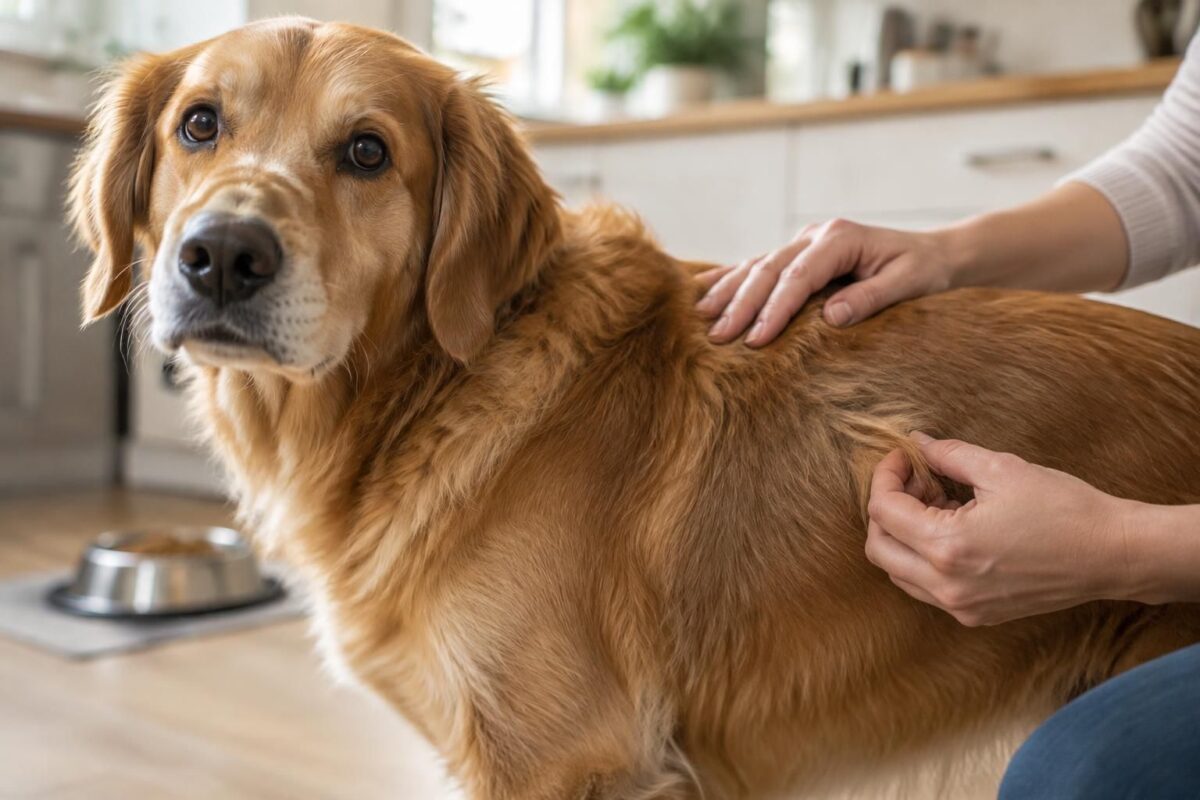
- Look over your dog’s coat and skin for flakes, redness, or bare patches.
- Note any changes in appetite, weight, thirst, or energy levels.
- Check that the food is complete and suited to your dog’s age and size.
- Avoid adding supplements without veterinary advice.
- Make an appointment if the signs persist, worsen, or are accompanied by marked fatigue.
A dry coat or unusual hair loss deserves attention, but don’t jump to conclusions about a nutritional deficiency. To learn more about possible signs, see these guides on the signs of a nutritional deficiency and its causes and prevention in dogs.
Dull coat in dogs: the common mistake to avoid
The first mistake is to automatically blame a dull coat on a lack of nutrients. Seasonal shedding, parasites, an allergy, or a hormonal disorder can cause similar signs.
A nutritional deficiency can, however, weaken the skin and make the coat dry, brittle, or less shiny. If this is accompanied by muscle loss, low energy, or weight loss, your dog’s health needs prompt evaluation.
When diet may be the cause
An improvised home-prepared diet or a poorly balanced diet may not meet your dog’s needs for protein and minerals. Omega-3 fatty acids also help maintain healthy skin, while zinc and certain vitamins support various functions in the body.
A dog eating a complete diet is not necessarily free from problems: digestive disease can interfere with nutrient absorption. The veterinarian will therefore aim to distinguish an insufficient intake from a health problem.
Signs that warrant a veterinary visit
Check whether the coat is losing its shine, the hair is breaking, or bald patches are appearing. Redness, persistent itching, or a large amount of dandruff can also point to a skin problem that needs to be examined.
Weight loss, pale gums, unusual thirst, or severe weakness warrant veterinary advice without delay. These symptoms alone cannot diagnose a deficiency, but they may indicate a more general problem.
| Observation | Possible causes | Helpful action |
|---|---|---|
| Dull or brittle coat | Unbalanced diet, skin condition, parasites | Check the diet and have the skin examined if the problem persists |
| Patchy hair loss | Parasites, allergy, or another illness | Consult a veterinarian rather than giving a supplement at random |
| Weight loss and fatigue | Insufficient intake or a health problem | Make an appointment promptly |
| Recurring digestive problems | Intolerance, illness, or poor absorption | Note how often they occur and discuss them with the veterinarian |
This table offers possibilities, not a diagnosis: several causes may coexist. How long the symptoms persist matters more than any one isolated sign.
Dog food: practical tips to protect your dog’s coat
Choose a complete food suited to your dog’s needs and follow the feeding guidelines, adjusting them with a professional if your dog’s weight changes. For a home-prepared diet, ask for a precise formulation: replacing or adding ingredients without calculating their amounts can throw the whole diet off balance.
Avoid giving “coat care” supplements without knowing whether they’re needed. Too much of certain nutrients, particularly vitamins or minerals, can also harm your dog’s health.
Changing food gradually
If the veterinarian recommends a new food, switch gradually over several days, often around 7 to 10 days depending on your dog’s digestive sensitivity. If diarrhea or vomiting occurs, ask for advice before continuing the change.
Keep a simple record of what your dog eats and any symptoms you notice. These details will help the veterinarian determine whether changes in the coat are linked to the diet or another cause.
Three steps to take if your dog has a dull coat
- Observe your dog for a few days. Note the condition of the skin, appetite, weight, stools, and energy level. If your dog’s overall condition worsens, don’t put off the appointment.
- Get the cause checked. The veterinarian can examine the skin, look for parasites, and decide whether tests are needed. Blood tests or other examinations are recommended only when the symptoms warrant them.
- Adjust the diet with appropriate guidance. If diet is the cause, work with a professional to make a specific change and monitor your dog’s response. The coat renews gradually, so improvement can take time.
So the right thing to do isn’t to pile on powders or oils, but to understand why the coat is changing. A calm, consistent approach better protects both the skin and nutritional balance.
Does a dull coat always mean a nutritional deficiency?
No. Shedding, parasites, an allergy, or an illness can also change the coat. A veterinarian can help identify the cause.
Which nutrients are linked to coat health?
Protein, omega-3 fatty acids, zinc, and certain vitamins support the proper functioning of the body. Supplementation should be suited to the diet and approved by a professional.
When should I consult a veterinarian about hair loss?
Consult a veterinarian if the hair loss is significant, persistent, occurs in patches, or is accompanied by redness, itching, weight loss, or fatigue.
Can I give my dog omega-3s without veterinary advice?
It’s best to ask for advice. The product and dose should take your dog’s diet, weight, and health into account.
Thanks for reading, Judith. If this topic resonates with you, please feel free to leave me a comment at the bottom of the article.