Dog Food: Do Eggs Really Help or Cause Problems?
Hi, I’m Judith. Yes, your dog can eat eggs, preferably well-cooked, plain, and in small quantities. They provide animal protein and several nutrients, but they don’t replace a balanced canine diet. The right portion depends on your dog’s size, activity level, and health.
What to do right away
- Cook the egg without salt, butter, oil, or spices.
- Start with a small piece, especially if your dog has never eaten one before.
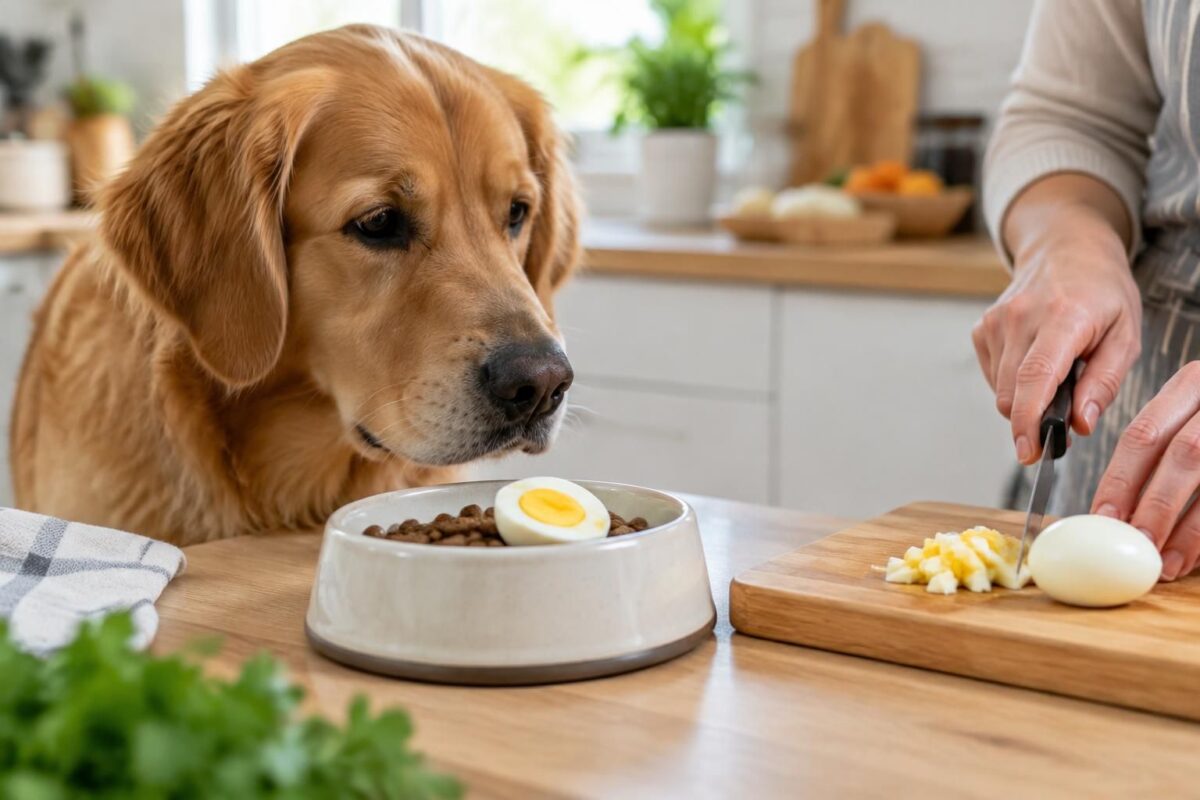
- Cut it into bite-sized pieces to reduce the risk of choking.
- Monitor your dog’s digestion for the next 24 to 48 hours.
- Count the egg as a treat and adjust any other extras given that day.
To compare preparation precautions and portions, you can consult these tips on eggs in a dog’s diet and this practical guide on how much to offer safely.
What are the benefits of eggs for dogs?
Eggs provide high-quality protein, as well as vitamins and fatty acids. These nutrients help, among other things, maintain muscle and support healthy skin and coat.
An egg can therefore occasionally supplement your dog’s meal, but it won’t transform your companion’s diet on its own. The benefits of eggs are part of an already balanced diet tailored to your dog’s age and activity level.
Cooked or raw eggs: which preparation should you choose?
Cooked eggs are the safest choice. Thorough cooking reduces the risks associated with bacteria and avoids repeated exposure to avidin in raw egg whites, which can interfere with biotin absorption if your dog eats them often.
You can serve a hard-boiled, poached, or scrambled egg, as long as you don’t add anything. Avoid eggs prepared with butter, oil, salt, or seasonings: these ingredients can upset a dog’s digestion, and some are unsuitable for their diet.
Raw eggs are less safe, especially for puppies, older dogs, or dogs with weakened immune systems. If in doubt, choose to cook the egg thoroughly rather than take an unnecessary risk.
What amount is recommended based on your dog’s size?
There is no one-size-fits-all portion: a whole egg can be a substantial extra for a small dog. The recommended amount should take into account your dog’s weight, energy needs, and any other treats given during the day.
| Dog size | To start | Guideline for caution |
|---|---|---|
| Small dog | A small piece or about a quarter of an egg | Avoid offering a whole egg right away |
| Medium dog | A quarter to half an egg | Keep it as an occasional extra |
| Large dog | Half an egg, then adjust based on how well your dog tolerates it | A large size is no reason to give it every day |
These guidelines are approximate and vary depending on the situation. A useful rule is to keep all treats and extras to a small portion of the daily diet, often around 10% at most. If your dog is on a therapeutic diet or needs to lose weight, ask your veterinarian before adding a new food.
Three steps for giving your dog an egg without any unpleasant surprises
- Step 1: Cook the egg thoroughly without seasoning, then let it cool.
- Step 2: Offer a small portion mixed with your dog’s usual food. Don’t change anything else in their diet that day.
- Step 3: Observe your dog’s behavior, stools, and skin for 24 to 48 hours before offering egg again.
One easy-to-forget detail: a greedy dog may swallow a whole hard-boiled egg too quickly. Cutting it into small pieces takes just a few seconds and makes eating it safer.
What food-related risks should you watch for?
Like any new food, eggs can cause a reaction in some dogs. Vomiting, diarrhea, itching, or redness may indicate an intolerance or food allergies: stop giving your dog eggs and contact a veterinarian if these signs appear or persist.
Raw eggs carry a greater risk of foodborne illness from bacteria. As for the shell, don’t add it to your dog’s diet without careful consideration: whole, it can pose a choking hazard, and ground into powder, it provides calcium that needs to be measured according to the overall diet.
Two situations where you should adjust your decision
If your dog is a puppy: Offer a small amount of well-cooked egg and keep complete puppy food as the basis of their diet. Their growth requires a carefully balanced diet.
If your dog is ill or sensitive: Don’t try giving them egg without veterinary advice, especially if they follow a special diet or have had digestive problems before. In this case, your dog’s health comes before variety in their bowl.
Frequently asked questions about eggs in a dog’s diet
Can a dog eat an egg every day?
It’s best to avoid making it a daily food. An egg is still an extra, and how often you give it depends on the dog’s size, diet, and health.
Is an omelet suitable for a dog?
Yes, if it is thoroughly cooked and prepared without salt, butter, oil, cheese, or spices. Offer a small portion.
Can you give a dog an eggshell?
Don’t give the shell whole or in pieces. Powdered shell can alter the mineral balance of the diet: ask a veterinarian for advice first.
What should I do if my dog vomits after eating egg?
Don’t give your dog any more and monitor their condition. If the vomiting recurs, is accompanied by other symptoms, or worries you, contact a veterinarian.
Thank you for your interest; Judith. I’d appreciate it if you could leave me a comment at the end of the article. Thanks, everyone.