Dogs: how to go natural without an upset stomach
Hi, I’m Judith. To switch to a natural diet without upsetting your dog’s stomach, introduce each new food gradually over about a week, and slow down if his stools change.
Things to do right away
- Choose a complete food suitable for your dog’s age, weight and activity.
- Keep his usual feeding times and portions during the transition.
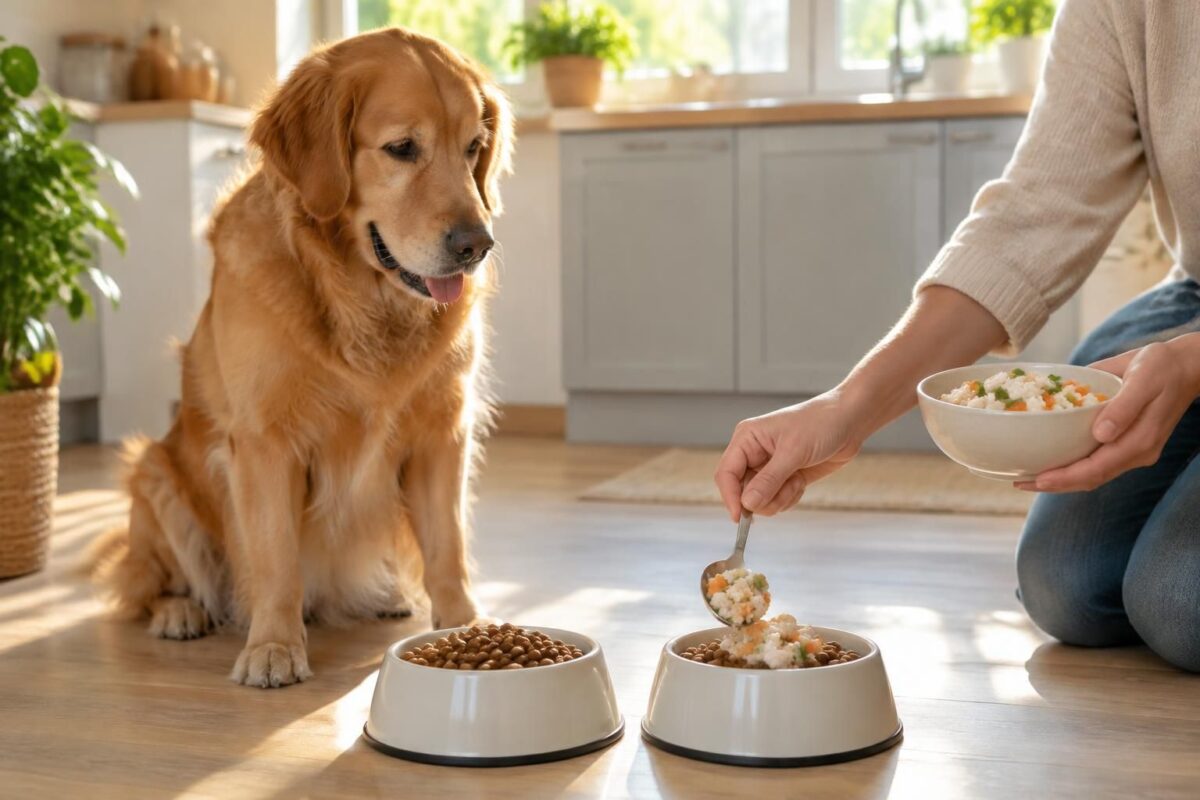
- Mix a small amount of the new food with the old one.
- Monitor his stools, appetite and energy each day.
- Plan for a slower transition if he has a history of digestive problems.
A natural diet for dogs can take the form of complete kibble or a homemade ration for dogs, formulated with a professional. To vary without upsetting canine digestion, follow a progressive feeding transition and ensure that each meal meets his needs; these tips on home-cooked meals for dogs can also help you prepare the change.
Switching to natural dog food without rushing the change
The word “natural” does not guarantee that a food is complete or that it suits every dog. Choose food bearing a clear indication of complete ration, or seek the help of a veterinary nutritionist before replacing meals with a home-made preparation.
For a healthy dog, a transition of about 7 to 10 days often works. If he has a sensitive stomach, spread it out over 10 to 14 days, depending on his situation.
| Period | Old food | New food |
|---|---|---|
| Days 1 and 2 | About 75% | About 25% |
| Days 3 and 4 | About 50% | About 50% |
| Days 5 and 6 | About 25% | About 75% |
| From day 7 | According to tolerance | Completely new meals if all goes well |
A simple three-step procedure
- Step 1: prepare the change. Choose the new food in advance and note the amount given. Avoid changing at the same time treats, feeding times or supplements: you’ll be able to better identify what doesn’t suit him.
- Step 2: increase the share gradually. Start with a small portion of the new food, then increase every two days if your dog tolerates it. Always keep fresh water available.
- Step 3: observe and adjust. Well-formed stools and a usual appetite are good indicators. If they become soft, slow the transition or temporarily revert to the last well-tolerated proportion.
A common mistake is to add several new things at once: a new recipe, oil, treats and probiotics for dogs. If a reaction occurs, it’s then impossible to know what disturbed its canine gut flora.
Protecting your dog’s digestion during the transition
Sudden changes in recipe or quantity can cause loose stools in the dog, gas, or a capricious appetite. These signs are sometimes temporary, but they deserve careful monitoring, especially in a puppy, an elderly dog, or a sick animal.
If your dog eats a homemade ration for dogs, don’t just rely on meat and vegetables chosen at random. The proportions and mineral intake must be adjusted: a veterinarian can help you establish a balanced and sustainable recipe.
If your dog is sensitive…
Stick to a single base recipe and extend each stage by a few days. If loose stools persist or recur often, seek advice rather than multiplying ingredients reputed to be gentle.
If it’s a home-cooked meal…
Have the recipe validated before completely replacing the usual food. Canine digestive health also depends on long-term nutritional balance, not only on the freshness or naturalness of the ingredients.
Natural ingredients: caution before adding a remedy
Turmeric, honey, coconut oil, chamomile, or apple cider vinegar are sometimes presented as home remedies. Yet their usefulness depends on the dog and the issue: they do not replace a complete diet or a veterinary diagnosis, and some may be poorly tolerated or unsuitable.
Avoid especially essential oils, preparations containing sweeteners like xylitol, and recipes whose dose is not suited to your dog’s weight. Traditional remedies do not replace a parasite treatment recommended by a veterinarian either.
- Do not add too many new things during the transition.
- Do not give supplements randomly, even if sold as natural.
- Ask for advice before using a product if your dog is on treatment or has a chronic illness.
When digestive troubles in dogs require a veterinarian
A dietary change can explain slight discomfort, but you should not automatically attribute all symptoms to the transition. Repeated vomiting, blood in the stools, severe fatigue, pain or a refusal to drink justify a quick veterinary opinion.
For a puppy, a small-breed dog, or a fragile animal, consult without delay if diarrhea is significant or persistent. The veterinarian can look for another cause and determine if probiotics for dogs or a special diet are appropriate.
How long does a dietary transition take?
It usually takes 7 to 10 days. For a dog with a sensitive stomach, plan for 10 to 14 days depending on tolerance and the veterinarian’s advice.
What should I do if my dog has soft stools?
Slow the change and return to the last well-tolerated proportion. If stools remain soft, worsen or are accompanied by other symptoms, contact a veterinarian.
Is a homemade ration always balanced?
No. A homemade recipe must cover the dog’s nutritional needs and be adapted to its age, weight and health. Have it checked by a veterinary nutritionist.
Can I add probiotics during the transition?
They are not necessary for all dogs. Seek advice from a veterinarian before giving them, especially if your companion has digestive troubles.
Merci for your interest; Judith. It would be kind to leave me a comment at the end of the article, thank you all