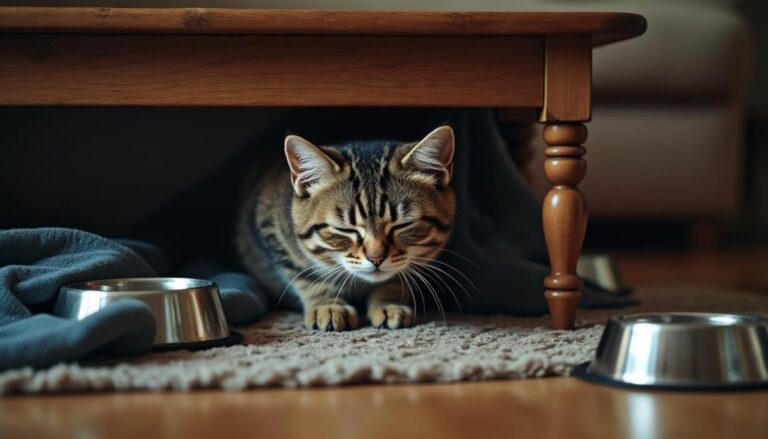
Why does my cat hide its head when it sleeps?
Hi, it’s Judith. If your cat hides its head when it sleeps, under your arm or against a blanket, it’s not necessarily a cause for concern. Most of the time, it’s simply seeking warmth, quiet, a feeling of security, or a comfortable position. This behavior can also help it protect itself from light, noise, or movement around it. What to do right away:
- Provide a quiet, dark place for naps.
- To offer a cozy sleeping surface with protective edges.
- Pay attention to the ambient temperature, especially in winter.
- Avoid sudden disturbances during sleep.
To better understand this behavior, you can take a look at these tips on Why might a cat suddenly hide? and on calming a nervous visiting cat.
Why does my cat hide its head when it sleeps?
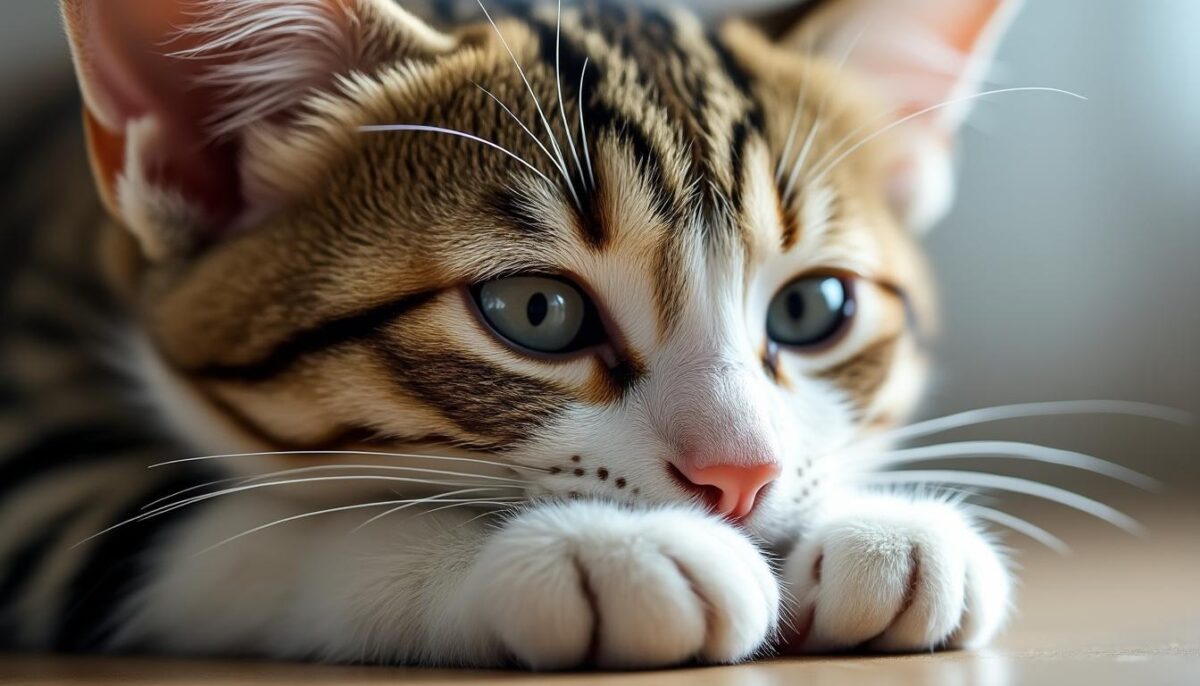
The fact that your cat tucks its head under its paw or into a corner is not insignificant. This gesture is part of its body language natural. It protects his whiskers, nose, and eyes—ultra-sensitive areas. In general, it’s a deep and a need for tranquility. Observing an animal at rest also reminds us of the importance of better understand the mechanisms of sleep
The example of Félix, Marion’s cat, illustrates this well: after a long day, he curls up into a ball, hides his face, a sign that he feels totally confident and calm.
As the renowned ethologist Desmond Morris said, “The cat is an expert in subtle feline expression.” When your cat protects itself in this way, it optimizes its cat psychology simple guidelines on animal health and behavior.
What’s the point of hiding your head?
The main reasons are:
- Light protection: to prevent the bright flashes from disturbing him.
- Thermoregulation: to preserve body heat, especially of the muzzle.
- Feeling of security: reduce vulnerability during sleep.
During the day, it’s usually the light that bothers him; at night, he seeks warmth and protection. A kitten will react more strongly to the cold. An older cat will do it for reassurance. All these factors often combine.
Recognizing the signs of a truly comfortable cat
Paying attention to the details can help you:
- Relaxed ears = the cat is calm.
- A light purr = a sign of contentment.
- Stable and repeated position = established comfort.
- Attention : So avoid disturbing him.
Should you be worried when your cat hides its head?
Normally, no. But you should remain vigilant. If this behavior is accompanied by lethargy, loss of appetite, or sudden agitation, it’s best to consult a veterinarian. Sometimes calm behavior masks an underlying condition, such as pain.
| Behavior | Possible meaning | Recommended action |
|---|---|---|
| Cat with head hidden, calm and purring | Relaxation and the need for security | Let them sleep, do not disturb. |
| Cat with head hidden and refusing to eat | Illness or significant stress | Consult a veterinarian |
| Cat is restless, meowing while hiding | Acute fear or stress | Identify the source, calm the environment |
A simple procedure to calm your cat
- Observe its behavior over several days.
- Provide a calm environment, with a dark and comfortable corner.
- Consult a professional if associated symptoms occur.
Sometimes, your cat will choose to bury its head against you, near your head, or under your arm. This is also a declaration of love and a sign of trust. Bastien’s cat, Whiska, often came to sleep against his head to enjoy his warmth and feel protected. This behavior can indicate a strong attachment and a need for interaction.
It’s also a way for your cat to leave its scent, a key element of its feline behavior and social recognition.
Here are a few tips to strengthen this bond:
- Offering cuddle time before naptime.
- Use calming diffusers like Feliway.
- Respecting their rest periods while offering chosen contact.
How to improve your cat’s comfort and safety
Creating an environment that meets your cat’s needs is key to its happiness. It loves soft darkness, warmth, and a place to hide. In winter, a heated mat or soft blanket makes all the difference.
Also avoid placing the litter box in a noisy or exposed location, as this can generate… sign of stress and encourage him to flee his space.
Focus on appropriate nutrition
By 2026, we know that good nutrition plays a key role in behavior and overall health. Senior cats, for example, need a ration adapted to their age relaxation.
Decoding feline behavior: listening to your cat to respond better
Cats don’t speak; they express themselves through their bodies. Understanding why they hide their heads is deciphering one of their many codes. When they curl up like this, they often express an instinctive need for protection, a state of calm, or sometimes a sign of stress If he feels threatened, you can take action to improve his well-being by combining observation and appropriate interventions.
- Provide quiet spaces, and avoid sources of stress.
- To offer hiding places and cozy sleeping areas.
- Adjust the temperature, especially for short-haired cats.
- Take into account their emotional and territorial needs.
- Monitor for sudden changes in behavior.
| Position | Meaning |
|---|---|
| Curled up, head hidden | Safety and heat retention |
| On his side, head uncovered | Light sleep, heightened alertness |
| On its back, paws in the air | Extreme trust and a secure environment |
Knowing these postures helps to better understand one’s cat psychology and its needs.
Why does my cat always hide its head?
It is an instinctive behavior that helps with thermoregulation, protects sensitive areas, and ensures a feeling of security during sleep.
Is this a sign that my cat is stressed?
Not necessarily: often this gesture actually indicates a state of relaxation. If there are other signs such as agitation or loss of appetite, then there is cause for concern.
It’s a sign of affection. If it bothers you, offer him a heating pad or a comfortable space next to you, to preserve both of your sleep.
Does my cat sleep better with more darkness?
Yes, in general, cats prefer dim lighting which allows them to fall into a deeper and more secure sleep.
How can I improve my cat’s sleep?
Provide it with a quiet space, a well-regulated temperature, a snug sleeping environment, and avoid sources of light or noise around it.
Action of the day: Observe your cat when it sleeps, note its position and let it settle in the place it likes best to better understand its needs.