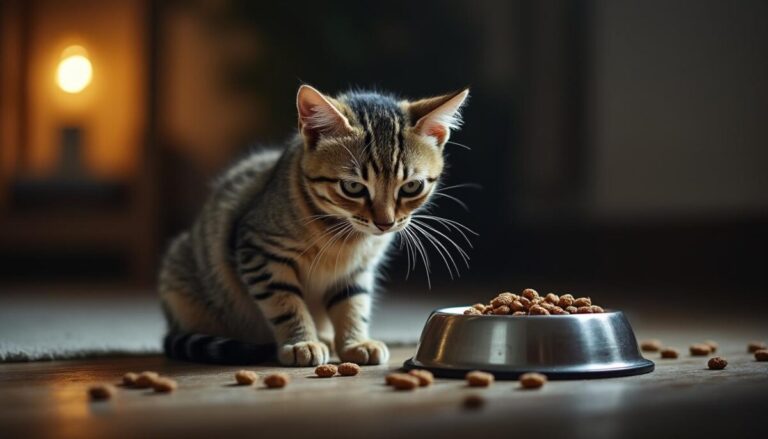
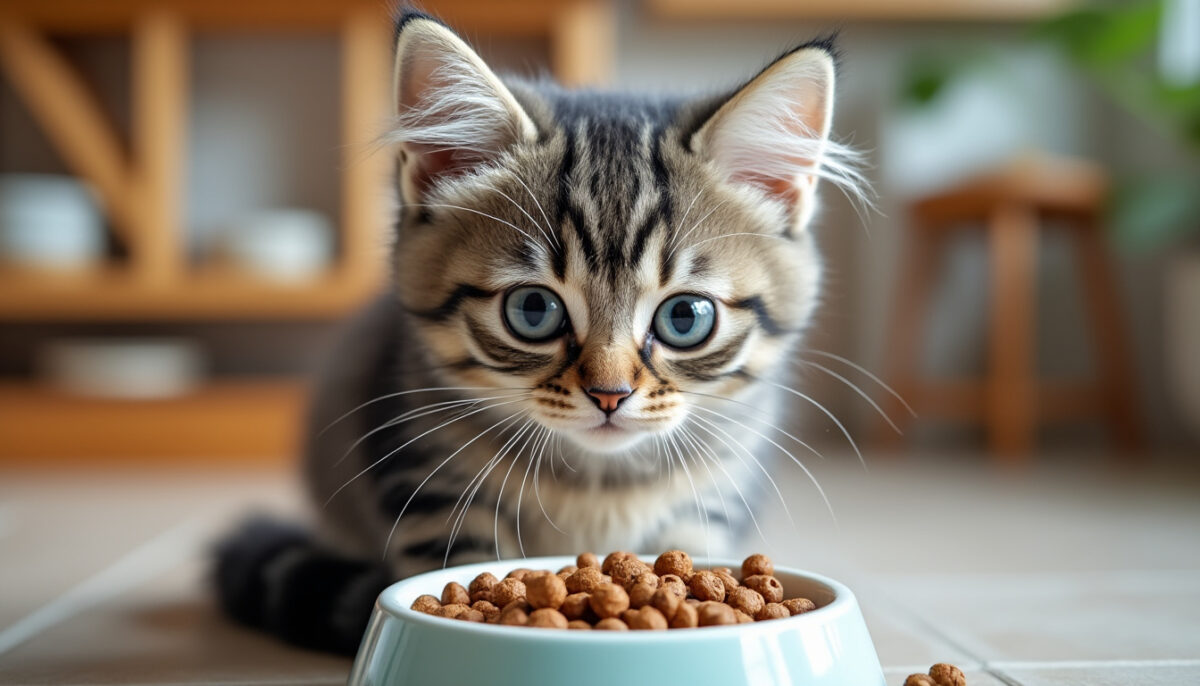
My cat doesn’t want to eat anymore: 5 common mistakes
Hi, it’s Judith. When a cat refuses to eat, it’s often linked to a sudden change or stress, so you need to act quickly and gently by changing its food gradually and paying attention to its environment. Without a rapid response, the cat’s appetite can deteriorate quickly, causing serious health problems.
To do immediately
- Introduce a gradual change in diet over approximately 10 days.
- Place the food bowl in a quiet location, away from stress and frequent traffic.
- Observe if your cat shows any other symptoms (vomiting, lethargy).
- Test different food textures and temperatures to stimulate appetite.
- Consult a veterinarian if the refusal to eat exceeds 24 hours.
Refusal to eat in cats is not uncommon, especially when linked to a common mistake in feline nutrition. Your cat might turn its nose up at its food bowl simply because the recipe has changed, or because it no longer likes the texture. Furthermore, leaving wet food out too long or in the refrigerator can make it unappetizing. Since cats have a very sensitive sense of smell, even a very slight change can prevent them from eating. A small change in environment, such as moving house or the arrival of another pet, can also disrupt a cat’s behavior. Felines like their routines; they need stability and calm to eat well.
My cat has stopped eating, what should I do? and then learn to truly recognize when to worry about the dangers of a loss of appetite in cats.
Changing your diet too quickly is a common mistake.
Many people make the mistake of abruptly changing their cat’s food. A cat, especially a sensitive one, doesn’t appreciate switching from one wet food to another, or from one brand of dry food to another, overnight. A rapid dietary transition often leads to a refusal to eat, or even digestive problems. Generally, the new food should be introduced gradually over a period of about 10 days. A simple but effective way to avoid unnecessary stress.
A common example
A cat who used to be very greedy suddenly turned its nose up at its kibble after a sudden change in brand. The owner became worried and tried adding treats, but this only made things worse. By going back to the old brand for a few days and gradually mixing it with the new, the cat regained its appetite. This just goes to show how essential patience is.
A disturbed environment that blocks the appetite
Cats need a calm and secure environment to eat well. Moving house, a sudden change in the location of their food bowl, or a litter box too close to their home can all lead to a refusal to eat. These details may seem small, but felines are particularly sensitive to their routine.
If your cat is showing signs of nervousness or has disappeared from its usual eating area, it’s time to reassess its territory. Creating multiple food and water stations can help determine where it feels most secure. Providing a high perch can also reassure it.
Ignoring the symptoms of illness behind loss of appetite
A refusal to eat should always raise suspicion of a health problem if the loss of appetite lasts more than a day. Painful dental problems, infections such as the common cold, and digestive disorders can all seriously impact the desire and ability to eat.
An older cat that is losing weight, for example, may be suffering from gingivitis or periodontitis, making chewing painful. It’s important to watch for these signs and consult a veterinarian at the slightest doubt. In some cases, only veterinary care can get your cat back on its feet.
Do not stimulate the cat’s appetite when necessary
Sometimes, simply making food more appealing is enough to get a cat’s appetite back. Gently warming their wet food to release any lingering aromas, adding a little brewer’s yeast or fish oil can make all the difference. Be careful not to offer unsuitable foods like smoked salmon or canned tuna, which are too salty.
Offering a variety of textures (wet food, kibble) can also pique a cat’s interest. Furthermore, stimulating a cat through play or bonding helps to break the lethargy that sometimes accompanies a loss of appetite.
How much and what should you feed your cat?
| Cat weight (kg) | Quantity of kibble (g) | Quantity of paste (g) | Bi-nutrition (kibble + wet food in g) |
|---|---|---|---|
| two | 35-40 | 150 – 180 | 20 + 80 |
| three | 45-50 | 200 – 220 | 25 + 100 |
| 55 – 65 | 250 – 300 | 30 + 150 | |
| five | 65-75 | 300 – 350 | 35 + 180 |
Three steps to revive your cat’s appetite
- Step 1: Observe the behavior carefully and identify any possible cause (stress, illness).
- Step 2: Introduce a smooth dietary transition and make meals appealing (temperature, flavors).
- Step 3: Improve the environment, offer stimulating activities and consult a veterinarian if necessary.
Can my cat die if it doesn’t eat?
Yes, a cat can quickly suffer serious complications if fasting lasts more than 24 hours, especially kittens and older cats. Veterinary consultation is essential in these cases.
How can I tell if my cat is refusing to eat because of a health problem?
Monitor for associated signs such as lethargy, fever, vomiting, or weight loss. If in doubt, veterinary consultation is the best course of action.
Can I change my cat’s food all at once?
It is advisable to make a gradual dietary transition over approximately 10 days to avoid refusal to eat or digestive problems.
Maintaining a calm environment, ensuring the stability of one’s habits, and placing the food bowl in a quiet place often helps to limit food refusal.
How much food should I give my cat?
The quantity depends on the weight and age. On average, a 3 kg cat will eat between 45 and 50 g of dry food or 200-220 g of wet food per day, as shown in the table above.
Thank you for your interest, Judith. It would be kind of you to leave a comment at the end of the article. Thank you all.