
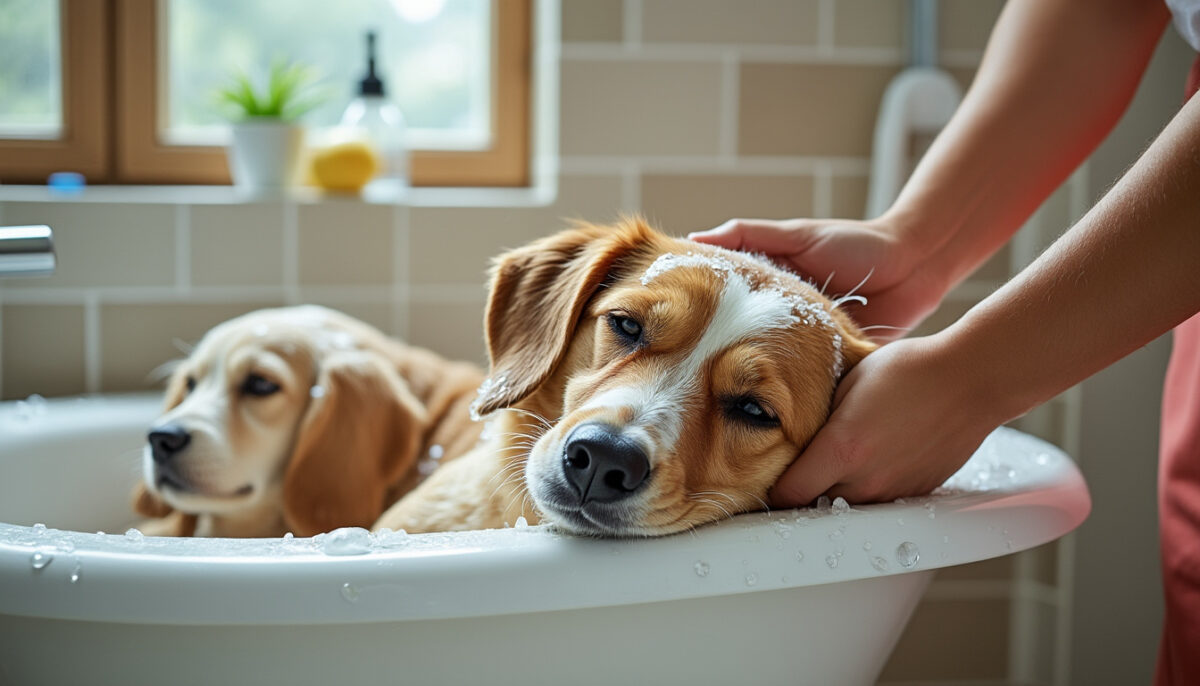
Dogs: This homemade shampoo is reassuring but damaging.
Hi, it’s Judith. Making your own dog shampoo is reassuring because you control the natural ingredients, but be careful: if it’s not made right, it can damage your faithful companion’s coat and weaken their skin. The pH of canine skin (7.5-8.5) is key, and an incorrect mixture can cause irritation and dryness. For effective natural care, choose recipes that are suitable for your dog and always test before use. A good coat care routine will make all the difference to your dog’s health.
To do immediately
- Test a homemade shampoo on a small area to check for reactions.
- Uses gentle, suitable ingredients, such as Castile soap and colloidal oatmeal.
- Avoid human shampoos; their overly acidic pH damages canine coats.
- Brush your dog regularly to prevent knots and aid in cleaning.
- Consult a veterinarian if your dog has sensitive skin or any particular problems.
To go further, discover all our tips on how to make homemade dog shampoo and the hidden dangers associated with certain ingredients in the shampoos with essential oils.
Why homemade dog shampoo can be reassuring but also damage the coat
Using homemade shampoo offers peace of mind: you know exactly what’s in it, with no harsh chemicals or artificial fragrances. This natural approach protects your dog’s health and limits exposure to allergens often found in commercial shampoos. However, if not properly balanced, this treatment can damage the coat. This is often due to an unsuitable pH or an excessive amount of ingredients.
The coat can become dull and dry, and the skin irritated, leading to itching. For example, a shampoo that is too alkaline or not rinsed properly disrupts the skin’s natural flora, which protects the skin’s barrier. It’s sometimes forgotten that an excess of coconut oil or essential oils can also cause reactions. The key, therefore, lies in a delicate balance of suitable ingredients.
If this is new to you, opt for simpler formulas, such as those with Castile soap and colloidal oatmeal. If your dog has sensitive skin, avoid using too many different ingredients and consult your veterinarian. This way, you’ll ensure both a reassuring bath and optimal coat care.
Control the pH and choose the right ingredients to avoid side effects
A dog’s skin can tolerate a pH between 7.5 and 8.5Homemade shampoos must adhere to this pH range, otherwise the dog’s health is at risk. Using a product that is too acidic – such as a human shampoo with a pH of 5.5 – creates an imbalance that can damage the coat, making it dry, brittle, or even irritated.
To guarantee this security, priority is given to:
- Castile soap as a gentle cleansing base.
- Colloidal oatmeal powder to soothe the itching.
- Aloe vera to hydrate and soothe sensitive skin.
- Apple cider vinegar diluted in rinse for shine and pH balance.
- Vegetable oils such as coconut or sweet almond, in moderate quantities to nourish without adding fat.
However, some natural ingredients should be handled with care. For example, neem oil is an excellent parasite repellent, but it is toxic to cats and an allergen for some dogs. Always perform a skin test 48 hours before using a new recipe.
Natural homemade shampoo recipes for a healthy and soft coat
Homemade recipes are often economical and environmentally friendly. Here is a summary table of ingredients according to their benefits:
| Ingredient | Function | Suitable for |
|---|---|---|
| Castile soap | Gentle cleansing base | All hair types |
| Colloidal oatmeal powder | Anti-itch | Sensitive, irritated skin |
| Aloe vera gel | Moisturizing and soothing | Dry or irritated skin |
| Apple cider vinegar (diluted) | Gloss and pH regulation | Dull coat, dandruff |
| Coconut or sweet almond oil | Nourishing, antimicrobial | Dry or damaged coat |
For example, for a soothing treatment, mix 60g of colloidal oatmeal in 240ml of lukewarm water, add 60ml of Castile soap and a spoonful of sweet almond oil. This type of formula helps relieve itching and gently moisturizes. Each recipe should be rinsed thoroughly and applied carefully to avoid leaving any irritating residue.
Apply the homemade shampoo thoroughly for optimal results.
A good app makes all the difference:
- Step 1: Brush your pet’s coat thoroughly with a suitable brush before bathing. This removes dead hair and tangles, making washing easier and reducing irritation. Brushing is often overlooked but is key to coat maintenance.
- Step 2: Wet your dog with lukewarm water (around 35-38°C), then gently apply the shampoo from the nape of the neck towards the tail. Massage gently without rubbing abruptly, avoiding the face, eyes, and ears.
- Step 3: Leave on for 1 to 2 minutes, then rinse several times until the water runs clear. Do not neglect this rinsing: shampoo residue quickly damages the coat and irritates the skin.
A handy tip: for a dog with sensitive skin, a final rinse with diluted chamomile soothes and delicately perfumes. Once the bath is over, dry with a soft towel and let it air dry or use a warm hairdryer.
Risks and precautions for use: what you absolutely must avoid
Even a well-intentioned natural shampoo can have side effects if its ingredients are unsuitable. Commonly reported mistakes include:
- Use human shampoo: This product really damages the dog’s skin due to its unsuitable pH, causing severe dryness and itching.
- Recipes with excessive amounts of essential oils: Some oils are toxic or irritating to dogs. Exercise caution and seek veterinary advice.
- Insufficient rinsing: Insufficient washing leaves traces of product and promotes irritation or even skin infections.
- Washing too often: A bath once a month is often sufficient. Excessive bathing disrupts the natural protective film.
- Poorly tested allergen ingredients: Always perform a skin test beforehand and observe for 48 hours before applying to the entire body.
If you ever panic and don’t have shampoo on hand, very diluted black soap is a tolerated emergency solution, but only for occasional use. Never use dish soap or pure white vinegar; they are too harsh.
FAQ about homemade dog shampoo: answers to your key questions
Can I use human shampoo to wash my dog?
Human pH (5.5) is too acidic for a dog’s skin (7.5-8.5), which can cause dryness, itching, and infections. It’s best to avoid contact with dogs, except in emergencies when using a very mild, diluted baby shampoo that is thoroughly rinsed.
How can I tell if my homemade shampoo is suitable for my dog?
Always do a skin test on a small area and observe for 48 hours. If redness or itching appears, stop use. Also consult a veterinarian, especially for a dog with sensitive skin.
How often should I wash my dog with a natural shampoo?
Generally, one bath per month is sufficient. Over-washing damages the coat and disrupts the skin microbiota.
Which natural ingredients should be favored?
Castile soap, colloidal oatmeal powder, aloe vera, diluted cider vinegar, and coconut or sweet almond oil are reliable options that respect a dog’s skin.
How can I extend the life of my homemade shampoo?
Store it in a clean bottle, away from light and heat. Generally, prepare it in small quantities to be used within 1 to 2 months maximum.
Thank you for your interest, Judith. It would be kind of you to leave a comment at the end of the article. Thank you all.