
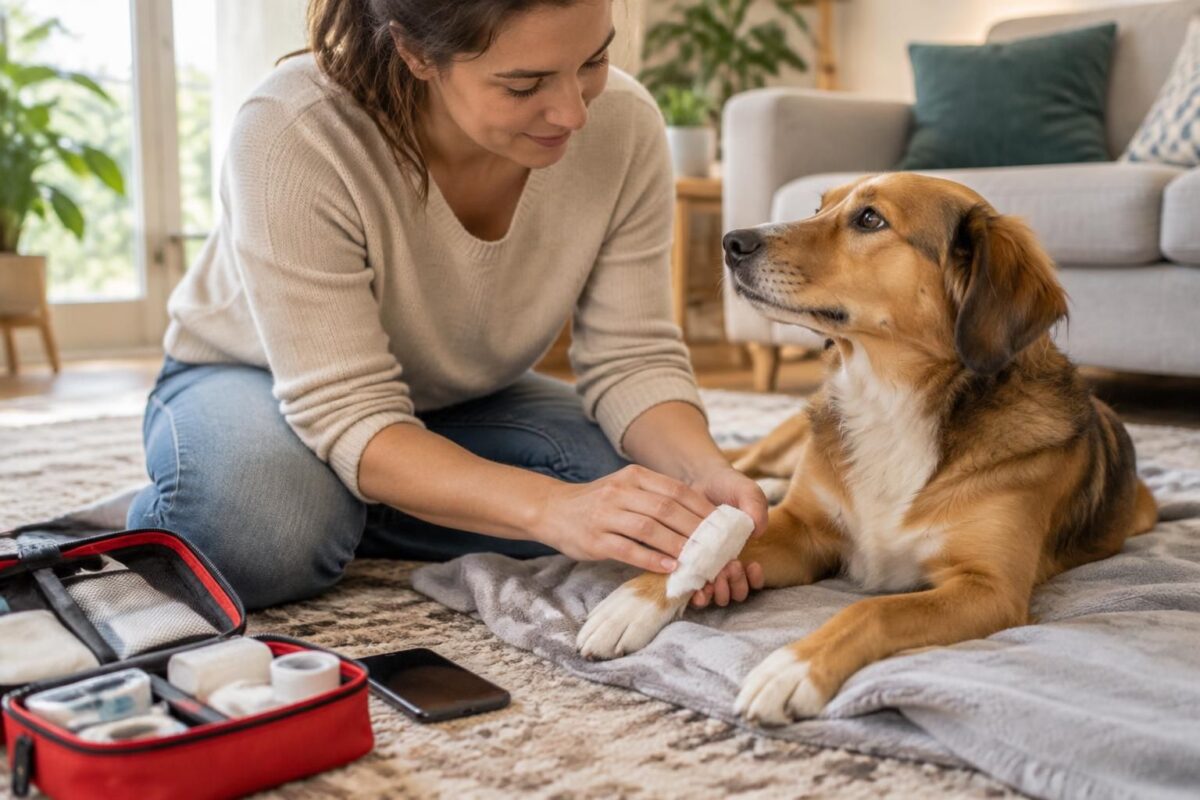
Animal First Aid: 5 Useful Steps to Take Before Calling
Hello, Judith here. Animal first aid involves making sure your companion is safe, assessing their condition, then quickly calling a veterinarian for appropriate instructions. In the meantime, a few simple actions can help prevent an injury from getting worse. Stay calm and only intervene if you can do so safely.
5 steps to remember
- Protect the animal: Move them away from danger and approach gently. An animal in pain may bite or scratch, even if they are usually very calm.
- Assess the injuries: Observe their behavior, posture, and the affected areas without handling them unnecessarily.
- Stop the bleeding: Place a clean compress or cloth over the wound and apply gentle, steady pressure. If blood soaks through the cloth, add another layer without removing the first one.
- Clean a wound: Rinse only a small, superficial wound with saline solution or clean water. Avoid alcohol, hydrogen peroxide, and products not recommended by a veterinarian.
- Monitor their breathing: Check whether it is regular and whether your companion remains conscious. Do not try to immobilize a suspected fracture: instead, limit their movement and ask for advice.
These first-aid steps are no substitute for a veterinary examination. To better distinguish a concerning situation from a veterinary emergency, also see the guidelines for assessing urgency and common first-aid mistakes.
Before calling the veterinarian: avoid actions that could make things worse
Sometimes the riskiest impulse is to try to do everything at once. An animal in pain may move suddenly; moving them or examining an injury in depth could make the situation worse.
For example, if a dog is limping after a fall, do not try to put their leg back in place. Keep them calm, limit their movement, and call the veterinarian to find out how to transport them.
| Observed situation | What to do while waiting for veterinary advice |
|---|---|
| Heavy or persistent bleeding | Apply pressure with a clean cloth and call without delay. |
| Superficial wound | Rinse gently without rubbing, then ask for advice. |
| Fall or painful limb | Limit movement and avoid trying to immobilize the fracture yourself. |
| Difficulty breathing, loss of consciousness, or seizures | Contact an emergency veterinary service immediately. |
Do not give any human medication, and do not force your companion to eat or drink. If in doubt, calling the veterinarian is already a form of care.
A simple 3-step process
When the situation is confusing, a short sequence can help you stay focused. It also helps you share useful information with the professional.
- Make things safe: Remove immediate dangers and keep a safe distance if your animal is panicking.
- Observe: Note what happened, when it happened, the symptoms, and how they change. Avoid touching an area that is very painful.
- Call: Describe the signs to the veterinarian and follow their instructions for care and transport.
If your companion is having trouble breathing, is bleeding heavily, stops responding, or has seizures, do not wait to see if it passes: call the veterinary emergency service immediately.
Helpful questions about animal first aid
Should I clean every injury before calling?
No. Rinse only a superficial wound with saline solution or clean water. A deep, extensive, or very painful wound should be assessed by a veterinarian.
How do I stop an animal from bleeding?
Place a clean compress or cloth over the area and apply gentle, steady pressure. If the bleeding is heavy or persistent, call a veterinarian immediately.
What should I do if a fracture is possible?
Limit movement and do not try to reposition or immobilize the limb. Call the veterinarian for transport instructions.
Can I give my animal human medication?
No, unless specifically instructed by a veterinarian. Some medications commonly used by humans can be toxic to animals.
Take good care of your companion, and feel free to share your observations in the comments. — Judith