
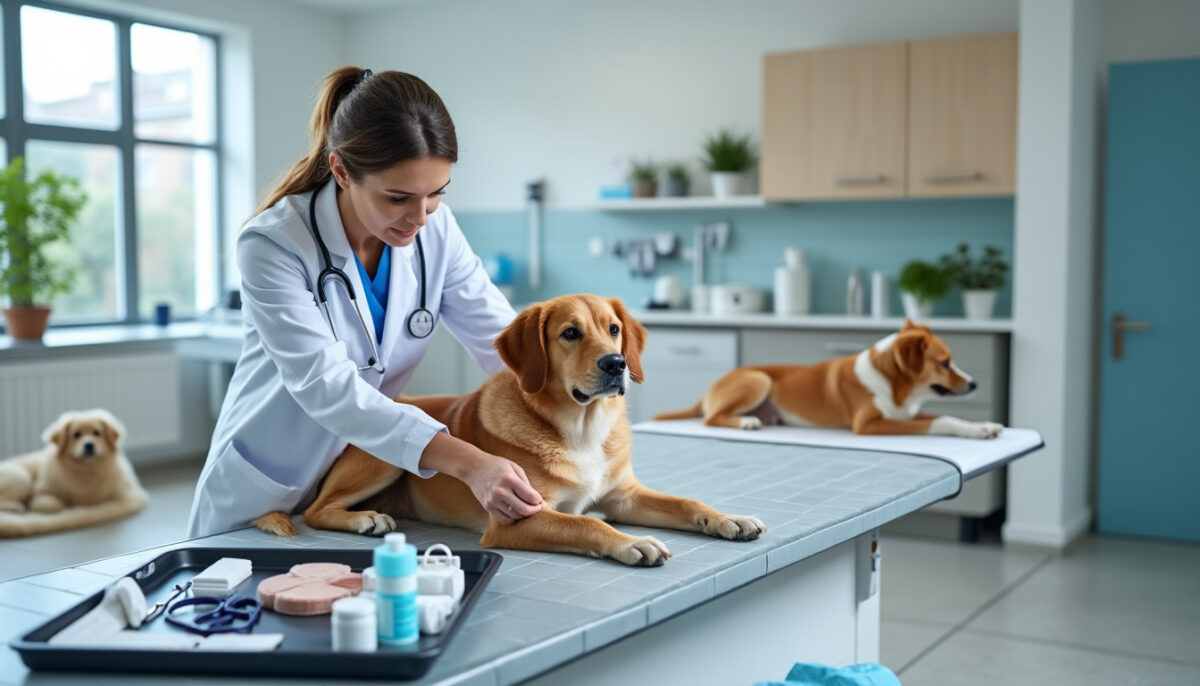
Animal First Aid: the right order so as not to panic
Hi it’s Judith. In the event of an emergency with your pet, the best reflex is to remain calm and follow a clear protocol in three steps: secure the animal, assess its condition, then act according to the necessary first aid.
Essential first steps to manage an emergency in your pet
Your companion may suddenly become injured or choke, and may not be able to tell where it hurts or how it feels. Panic doesn’t help. It is better to adopt a precise order of intervention to keep a cool head. First, make sure the location is safe: keep it away from any threats or busy roads. Then observe if he is breathing and conscious. Finally, take actions that will slow the progression of the problem, such as stopping bleeding or clearing the airways. This method, simple but clear, allows for better rescue and avoids worsening the situation.
- Secure the environment to avoid any additional danger
- Assess breathing and awareness to judge the severity
- Control bleeding then protect the injured area
- Clear the airways in case of suffocation
- Contact a veterinarian quickly
See also actions that save animals in first aid And how to prepare an animal first aid kit.
Secure and calm: the first step to avoid panic
In an emergency, it’s tempting to rush straight to help. But the common mistake is not first securing the environment and the animal. For example, a dog injured on the road, if stressed or panicked, can become aggressive, making the intervention dangerous. Speaking gently, using a temporary muzzle if necessary, or wrapping a cat in a cloth helps calm and protect everyone involved.
The calm transmitted to the animal is a real natural soothing, which limits panic and facilitates further first aid.
Assess the situation: vital signs and visible injuries
You can save time by checking if your pet is breathing normally. Place your hand in front of his nostrils or see if his chest rises. A palpable pulse on the inner thigh confirms blood circulation. Observe his gums: pale or bluish often indicate a serious problem. This step avoids unnecessary actions and allows the intervention to be adapted.
The 3-step protocol for effective animal first aid intervention
In the event of an emergency, this simple protocol keeps your head cool and takes action in the right order.
- Step 1: Place your pet in a safe, quiet place where there is no risk.
- Step 2: Check his breathing, his pulse, his state of consciousness, and the visible presence of injuries.
- Step 3: Apply the first appropriate actions: compression to stop bleeding, maneuver to clear the airways in the event of suffocation, or gentle cooling in the event of heat stroke.
For example, as soon as bleeding occurs, press firmly with a compress. If it is choking, perform the canine Heimlich maneuver, especially in young dogs who chew everything. These actions slow down the deterioration and provide precious time before the veterinarian arrives.
Common mistakes to avoid so as not to aggravate the injury
Never panic, but also avoid trying to remove an invisible object stuck in the throat or wound. This can make injuries worse. Another common mistake: making your pet vomit in the event of poisoning without veterinary advice, which can cause more damage. To better understand these situations, refer to the advice on first aid procedures for dogs and cats.
Key actions for 6 common emergencies in animals
| Emergency | Main symptoms | Immediate intervention |
|---|---|---|
| Cardiac or respiratory arrest | Unconsciousness, absent breathing, weak pulse | Cardiopulmonary resuscitation: compressions and mouth-to-mouth resuscitation |
| Choking | Persistent cough, panic, difficult breathing | Heimlich maneuver, remove visible foreign body |
| External hemorrhage | Heavy bleeding | Direct pressure with compress, tourniquet as a last resort |
| Poisoning | Vomiting, excessive salivation, convulsions | Immediate contact with veterinarian, do not induce vomiting without warning |
| Heat stroke | Excessive panting, thick saliva, bright red gums | Gradual cooling, fresh water available |
| Fracture | Lameness, pain when touched, swelling | Immobilization with splint, muzzle if necessary, careful transport |
The essentials for your animal first aid kit
- Sterile compresses and clean cloths
- Alcohol-free disinfectant
- Tweezers for small objects
- Self-adhesive strip and round-tipped scissors
- Soft muzzle and disposable gloves
- Veterinary emergency numbers at your fingertips
Thinking about this kit means anticipating the rescue while maintaining the calm necessary in the face of an emergency.
What are the signs of choking in a dog or cat?
The animal coughs heavily, seems panicked, breathes with difficulty sometimes with excessive salivation. An object may be partially visible in the mouth.
How to perform cardiac massage on a dog?
Place the hands in the center of the ribcage, interlace them on medium to large dog and squeeze 100 to 120 times per minute. Alternate with ‘mouth-to-nose’ insufflations every 30 compressions.
What should I do if my pet ingests a toxic product?
Above all, don’t make him vomit without veterinary advice. Contact a veterinary poison center with the product packaging for urgent advice.
When should you use a tourniquet?
The tourniquet is reserved for massive hemorrhages on a limb when direct pressure is ineffective. You must mark the application time and never leave it for too long.
Why is it important to stay calm in the face of an animal emergency?
Because the animal perceives stress and can become more agitated or panicked, which complicates care and makes the situation worse.
Thank you for your interest; Judith. It would be kind to leave me a comment at the end of the article, thank you all


