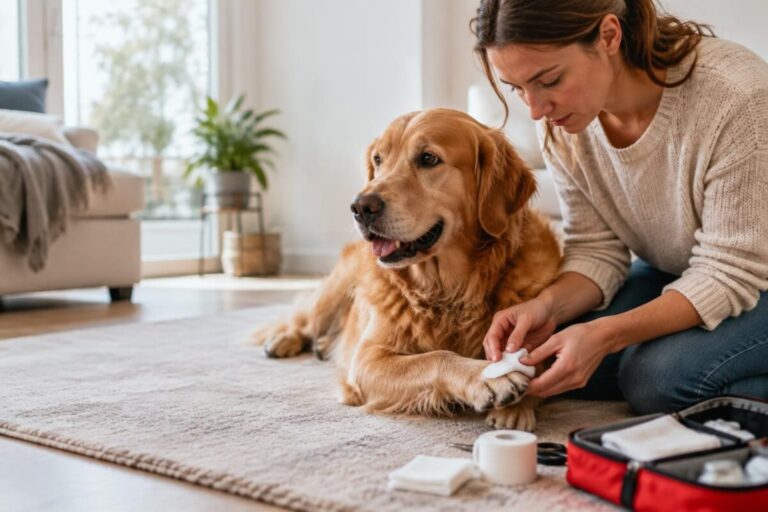

Emergency care: what your first-aid kit almost always forgets
Hello, it’s Judith.
For your pet, a truly useful kit also includes your vet’s phone numbers, your pet’s health records, and supplies suited to emergency care.
A cut or a tick can happen during a walk or at home. The best approach is to prepare what you need without turning the kit into an improvised medicine cabinet.
Good habits to adopt
- Save emergency veterinary phone numbers and the address of a clinic that’s open at night or on weekends.
- Add sterile gauze pads, bandages, and dressings suitable for animals.
- Include disposable gloves, sterile saline solution, and a disinfectant recommended by your vet only.
- Keep tweezers, a tick remover, and blunt-tipped scissors in the kit.
- Keep your pet’s health record, a list of medications, and an emergency blanket close at hand.
Before heading out, check that the supplies are clean and that none of the products have expired. To find out what order to take action in without panicking, read these tips on the right order for giving first aid to an animal and these guidelines on recognizing when you need to act quickly.
What first-aid kits often leave out
Bandages and gauze pads are easy to think of, but useful information is often missing when it matters most. A sheet listing your pet’s weight, allergies, medications, and vet’s contact details can save precious time.
Imagine Noa finds a small wound on her dog’s paw after a walk. With saline solution, gauze pads, and the clinic’s phone number close at hand, she can keep her companion calm and ask for advice before applying any product.
A pet-specific kit, not a human medicine cabinet
Human medications should not be given to a dog or cat without instructions from a vet. Some common products can be dangerous, even in small amounts.
Sterile saline solution can be used to gently rinse a small wound or an eye, while disinfectant should be chosen with your vet’s advice. Avoid alcohol and hydrogen peroxide, which can irritate tissue.
| What to include | What it’s for | Keep in mind |
|---|---|---|
| Sterile gauze pads and a bandage | Cover a minor injury or apply gentle pressure | Don’t wrap a limb tightly unless advised by a vet. |
| Sterile saline solution | Rinse a small wound or an eye | It doesn’t replace an examination if the injury is deep. |
| Disposable gloves and blunt-tipped scissors | Protect your hands and cut a bandage | Keep the scissors away from skin and fur. |
| Tweezers and a tick remover | Remove an accessible small foreign object or a tick | Ask for advice if the object is embedded deep. |
| Health information sheet and emergency numbers | Quickly share useful information | Also note the contact details of the on-call veterinary clinic. |
Mistakes to avoid during emergency care
A kit is no substitute for a diagnosis or training in animal first aid. If your pet is having trouble breathing, loses consciousness, is bleeding heavily, has a seizure, or may have swallowed something toxic, contact a vet or emergency clinic immediately.
Don’t force an animal in pain to let you handle them. A dog or cat that’s usually gentle may bite when in pain; also avoid using a muzzle if your pet is having trouble breathing, is vomiting, or has an injury to the muzzle.
Prepare your kit in three steps
- Tailor the contents to your pet. Note their medications, allergies, and any needs related to their age or health.
- Keep the supplies together in one place. Choose a pouch that’s easy to take with you, dry, and out of reach of both children and pets.
- Check it regularly. Replace expired products and make sure the phone numbers and contact details are up to date.
For a hike or a trip, add a leash, a towel, and water. The most effective kit is one you can grab quickly and whose contents you already know.
Helpful questions about pet first-aid kits
Can you use human disinfectant on a pet?
Not without veterinary advice. Some products irritate tissue or are dangerous if your pet licks them. Rinse a small wound with sterile saline solution and ask for advice on what to do next.
Should you put medications in the kit?
Don’t include medications to give your pet without personalized instructions from your vet. Instead, keep a list of their usual medications and the veterinary clinic’s contact details.
What should I do if my pet is bleeding heavily?
Keep them as calm as possible and contact a veterinary clinic without delay. If you can do so safely, apply a clean gauze pad with gentle pressure while you call for help.
How often should I check the contents?
Check the kit several times a year, as well as after each use. Replace used or expired products and make sure the emergency numbers are up to date.
Take good care of your companion, and feel free to share your observations in the comments. — Judith