Beneficial wildlife: this wetland area becomes a real asset
Hi, it’s Judith. A wetland isn’t just an abandoned marsh: it’s a real asset for biodiversity and the conservation of beneficial wildlife. These wetlands provide essential natural habitats, promote ecological balance, and protect wildlife while enriching the ecosystems around us.
To do immediately
- Let a wild corner develop naturally, even if it looks messy.
- Install a shallow water feature to attract insects and amphibians.
- Uses native plants adapted to wetlands to enrich the habitat.
- Avoid draining or radically altering your wet area.
- Support local initiatives to protect wetlands and learn about their importance.
Wetlands are natural filters for water, reservoirs against flooding, and essential habitats for a multitude of species. They provide habitats for amphibians, waterfowl, small mammals, and insects, all vital to a healthy ecosystem. To better understand their role in preserving biodiversity, discover the benefits of aquatic environments. here and why wetlands are a true treasure to protect.
How beneficial wildlife transforms wetlands into ecological assets
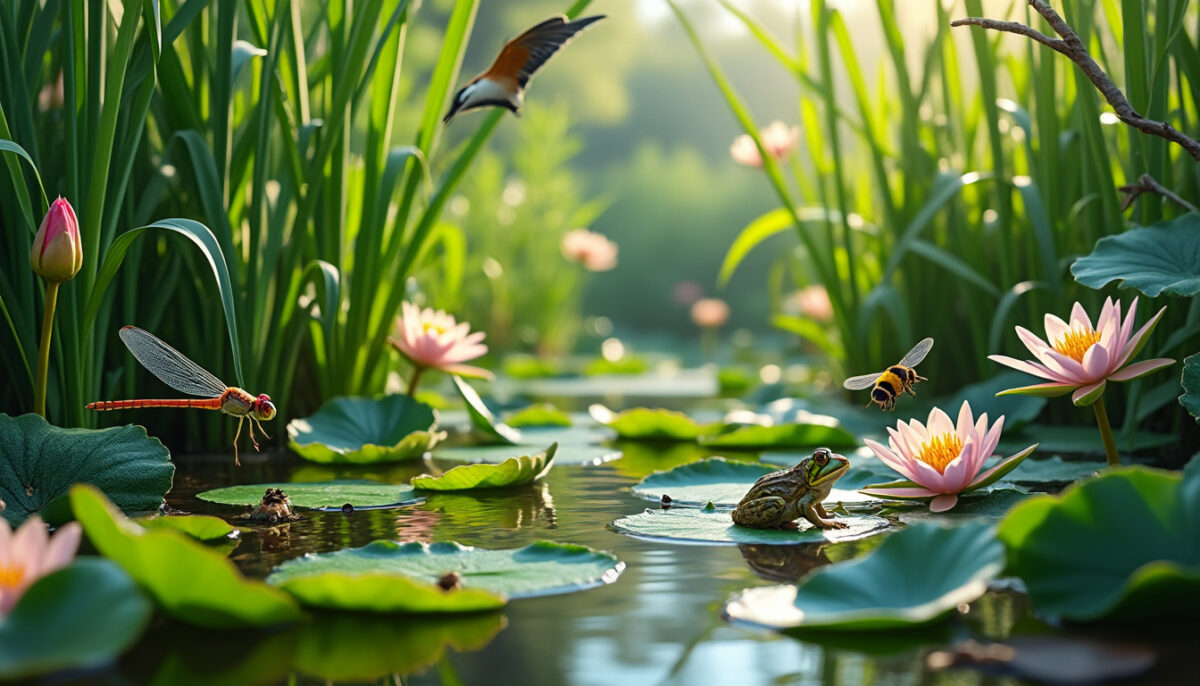
The true wealth of a wetland lies in its beneficial wildlife. Without it, these environments could not fulfill their functions. For example, amphibians play a crucial role in regulating harmful insects. Waterfowl such as ducks and ospreys nest there and contribute to the ecological balance by controlling certain populations. These areas also serve as spawning grounds for numerous fish, which supports the surrounding biodiversity.
In many cases, a well-preserved wetland encourages wildlife. If you manage a garden or plot of land with a wet area, don’t try to order everything: it’s often the surprise of encountering a hedgehog or a toad that will delight wildlife enthusiasts. To design your garden to welcome beneficial animals, you can draw inspiration from simple and effective tips. available here.
Steps to make the most of a damp area in your home
- Step 1: Observe your land and identify areas where water stagnates or where the soil remains damp.
- Step 2: Plant local species adapted to wetlands, such as sedges, rushes or alders, without disturbing the existing ecosystem.
- Step 3: Provide a gentle habitat by installing piles of wood, dead leaves, or small shelters for mammals and insects. Respect this area by avoiding pesticides and aggressive modifications.
A wild, wetland area often attracts a hidden biodiversity, difficult to perceive but vital. Keeping this poorly ordered land, sometimes appearing “disorderly,” means providing security and resources to fragile species.
Ecological balance: what wetlands contribute to the environment
Wetlands act as natural regulators of the landscape. They retain water during periods of heavy rainfall, thus limiting flooding. In summer, they slowly release this reservoir, preventing drought. Their vegetation absorbs and filters pollutants, protecting our groundwater. During dry periods, it is often the beneficial wildlife of these environments that helps maintain the vital stability of an entire region.
While it is true that 50% of wetlands have disappeared in several regions, many conservation efforts are in place to reverse this decline, as these environments are essential to maintain for their role in animal protection and biodiversity.
| Type of wetland | Key Features | Biodiversity present | Ecological functions |
|---|---|---|---|
| Swamps | Variable flooding, dense woody vegetation | Amphibians, birds, mammals | Water storage, pollutant filtration |
| Marsh | Areas of stagnant water, high productivity | Muskrats, ducks, aquatic insects | Breeding habitat, silt filtration |
| raised bogs | Acidic soil, low productivity, stagnant water | Carnivorous plants, small mammals | Carbon storage, a rare ecological niche |
| Shallow open water | Transition zones between lakes and marshes | Fish, reptiles, aquatic birds | Food supply, temporary habitat |
Taking action for conservation without having a negative impact
It’s tempting to want to “clean up” or transform a damp area to make it more aesthetically pleasing. However, this habit is misguided. Abruptly altering this environment can disturb the discreet wildlife that depends on it. Instead, try working with nature: for example, by planting suitable vegetation, you enhance the safety of all the inhabitants of the area.
If your wetland area is small or integrated into your garden, a few simple steps are all it takes to transform it into a true ecological haven. However, if you have a larger plot of land with a natural wetland ecosystem, it’s best to consult experts to avoid disrupting this delicate balance.
Wildlife in this wetland: more than just biodiversity
The beneficial wildlife in these areas acts as an ecological sentinel. For example, the presence of dragonflies and frogs often indicates good water quality and a healthy habitat. Some protected species, often invisible, depend entirely on these ecosystems for survival. These wildlife-rich areas offer numerous opportunities for observation and learning, and encourage everyone to respect and protect these environments.
Some tips to protect your wetland area and its wildlife
- Do not use pesticides or chemical fertilizers near the wetland.
- Promote the planting of local plants to provide food and shelter.
- Inform and raise awareness among those around you about the importance of conservation.
- Avoid heavy mechanical interventions that alter water levels or vegetation.
- Observe and note the species present to better understand the richness of the place.
Why is a wetland essential to biodiversity?
Because it provides a habitat for many animal and plant species, serving as a refuge, breeding ground and food source.
How can I help beneficial wildlife in my wetland?
By letting nature express itself, by planting native species and by avoiding modifying or polluting this environment.
What is the difference between a swamp and a marsh?
The swamp is characterized by dense woody vegetation and often stagnant water, while the marsh contains more emergent aquatic vegetation and generally deeper water.
What are the dangers that threaten wetlands?
Pollution, drainage for agriculture, urbanization, and the presence of invasive species can seriously compromise these environments.
Thank you for your interest, Judith. It would be kind of you to leave a comment at the end of the article. Thank you all.