Cats: this rare bath can sometimes be really useful
Hello, this is Judith. A bath for a cat is rarely necessary, but it can be helpful if they are very dirty, have a dangerous substance on their coat, or a vet recommends it. Most cats groom themselves. So it’s best to save water for situations where cleaning without it could be unsafe.
What to do right away
- Identify what’s on the coat: if your cat has come into contact with a household cleaner or an unknown substance, call a vet before washing them.
- Check their skin: redness, a wound, or itching calls for professional advice.
- Prepare a warm room and a towel before running a little lukewarm water.
- Choose a cat shampoo, never a product intended for humans or dogs.
- Stop if your cat panics: forcing them can increase their stress and make care more difficult.
Brushing is often enough for coat care; a bath may be an option when sticky or persistent dirt cannot be removed with spot cleaning. For a simple routine, also see this guide to cat coat care and these tips for avoiding irritating practices at home: care practices that can irritate a cat.
When a bath can help a cat
A healthy cat generally does not need regular baths. Grooming is enough to maintain good feline hygiene, and frequent baths can dry out their skin or make them uncomfortable, especially if they have sensitive skin.
A bath may, however, be recommended if the coat is covered in a substance the cat might swallow while licking themselves, if they are soiled with feces, or if their physical condition prevents them from cleaning themselves. Some skin conditions also require a medicated shampoo, but only as directed by a vet.
A bath is not part of a routine
Giving a cat a bath simply because they seem “less clean” is a common mistake. For a small stain, a damp cloth or gentle brushing is often enough; a full bath may be more stressful than beneficial.
For example, if Moka comes back from the garden with dry dirt on one paw, spot cleaning is generally preferable. An oily or potentially toxic substance, on the other hand, calls for prompt veterinary advice: some products should not be spread over the coat with water.
| Situation | What to do |
|---|---|
| A little dust or dirt | Brush or clean the area with a damp cloth. |
| Heavy or sticky dirt | Ask your vet for advice and wash only if appropriate. |
| Potentially toxic product | Contact a vet or veterinary poison control center immediately before handling it. |
| Shampoo prescribed for a skin condition | Follow the specified frequency and leave-in time exactly. |
How to bathe a cat without increasing their stress
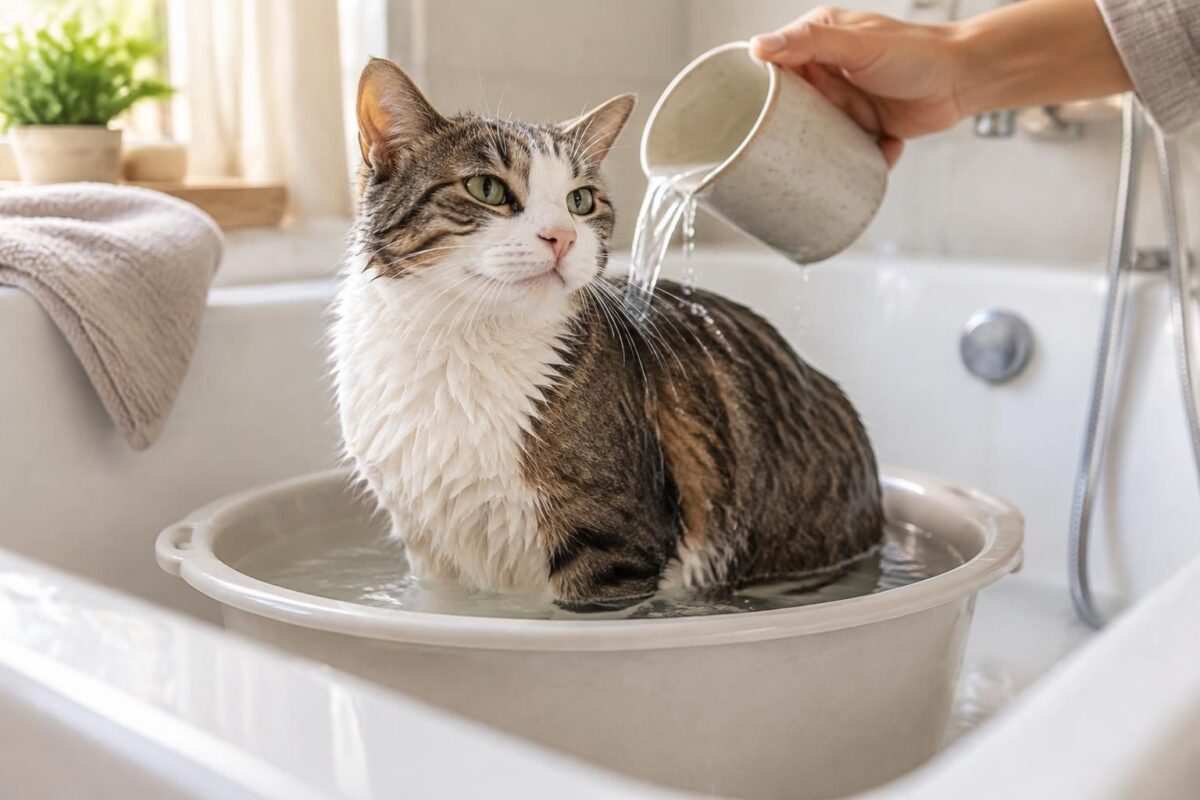
If a bath is necessary and a professional confirms it is appropriate, prepare everything before approaching your cat. A warm room, a non-slip surface, and a towel within reach help prevent slipping and prolonged handling.
Keep the water lukewarm and shallow. Wet the body gradually, without directing the stream at the head, ears, eyes, or nose; then apply only a suitable cat shampoo. Rinse thoroughly, as residue can irritate the skin and be swallowed while your cat grooms themselves.
The process in three steps
- Prepare: gently brush the coat, close doors and windows, then place a towel and the recommended product in a warm room.
- Wash gently: use a little lukewarm water, avoid the head, and follow your vet’s instructions for the shampoo and how long to leave it on.
- Dry and observe: pat your cat with a towel, keep them warm, and monitor their skin and behavior over the following hours.
If your cat struggles intensely, breathes with their mouth open, or seems exhausted, stop the bath and ask a vet for advice. When it comes to animal health, a well-tolerated partial clean is better than a forced full bath.
Questions to ask before bathing your cat
How often should you bathe a cat?
Most cats do not need to be bathed regularly. A bath is mainly warranted when they are very dirty or if a vet recommends it.
Can you use baby shampoo?
No. Use only a product formulated for cats or prescribed by a vet, as their skin and sensitivities differ from those of humans.
What should you do if a suspicious substance spills on your cat’s coat?
Stop your cat from licking themselves and contact a vet promptly for advice on what to do. Do not try to treat an unknown substance without professional advice.
Might an older cat need a bath?
Yes, if they have difficulty grooming themselves or their coat is soiled, but spot cleaning is often less stressful. Ask your vet for advice, especially if your cat is ill or has limited mobility.
Take good care of your companion, and feel free to share your observations in the comments. — Judith