Dogs: what a poorly planned natural diet can cause
Hello, Judith here. An unbalanced natural diet can cause deficiencies and digestive problems and, over time, weaken a dog’s health. Using fresh ingredients doesn’t guarantee that the diet meets their needs. When it comes to natural dog food, balance matters just as much as the quality of the ingredients.
What to do right away
- Don’t change their entire menu all at once: stick to their usual food while you ask for advice.
- Write down the ingredients and quantities served each day, including treats.
- Keep an eye on their condition: stools, appetite, weight, energy, and itching.
- Avoid improvised recipes and supplements added at random.
- Make an appointment with a veterinarian if symptoms persist or if your dog is a puppy, elderly, or ill.
A homemade diet must be formulated according to the animal’s weight, age, activity level, and health. To plan this transition carefully, see the precautions for natural dog food and the advice on how to avoid hidden nutritional deficiencies.
What a poorly planned natural meal can cause
A recipe made with meat, vegetables, and rice may seem complete while still lacking essential nutrients. Needs vary from dog to dog: a diet suitable for a healthy adult may not be right for a growing puppy or an animal with a chronic illness.
Imbalances aren’t always noticeable right away. A lack of vitamins or minerals can develop gradually, while a meal that’s too rich or poorly tolerated can trigger digestive problems such as loose stools, vomiting, or a loss of appetite.
Deficiencies, excesses, and food safety risks
An unbalanced meal may provide too much of some nutrients and not enough of others. For example, adding meat without adjusting the sources of calcium and phosphorus can throw the diet off balance, especially for a young dog whose skeleton is still developing.
Too much protein isn’t automatically beneficial: it doesn’t make a diet complete and may be unsuitable for some sick dogs. Raw foods also pose food safety risks, particularly due to bacteria and contamination of food preparation surfaces.
| Possible problem | What may contribute to it | What to watch for |
|---|---|---|
| Nutritional deficiencies | Homemade recipe that hasn’t been formulated or is repeated without adjustment | Changes in weight, coat, and energy |
| Digestive problems | Rapid transition, poorly tolerated ingredient, or diet that’s too rich | Vomiting, diarrhea, unusual stools |
| Food allergies | Reaction to an ingredient, to be assessed with a veterinarian | Itching, recurring ear infections, or digestive problems |
| Contamination | Raw meat that hasn’t been stored properly or inadequate hygiene | Digestive symptoms and a risk to people in the household |
A real-life example: Milo’s homemade diet
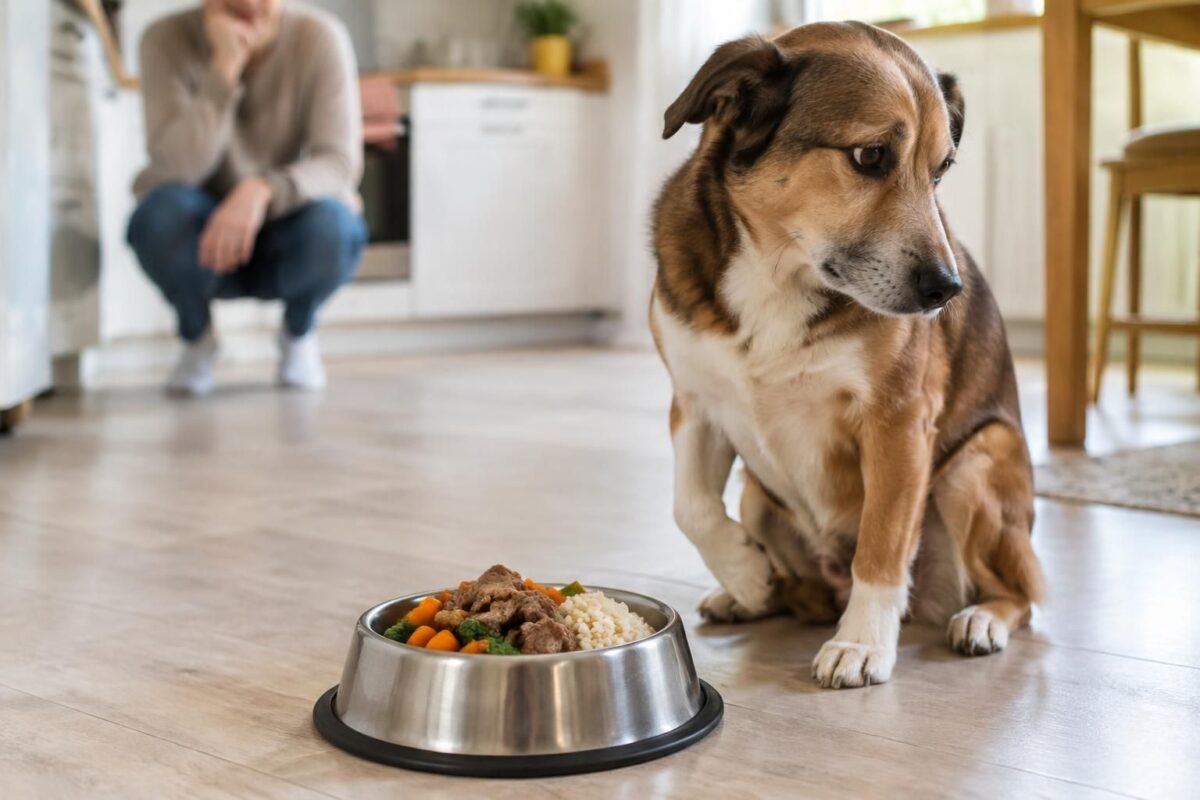
Milo, a fictional adult dog, gets meat, rice, and a few vegetables every evening. His owner thinks they’re giving him a healthy menu, but the recipe hasn’t been calculated and the portions vary from day to day. After several weeks, he develops loose stools: this sign alone doesn’t identify the cause, but it’s a reason to review his diet with a professional.
Food allergies shouldn’t be inferred from a simple itch. There may be other causes, and eliminating ingredients without professional guidance can make the diet even less balanced. When it comes to canine nutrition, it’s better to establish a precise plan than to make changes at random.
Three steps to make a natural diet safer
- Take stock. Write down their weight, age, activity level, any illnesses, the foods they’re given, and the symptoms you’ve noticed. Keep the packaging of the products you use.
- Have the diet formulated. Ask a veterinarian, ideally one trained in nutrition, to check the quantities and required nutrient intake. Supplements should be tailored to the recipe, not chosen at random.
- Monitor the effects. Make changes gradually according to the recommendations you’ve received, then keep an eye on their weight, stools, and general condition. If they vomit repeatedly, are extremely tired, or have persistent diarrhea, contact a veterinarian promptly.
This approach helps you enjoy the benefits of carefully prepared food without confusing natural with complete. A safe diet depends on measured needs and monitoring suited to the dog.
Frequently asked questions about natural dog food
Is homemade food necessarily better for a dog?
No. It may be suitable if its composition meets the dog’s needs and it’s prepared according to hygiene rules. An improvised recipe can lead to deficiencies or excesses.
What signs might suggest that a diet isn’t suitable?
Digestive problems, a change in weight, reduced energy, or changes to the skin and coat may be warning signs. These signs can have several possible causes: a veterinarian can investigate the underlying cause.
Can food allergies be identified from a single symptom?
No. Itching or digestive problems aren’t enough to confirm an allergy. The diagnosis and any elimination diet should be supervised by a veterinarian.
Can you give your dog raw meat?
Raw meat carries a risk of contamination for the dog and people in the household. Talk to a veterinarian and follow strict storage and hygiene rules if you’re considering this type of diet.
Take good care of your companion, and feel free to share what you’ve noticed in the comments. — Judith