
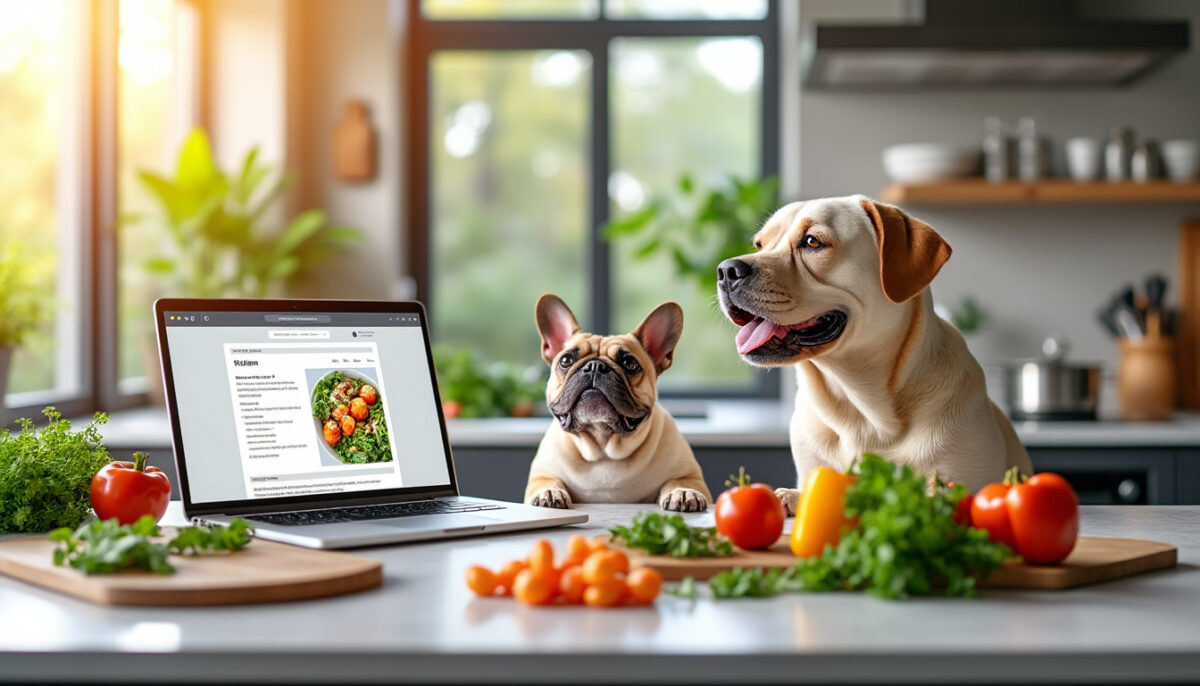
Dogs: Should you copy a recipe seen online?
Hi, it’s Judith. Copying a recipe you see online for your dog is fine, but proceed with caution: you need to adapt your dog’s food to their specific needs and ensure food safety. Many wonderful homemade recipes circulate online, but not all of them are necessarily suitable for your companion. Dogs have specific nutritional requirements that should not be overlooked.
To do immediately
- Always check the source of recipes to ensure they come from experts or reliable websites.
- Adjust the ingredients according to your dog’s size, age, and potential allergies.
- Don’t reproduce recipes blindly, take the time to understand the nutritional composition.
- Always store leftovers properly to avoid any health risks.
- Consult a veterinarian before making any major changes to your pet’s diet.
To help you cook healthy and balanced meals, you can consult reliable resources such as this selection of easy recipes for dogs or learn how to cook meat for dogs properly. Homemade food doesn’t always rhyme with simplicity, but it’s an act of love when it’s done well.
Why not just blindly copy a recipe seen online?
Dogs aren’t humans – their digestion and nutritional needs are very different. An online recipe might seem perfect, but it often doesn’t take into account your dog’s specific needs, such as their weight, activity level, or any allergies. Copying a recipe exactly, without adjustments, can lead to dangerous deficiencies or excesses.
A common mistake is ignoring the importance of cooking. For example, some owners feed raw meat from trendy recipes, but this poses a significant health risk. Proper cooking eliminates most bacteria and preserves essential vitamins like B6 and B12.
If your dog has a digestive problem
Avoid recipes that are too rich or contain new ingredients without veterinary advice. However, introduce new foods gradually and observe your pet’s reactions.
If you’re short on time
Choose simple, well-rated, and tested recipes using easy-to-find ingredients. Consistency is more important than the complexity of the meal.
3 steps to prepare a safe homemade meal
- Step 1: Choose fresh, lean meat that’s suitable for your dog (chicken, beef, fish). Alternate meats to vary the nutrients and optimize your dog’s nutrition.
- Step 2: Cook the meat gently. Steaming or simmering is perfect for preserving nutrients and avoiding foodborne illnesses. Adjust the cooking time according to the type of meat (30 minutes for beef, up to 2 hours for chicken).
- Step 3: Add extras like cooked vegetables (carrots, zucchini), a little vegetable oil, and some fruit for balance. Remember to blend or chop everything into small pieces to avoid any risk of choking.
The golden rules for a successful homemade recipe
| Appearance | Practical advice |
|---|---|
| Meat selection | Choose fresh and varied meats, without excessive fat or bones. |
| Cooking | Cook slowly and gently; avoid overcooked or raw meat. |
| Servings | Adapts precisely according to weight and height, prevents overweight. |
| Supplements | Cooked vegetables and vegetable oil for vitamins and good coat health. |
| Conservation | Leftovers can be kept in the refrigerator for a maximum of 3 days, and always reheated before serving. |
By following these steps, your homemade recipe will no longer be a simple copy-paste from the internet, but a healthy meal tailored to your dog’s needs. A common mistake is forgetting to consult your veterinarian, essential advice to ensure food safety and nutritional quality.
When embarking on this preparation, remember that every dog is unique. Listening to their appetite, preferences, and reactions to a new dish is fundamental to ensuring their happiness and health.
Is it safe to give raw meat to your dog?
Raw meat can contain dangerous bacteria. It is safer to opt for proper cooking methods that eliminate health risks while preserving essential nutrients.
How can I tell if a homemade recipe is suitable for my dog?
Always check that the recipe is appropriate for your pet’s age, weight, activity level, and any allergies. A veterinary consultation is recommended before making any changes.
How to store leftover meat?
Store leftovers in an airtight container in the refrigerator for up to 3 days. Always reheat to a lukewarm temperature before serving, never cold or piping hot.
What additions can be made to a homemade recipe?
Cooked vegetables such as carrots or courgettes, a little sweet fruit such as apple, plus a drizzle of vegetable oil (olive or rapeseed) for essential fatty acids.
Should you follow a recipe to the letter?
The recipes are a starting point that should be adapted to your dog. Observing their reactions and adjusting the quantities or ingredients is essential for a balanced meal.
Thank you for your interest, Judith. It would be kind of you to leave a comment at the end of the article. Thank you all.