Garden wildlife: does this water feature help or attract too many?
Hi, I’m Judith.
A well-designed water feature helps local wildlife without attracting excessive numbers of animals, provided you choose the right type and maintain it.
During dry spells, birds, hedgehogs, and insects need safe access to water. The risk mainly comes from small, forgotten containers or poorly planned setups, not from the presence of a thriving pond.
What to do right away
- Choose a partially shaded, visible spot close to plant cover.
- Add stones or a rough ramp so small animals can climb back out.
- Replace the water in a shallow drinking dish every two to three days during hot weather.
- Empty unused saucers and buckets, where standing water encourages mosquitoes.
- Avoid chemicals and don’t put fish in a pond intended to support biodiversity.
To create a balanced haven for wildlife, also consider shelters and hedges: these wildlife-friendly garden features are a useful complement to a water feature. If you’re unsure about the shape or location, this guide to creating a water feature suited to local wildlife offers more practical tips.
The pitfall: confusing a thriving pond with stagnant water
A small amount of still water in a bucket, a clogged gutter, or a forgotten dish can become a mosquito breeding site. These small volumes rarely support enough predators to control the larvae.
A balanced pond works differently. Dragonfly larvae, backswimmers, and some tadpoles help keep mosquitoes in check, while amphibians and aquatic insects find a habitat there. It can take one or two seasons for this balance to become established.
A drinking dish or a pond: choosing the right option for your space
A drinking dish is easy to set up and works well for birds and pollinators. Even a modest pond can offer more: it provides a breeding site for amphibians and a habitat for several aquatic insects.
Clara, who has only a small terrace, started with a wide saucer filled with pebbles. She rinses it regularly and places it near a shrub without pushing it right up against the foliage: birds have shelter nearby while still being able to see clearly around them.
| Type of water feature | Depth guide | What it can provide | Things to watch out for |
|---|---|---|---|
| Saucer or container | 2 to 5 cm | Drinking water for birds and insects | Replace the water frequently |
| Patio tub | 20 to 40 cm | A few plants and aquatic insects | Provide a ramp or stones |
| Garden pond | Terraced levels from 10 to 80 cm | A richer habitat for amphibians and dragonflies | Make one bank gently sloped |
| Large natural pond | Up to 1 m or more | A more complete and resilient ecosystem | Check that it is safe for children and pets |
Limit wildlife attraction without depriving animals of water
A water feature attracts visitors, but that doesn’t mean it will create an uncontrollable concentration of animals. Its location, accessibility, and maintenance frequency are the main factors determining its impact. Keep it away from the bird feeder to reduce mess, and avoid placing it in an area heavily used by dogs or cats.
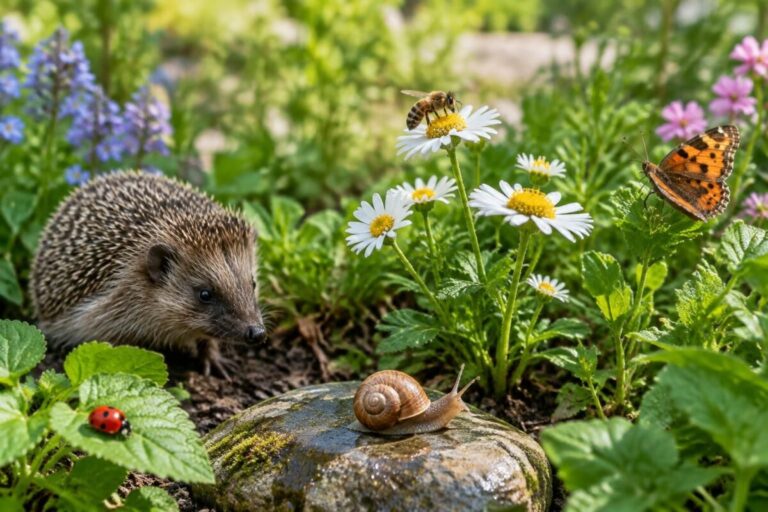
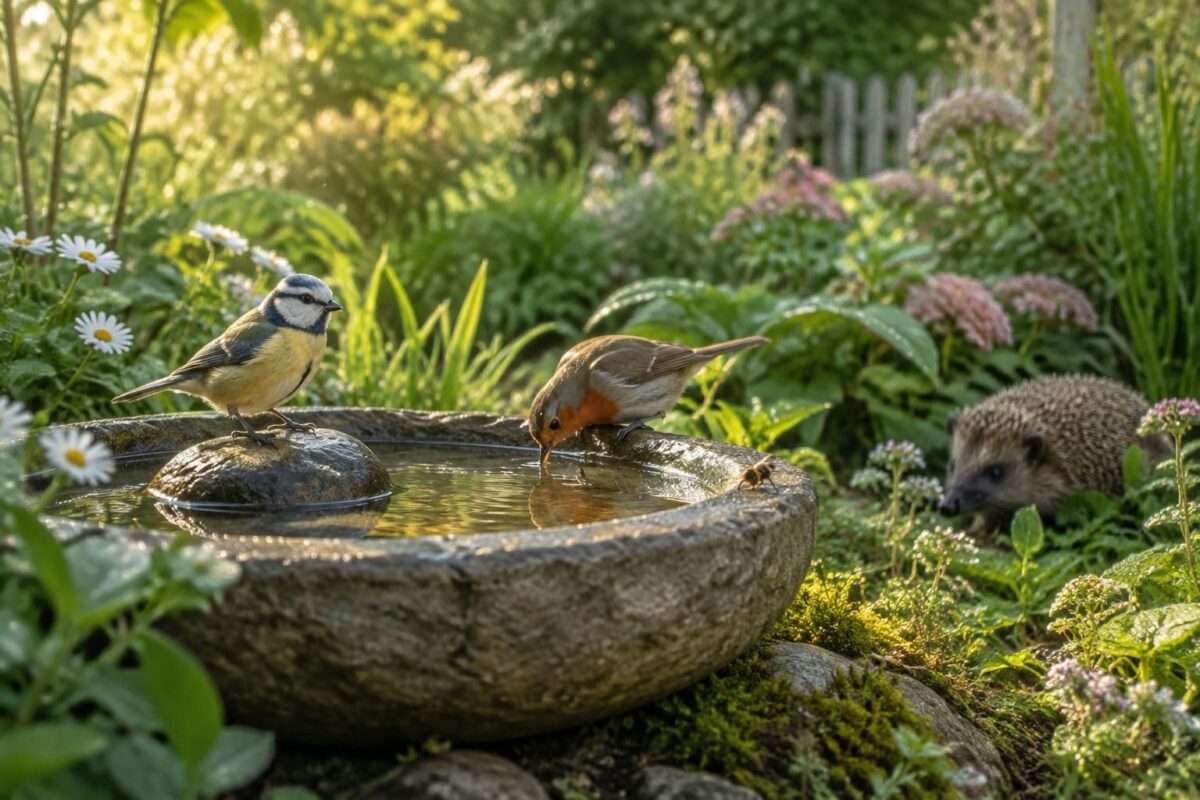
For bees and butterflies, a shallow dish with pebbles sticking out of the water is often enough. The stones provide dry perches and reduce the risk of drowning. For a hedgehog, a gentle slope or ramp is essential, especially if the container is deep.
Three steps to set up a safe water feature
- Choose the location. Opt for partial shade, with plant cover nearby and an open area around it so birds can spot danger.
- Provide a way out. Make one bank of a pond gently sloped, or place a stable stone and a rough ramp in a tub.
- Fill it and observe. Rainwater is generally suitable for a pond. For a drinking dish, monitor its cleanliness and replace the water often, especially in hot weather.
Maintain it without disrupting the ecological balance
Clean a drinking dish regularly with a dedicated brush and clean water. If the water becomes cloudy, slimy, or dirty, empty it, rinse the container, and refill it: hygiene also matters for bird health.
An established pond needs less intervention. Remove some of the dead leaves in autumn, but never empty it completely to “clean” it: you would destroy eggs, larvae, and useful microorganisms. If plants take over the surface, remove them gradually and leave them on the bank for a few days so small wildlife can return to the water.
Signs that your water feature needs adjusting
Foul-smelling water, a large buildup of debris, or a surface completely covered with vegetation are signs that action is needed. On the other hand, a few algae or water that turns green temporarily don’t always mean the pond is in poor condition.
Also look around the edges: paw prints, a few feathers, or insects landing there show that the water feature is being used. The goal isn’t to attract as many animals as possible, but to provide an accessible, clean resource that suits the garden.
Does a water feature attract too many mosquitoes?
A small, neglected container of stagnant water can encourage mosquitoes. A thriving pond supports natural predators of mosquito larvae, but it can sometimes take one or two seasons for its balance to become established.
How often should you change the water in a drinking dish?
During hot weather, replace the water every two to three days. Clean the container sooner if the water is cloudy or dirty.
How deep should a water feature for wildlife be?
A dish 2 to 5 cm deep is suitable for birds and insects if stones stick out of the water. For a pond, several levels and at least one gently sloping bank make it easier for wildlife to move around.
Should you empty a pond to clean it?
No. Avoid emptying it completely, as this disrupts aquatic life. Gradually remove excess leaves and plants without disturbing the entire ecosystem.
Thanks for reading, Judith. Feel free to leave a comment if you’d like to share your thoughts or experience.