Garden Animals: The Detail That Reveals a True Ally
Hello, Judith here.
The detail that reveals a true garden ally is what an animal eats or helps with: a larva that hunts aphids, a bee that visits flowers, or a hedgehog rummaging through leaves.
In the garden, appearances can be deceiving: ladybug larvae are less familiar than adults, but they are valuable hunters. Observing their behavior helps you distinguish garden allies from visitors to keep an eye on, without intervening too quickly.
What to do right away
- Observe the animal from a distance before moving it or chasing it away.
- Notice what it eats: aphids, slugs, nectar, or dead plant matter.
- Avoid pesticides, even when pests seem plentiful.
- Leave some dead leaves and a sheltered area in the garden.
- Note where and when the animal appears to better understand its role.
To identify the visitors you come across, check out these guides to garden animals and this guide to species found in gardens.
The trap: judging an animal by its appearance
An unfamiliar insect can be alarming, even though it plays a useful role. The ladybug larva, for example, doesn’t look like the red adult with black spots: its long, dark body can make it seem like a pest.
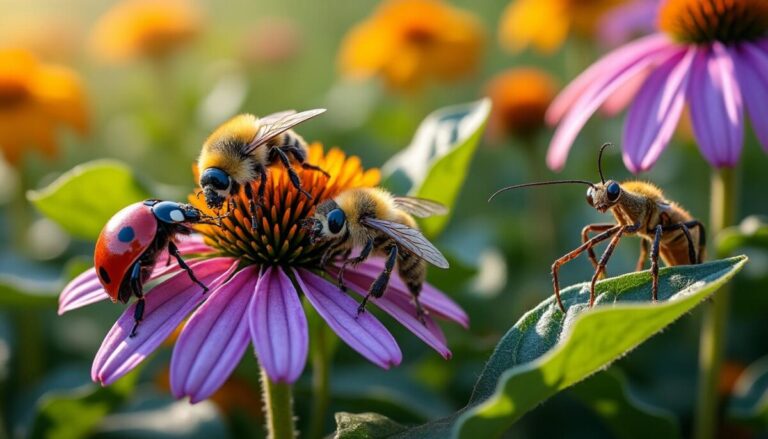
Its behavior is often the best clue. If it moves across a plant covered in aphids and eats them, it is acting as a natural predator. By contrast, a bee gathering nectar contributes to pollination, while woodlice and earthworms help recycle organic matter.
| Animal observed | Tell-tale detail | Common role in the garden |
|---|---|---|
| Ladybug larva | It hunts aphids on leaves | Controls small pests |
| Bee or bumblebee | It visits flowers to collect nectar or pollen | Pollinates plants |
| Hedgehog | It searches for food on the ground, especially after dark | Eats a range of invertebrates |
| Ground beetle | It moves close to the ground, often in sheltered areas | Preys on slugs and larvae |
| Earthworm | It burrows and leaves behind small piles of castings | Aerates and enriches the soil |
These roles complement one another: flowers feed pollinators, predatory insects keep some pests in check, and decomposers maintain the soil. It’s this diversity, rather than any one animal, that makes an ecological garden resilient.
Garden allies can be recognized by their habits
On plants, look for hunters and pollinators
Adult hoverflies sometimes look like small wasps, but they are harmless. They visit flowers, while their larvae may eat aphids. Lacewings are just as inconspicuous: their larvae prey on aphids and mites, among other things.
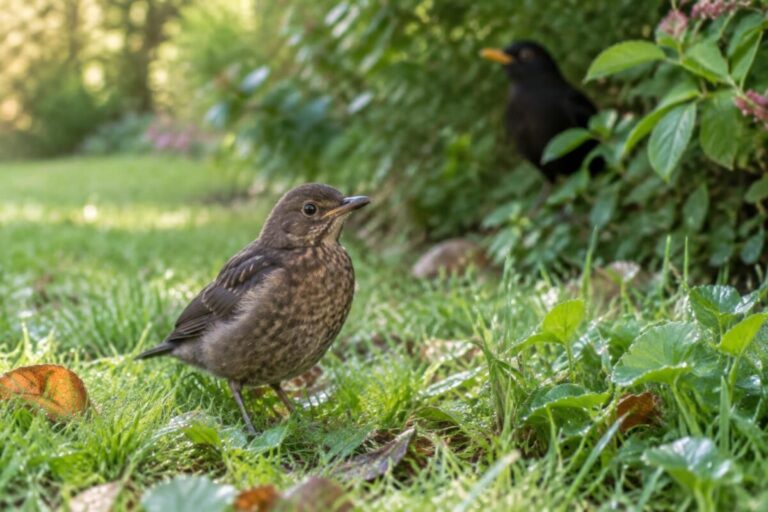
Birds offer another clue: tits searching among the branches may be looking for insects and caterpillars. Flowering plants, a few shrubs, and avoiding treatments provide them with more resources than a uniformly mown space.
On the ground, traces also tell the story
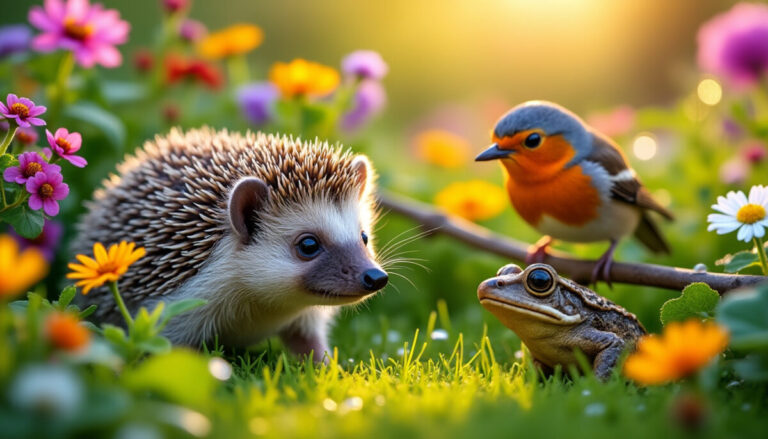
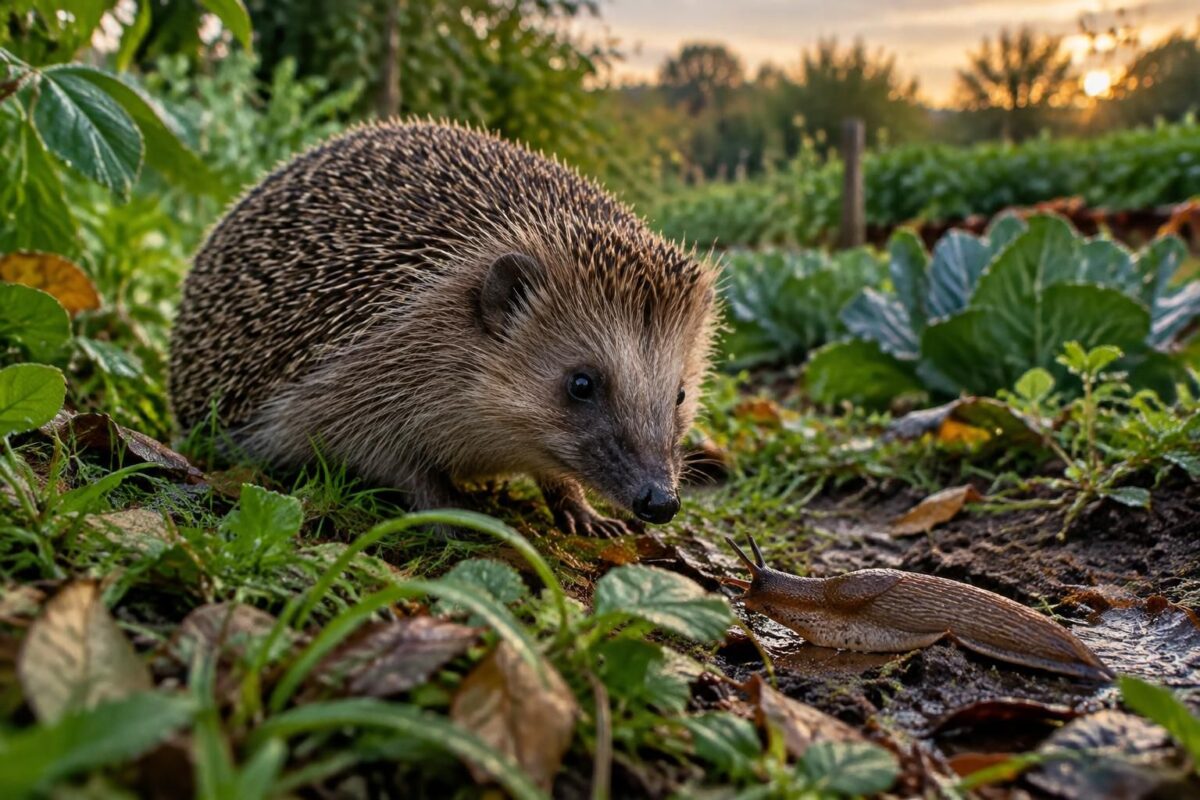
A pile of leaves or dead wood can shelter ground beetles, woodlice, and sometimes a hedgehog. Hedgehogs are wild animals: it’s better to leave them a passage, a refuge, and clean water than to try to feed or handle them.
Earthworms can be spotted by their small burrows and their castings. They help aerate the soil; compost and mulch encourage this underground life without requiring any complicated setup.
Three ways to welcome garden allies
- Provide a variety of resources. Plant flowers with different shapes and, if possible, keep a small area less manicured. Calendula, phacelia, yarrow, and cosmos can provide nectar and pollen for different visitors.
- Preserve simple shelters. A diverse hedge, a woodpile, or a few stones can create refuges. A shallow water source can also be useful, as long as you keep it clean and accessible.
- Observe before taking action. If aphids appear, wait a little and check whether ladybug or hoverfly larvae are already there. A moderate number of pests can feed beneficial insects and contribute to the natural balance.
A common mistake is to immediately remove every insect or damaged leaf. But beneficial insects need prey and habitats; they establish themselves gradually when the garden makes room for them.
To understand how species interact, observe flowers, foliage, and soil at different times of day. The most telling detail is often a simple action: pollinating, hunting, or decomposing. That’s how biodiversity becomes visible, right in front of you.
What detail helps you recognize an animal that is useful in the garden?
Observe its behavior and what it eats. A larva that hunts aphids, a bee that gathers nectar, or an earthworm that burrows plays an identifiable role in the ecosystem.
Is the ladybug larva useful?
Yes. It doesn’t look like an adult ladybug, but it hunts aphids in particular. Avoid disturbing it if it is feeding on a plant.
How can you attract more beneficial garden insects?
Plant a variety of flowers, preserve shelters such as hedges and woodpiles, and avoid pesticides. A small water source can also welcome some animals.
Should you feed a hedgehog that visits the garden?
Instead, give it safe access, a natural shelter, and clean water. Avoid handling it and don’t give it milk, which can be harmful.
Thanks for reading, Judith. If this topic resonates with you, feel free to leave me a comment below the article.