Injured wild animal: real emergency or false alarm
Hello, it’s Judith.
An injured wild animal needs prompt help if it is bleeding, cannot move, or is in immediate danger; otherwise, observe it from a distance and ask for advice before intervening.
A motionless young animal is not always abandoned, and an unusual posture does not necessarily signal an animal emergency. A few concrete clues can help distinguish a false alarm from a situation that requires specialist intervention.
What to do when you encounter an injured wild animal
- Keep your distance and move children and pets away.
- Look for visible signs: blood, a drooping wing, a leg that cannot bear weight, difficulty breathing, or no response.
- Note the exact location, the species if you can identify it, and what you observe.
- Call a wildlife rescue center or a qualified professional for instructions.
- Do not offer food or water or try to treat the animal without specialist advice.
To prepare a useful report, read these tips on steps to avoid making the situation worse and on who to contact in the evening or on weekends.
Real emergency or false alarm: signs that make the difference
An animal that is bleeding, lying down and unresponsive, has an obvious injury, or is on a road is in danger. In these cases, the priority is to protect people and contact a specialist organization without trying to handle the animal.
By contrast, a young bird on the ground may be learning to fly. If its parents appear to be nearby and it does not seem injured, observing it from a distance is often better than attempting an improvised rescue.
| What you observe | Appropriate response |
|---|---|
| Blood, an open wound, or an obviously injured wing or leg | Call a wildlife rescue center or a veterinarian experienced with wildlife promptly. |
| An animal lying on a road or exposed to danger | Stay safe and report the exact location; do not go onto the road. |
| A fully feathered, alert young bird with no apparent injury | Observe from a distance and keep dogs and cats away. |
| An animal that is motionless but shows no obvious signs of injury | Watch briefly from a distance and ask a professional for advice if you are concerned about its condition. |
If the animal is injured, don’t confuse caution with inaction
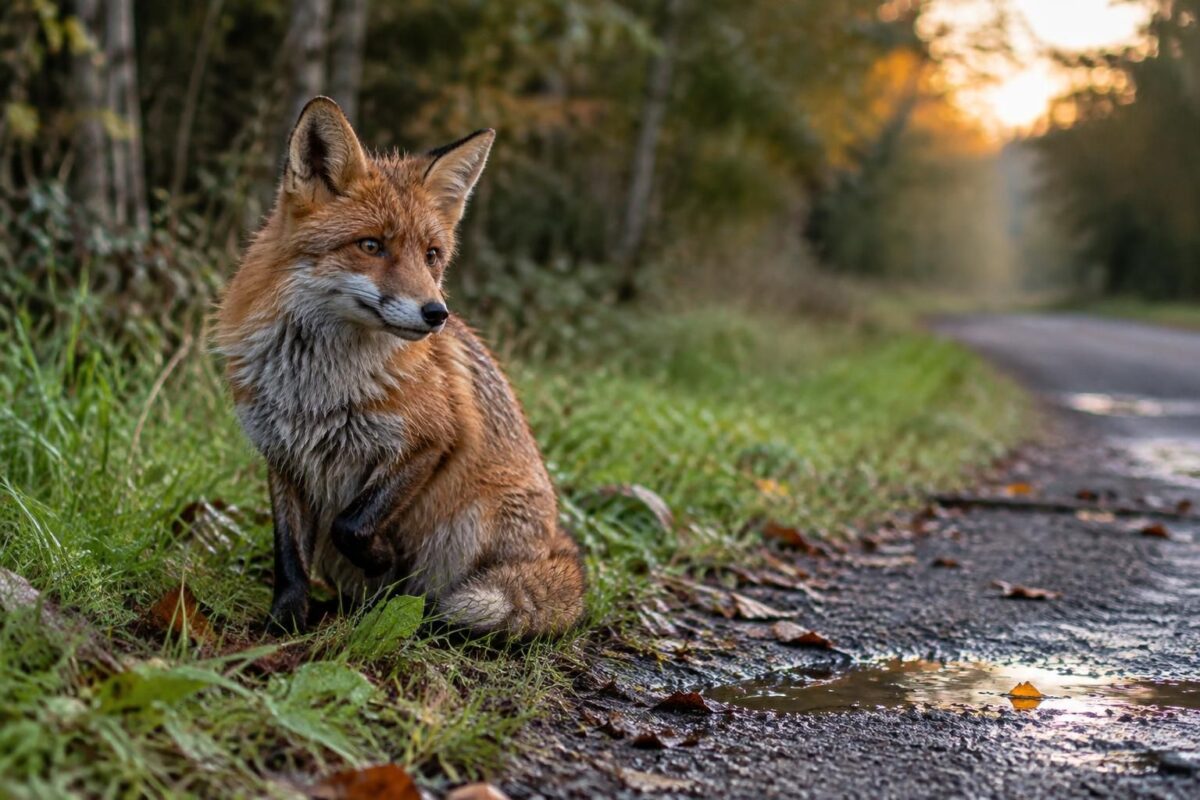
A serious injury may be less visible than a wound: a trailing wing, an abnormal gait, or labored breathing warrant a prompt call. The risks also vary by species; a bird of prey, fox, or bat may bite or transmit infectious agents if handled.
First aid begins with reducing stress and preventing further injury. Do not try to capture the animal: ask the wildlife rescue center what to do and follow its instructions.
If there are no signs of injury, check before intervening
A fawn curled up in the grass or a young bird on the ground may be alone temporarily without having been abandoned. Approaching, moving, or feeding the animal could separate it from its parents or disrupt its behavior.
Move far enough away that you do not affect what is happening. If you notice a real danger or the animal’s condition changes, share your observations with a professional rather than repeatedly checking on it up close.
How to help without making things worse: a 3-step procedure
- Make the area safe without putting yourself in danger. Keep pets and bystanders away. If the animal is on a road, do not try to stop traffic yourself.
- Describe what you see over the phone. Give the species if identifiable, the signs you have observed, the exact location, and any nearby hazards. A photo taken from a distance may help as long as it does not bring you closer to the animal.
- Act only on instructions. The professional will tell you whether to wait, mark off the area, or move the animal. Some animals require specialist intervention and should not be touched.
For example, if a hedgehog appears injured near a busy crossing, keep cars and dogs away, then call for instructions. Putting it straight into a box without advice could worsen an injury or complicate its care.
Common mistakes when reporting an animal
Good intentions are not enough: giving the animal milk, forcing it to drink, or transporting it in a vehicle could harm it. Even a seemingly simple action should be approved by a wildlife rescue center, especially if the species is unknown.
A precise report makes it easier to assess the situation: give the access point, visible landmarks, and any changes in the animal’s condition. Keeping your distance and providing good information are often more useful than attempting an improvised capture.
Common questions about injured wild animals
How can you tell if a wild animal is really injured?
Look for visible signs such as blood, a drooping wing, a leg that cannot bear weight, difficulty breathing, or no response. If in doubt, observe from a distance and ask a professional for advice.
Should you move an injured wild animal?
Not without specialist instructions, unless immediate danger requires action and a professional has guided you. Some species may be injured further or defend themselves when handled.
What should you do if a young bird is on the ground?
If it is fully feathered, alert, and has no apparent injury, keep your distance and move pets away. Its parents may be nearby; call a wildlife rescue center if you notice an injury or danger.
Can I give an injured animal water or food?
No, unless a professional has explicitly told you to. Inappropriate food or water poured into its beak could make its condition worse.
I hope you found these tips helpful. Share your experience in the comments! — Judith