
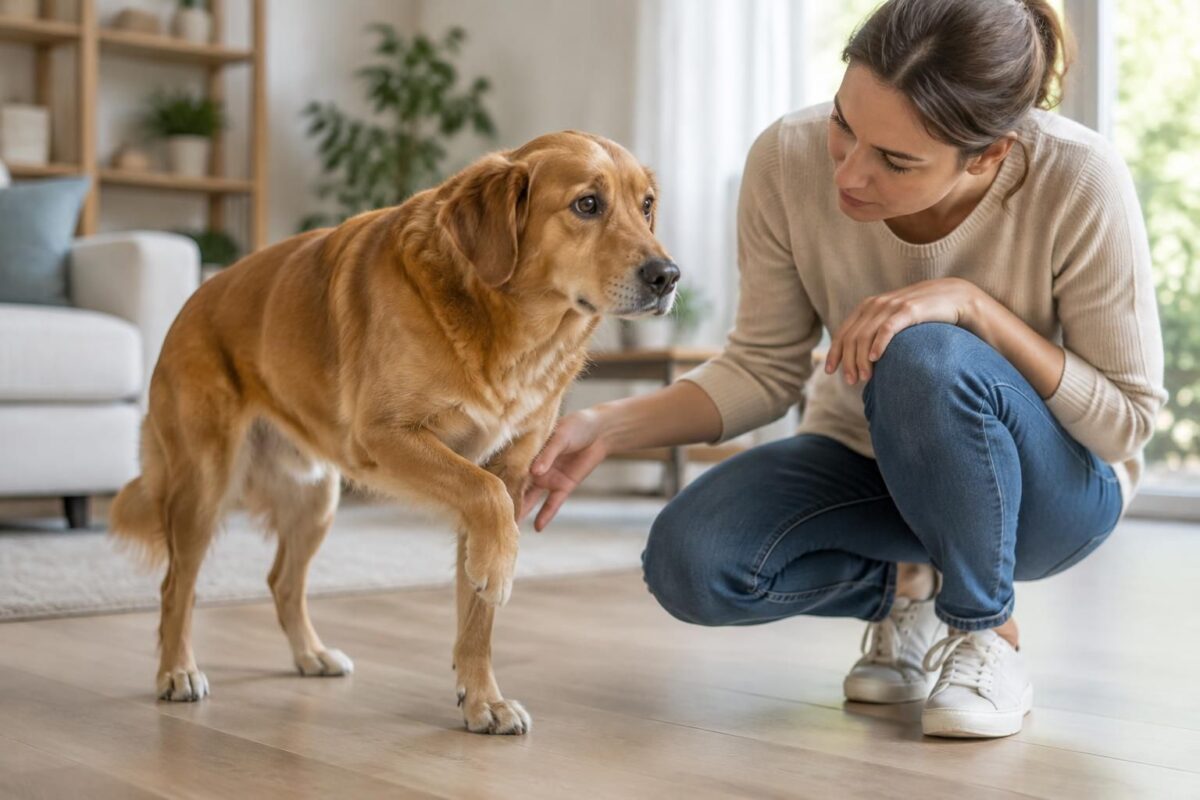
Injured dogs: Does this sudden limp already warrant care?
Hello, this is Judith.
Yes: sudden limping warrants at least a careful assessment, and a prompt consultation if the pain is severe or the paw no longer touches the ground.
An injured dog may limp because of a paw injury, but also because of a joint or bone problem. Here are some useful first steps to protect your dog’s health and recognize a veterinary emergency.
What to do right away if your dog is limping
- Let your dog rest and limit movement to necessary outings on a leash.
- Observe your dog’s gait without forcing them to walk or climb stairs.
- Gently check the paw: the paw pad, claws, and spaces between the toes, without pulling on an embedded object.
- Call a veterinarian if the limping is severe, gets worse, or persists.
- Do not give any human medication or apply any treatment without veterinary advice.
A dog’s limping can be caused by anything from minor irritation to a fracture or joint injury. To better understand the possible causes, you can consult these resources on first aid for a limping dog and signs associated with limping.
Sudden limping: signs that require veterinary care
If your dog refuses to put weight on a paw, whines, has significant swelling, or seems very lethargic, contact a veterinary clinic promptly. A deformity, a deep wound, heavy bleeding, or abnormally rapid breathing calls for a veterinary emergency.
On the other hand, mild discomfort after an activity may sometimes ease with rest. If it does not improve quickly, comes back, or is accompanied by a change in appetite or behavior, ask for advice: dogs sometimes hide their pain.
What your dog’s gait can reveal
A dog chewing at a paw may be showing signs of irritation or localized pain. Difficulty getting up or jumping may point to joint discomfort, but these signs are not enough to make a diagnosis.
| What you observe | Recommended response |
|---|---|
| Your dog puts the paw down but limps slightly | Rest, monitor, and call the veterinarian if it persists or gets worse. |
| Your dog no longer puts the paw down or seems very painful | Contact a veterinarian promptly. |
| Deformity, deep wound, or heavy bleeding | Have the situation assessed without delay. |
For example, after a walk, a dog may start limping because of an irritated paw pad. Even if the discomfort seems mild, a gentle inspection and close monitoring can help you spot any worsening without increasing your dog’s pain.
Veterinary examination: identifying the cause of the limping
During a veterinary examination, the professional observes your dog’s gait, examines the paws, and carefully feels the muscles and joints. They will ask when the problem started, whether your dog has fallen, and whether the limping changes with rest or exercise.
Depending on their findings, they may recommend an X-ray or other tests. A paw injury is not always visible from the outside; imaging can sometimes help identify a fracture or a more serious underlying injury.
Three steps to take without making things worse
- Keep your dog safe and calm. Settle them in a comfortable place and avoid play, running, and stairs.
- Observe without handling them excessively. Note which paw is affected, when the limping started, any visible signs, and any changes in behavior.
- Share this information with the veterinarian. Follow their instructions for veterinary care, tests, and gradually returning to activity.
Treatment depends on the cause: supervised rest, prescribed medication, or, in some cases, surgery. Do not massage a painful area or give anti-inflammatory medication intended for humans; some medications can be dangerous for dogs.
Rest and recovery: helping your dog get comfortable again
Once the cause has been identified, follow the recommended rest period and the veterinarian’s instructions for returning to activity. A support harness or ramp may help some dogs get around, but these accessories do not replace professional advice and should be suited to your dog’s build.
A balanced diet contributes to overall well-being. If your dog needs to lose weight or you are considering a supplement, ask your veterinarian for advice: needs vary according to age, health, and diagnosis.
When does limping in a dog become an emergency?
A prompt consultation is necessary if the dog no longer puts weight on the paw, is in severe pain, has a deformity, a deep wound, heavy bleeding, or an unusual general condition.
Can I wait if my dog is limping slightly?
You can let your dog rest and monitor their progress, but contact a veterinarian if the discomfort persists, gets worse, or comes back.
Should I give a human painkiller to a limping dog?
No. Some human medications are toxic to dogs. Do not give any treatment without veterinary instructions.
What should I check if my dog has a paw injury?
Gently check the paw pads, claws, and spaces between the toes. Do not put your fingers into a wound or remove an object that is deeply embedded; ask a veterinarian for advice.
Take good care of your companion, and feel free to share your observations in the comments. — Judith


