Garden wildlife: how to help without causing damage
Hello, this is Judith.
To help garden wildlife without harming it, offer native plants, clean water and natural shelter, while removing hazards and chemicals.
A welcoming garden doesn’t need to be left completely untended: a few well-placed features are enough. The key is to let wild animals live at their own pace, without handling them or making them dependent on you.
Good habits to adopt right away
- Keep a quiet corner with fallen leaves, a few branches or tall grasses.
- Set up a shallow water source, with pebbles to help insects climb back out.
- Plant native species that bloom at different times of the year.
- Avoid pesticides and traps, including products marketed as gentle or natural.
- Check before pruning or moving a shelter: there may be a nest or an animal inside.
To adapt what you do to the season, also check out these tips for helping hedgehogs, birds and insects in autumn and these pointers on how to support wildlife without overdoing it.
Welcome garden wildlife without disrupting its habits
A mixed hedge, a flower bed and a small woodpile do more than just decorate: they provide shelter and pathways for different species. By varying heights, sunny areas and shady spots, you can encourage biodiversity without transforming the entire garden.
For example, in an urban garden, a few square metres left undisturbed can provide food and hiding places for insects. Add native plants suited to the local soil: they often need less maintenance and help protect pollinators.
Create natural shelters instead of adding lots of installations
Natural shelters are often more useful than equipment bought at random. A pile of leaves sheltered from the rain, a few carefully placed stones or a patch of lawn that is mown less often can provide a home for insects, hedgehogs or lizards.
Nest boxes and insect hotels should be suited to their occupants and maintained with care. A poorly placed nest box or an insect hotel filled with unsuitable materials may go unused; it’s better to start by preserving the habitats that are already there.
Helpful ways to provide water and food and support birds
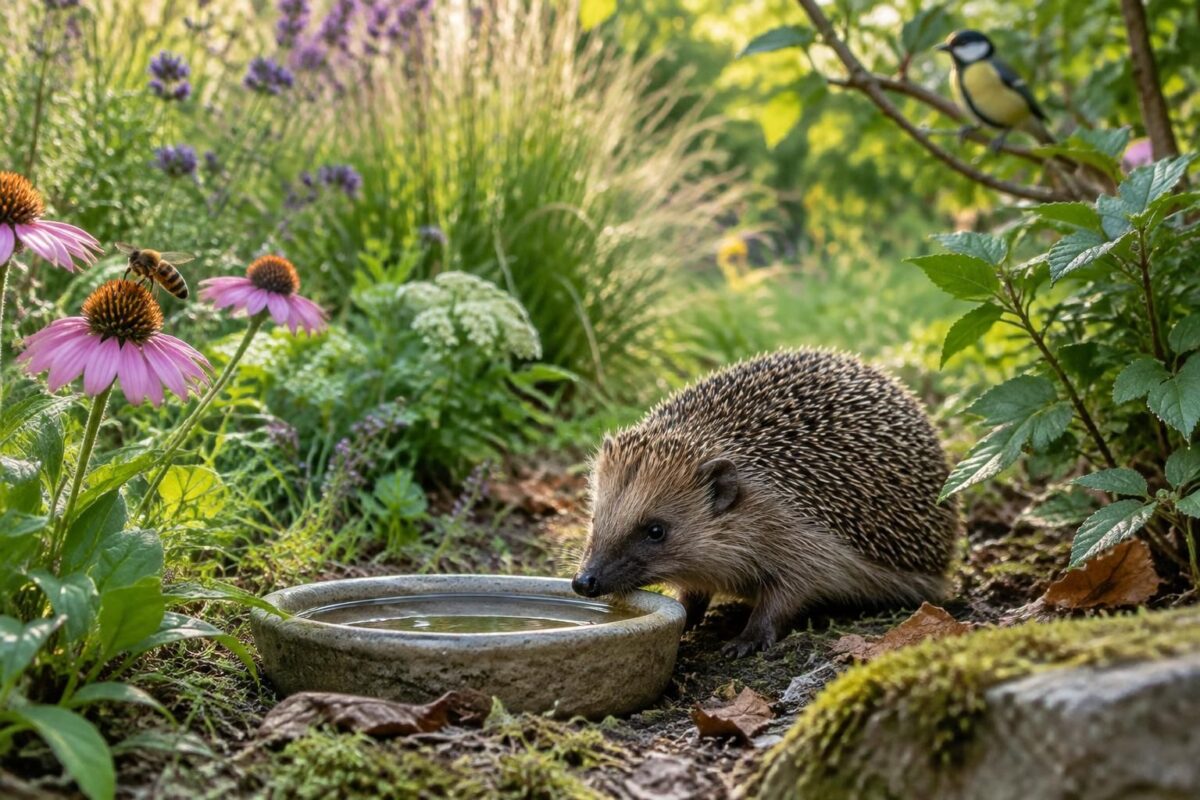
A stable, shallow container is enough to provide water. Change it regularly and add a few pebbles or a small ramp: insects will be able to land on it and climb back out if they fall in.
Bird feeders aren’t necessary all year round. If you put one out during a cold spell, offer suitable seeds in reasonable quantities, clean it often and place it out of cats’ reach. Avoid bread and milk, which aren’t suitable food for birds or hedgehogs.
| Feature | What it provides | Useful precaution |
|---|---|---|
| Shallow water source | Drinking water and bathing for several species | Refresh the water and add stones |
| Varied mixed hedges | Shelter, food and pathways | Avoid trimming during nesting season |
| Pile of leaves or wood | Hiding places and seasonal shelter | Move it only after checking |
| Suitable nest box | A nesting site for certain species | Place it somewhere quiet and sheltered |
Reduce hidden hazards in the garden
Windows can reflect the sky or trees and confuse birds. Visible markers placed on the outside of the glass help make the window easier to see. Also remember to cover or remove loose netting and deep containers that could trap a small animal.
Eco-friendly gardening is also about timing: before trimming a hedge, clearing a pile of leaves or cleaning a shelter, look carefully and check that no animal is inside. And if a young animal seems to be alone, don’t automatically pick it up: its parents may be nearby.
A simple three-step approach to helping without causing harm
- Observe for a few days. Take note of the animals that are around, the places they visit and any potential hazards, such as a reflective window or netting.
- Make changes gradually. Start with a water source, native plants and a sheltered corner; there’s no need to install several features at once.
- Maintain things in moderation. Clean water sources and feeders, but check shelters before doing any work and give animals space.
A livelier garden takes shape over the seasons. By providing food, water and shelter without trying to attract or touch every visitor, you help preserve habitats and create a balance that benefits the whole garden.
Frequently asked questions about garden wildlife
Should you feed birds all year round?
No, artificial food isn’t essential all the time. If you choose to use a feeder during cold spells, offer suitable seeds in moderate quantities and clean the equipment regularly.
What is the safest water source for insects?
A shallow container filled with pebbles or pieces of wood that stick out of the water allows them to drink and climb back out more easily. Refresh the water regularly.
Can you trim a hedge at any time of year?
Before trimming, check that there isn’t a nest or a hidden animal inside. Avoid working during nesting periods and postpone the work if you spot any activity.
A wild animal seems to be alone: should you take it in?
Not necessarily. Its parents may have gone to look for food. Observe from a distance and avoid handling the animal; if it is injured or in immediate danger, contact a wildlife rehabilitation centre.
I hope you found these tips helpful. Share your experience in the comments! — Judith