Injured wildlife: should you feed it or give nothing at all?
Hi, I’m Judith. If you find injured wildlife, neither food nor water should be given to it without instructions from a specialist. Keep bystanders away, observe the animal from a distance and promptly contact a wildlife care center. A prudent gesture can prevent worsening its injury and facilitate aid to the animals.
What to do right away
- Protect yourself: do not approach an animal that threatens, bites or seems panicked.
- Keep your distance: keep away dogs, cats and people around.
- Do not give anything: neither water, nor food, nor milk, nor medicine.
- Call a care center: describe the species, its condition and the place where you found it.
- Wait for instructions: do not capture or transport the animal without guidance, unless indicated by the specialist.
An injured wing, an open wound or the inability to stand justify a rapid call. To verify the correct steps and know who to contact, consult the veterinarians’ advice on handling a wounded wild animal and the wildlife rescue recommendations.
Why you should not feed a wounded animal
An animal in shock may swallow incorrectly, have trouble digesting or react dangerously to food that isn’t suitable for it. Even a small amount of water poured into its beak can cause choking.
The impulse to offer bread or milk stems from good intentions, but it can complicate care. The appropriate feeding depends on the species, age and the animal’s condition: it should be decided by a specialist.
Actions to avoid worsening the situation
- Don’t force the animal to drink or eat.
- Don’t give it milk, even if it seems young.
- Avoid handling or moving it without advice.
- Do not keep it at your home to nurse it: keeping wild animals is regulated.
A common mistake is placing a bowl of water right under the beak of a weak bird. It’s better to keep the animal calm and follow the first-aid guidance given over the phone.
Young animal found alone: should you intervene?
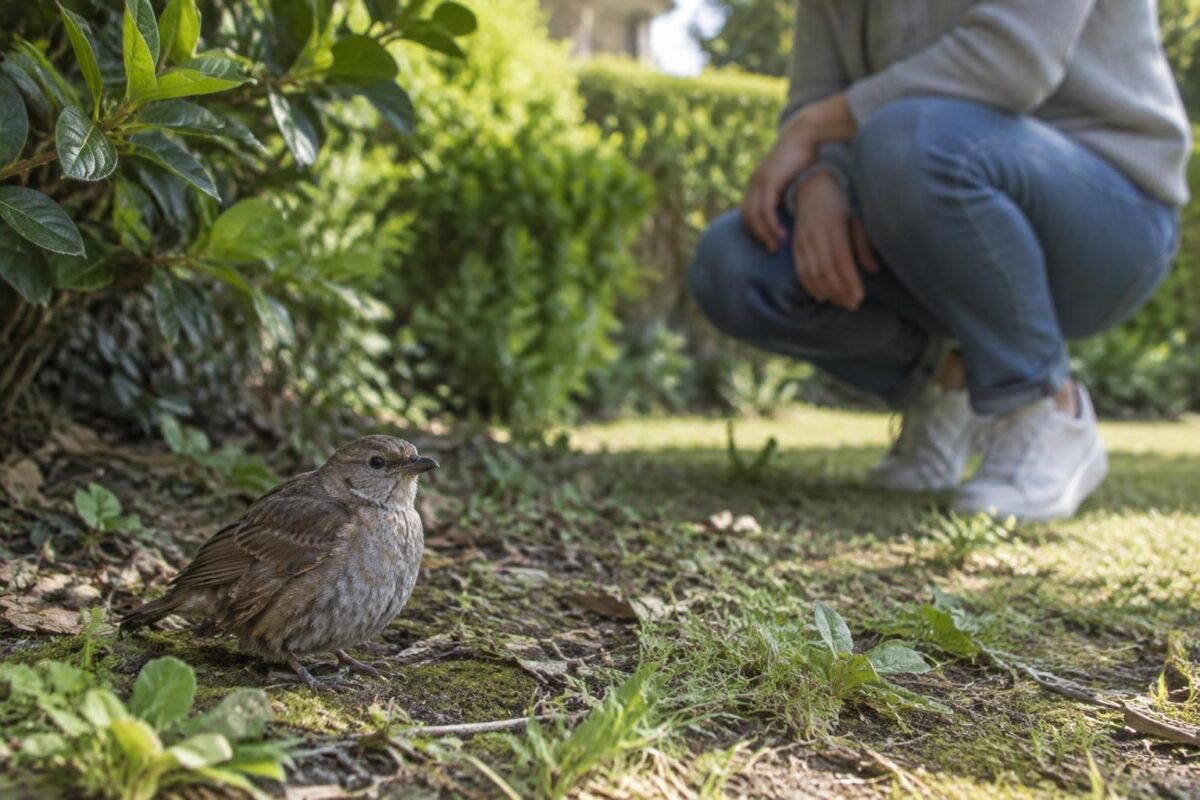
A young bird on the ground is not necessarily abandoned: its parents may be nearby and continue to feed it. Young hares and some fawns also stay alone for a while, hidden, while their mother moves away.
If the animal is not obviously injured, step away and observe from a distance, without touching it. If it has an injury or is in immediate danger, call a care center before acting; for some mammals, human handling can complicate the return to its parents.
What to do when facing injured wildlife: 3 simple steps
- Step 1 — Evaluate without touching. From a safe distance, look to see if the animal is bleeding, has trouble breathing, is limping or cannot get up. Do not take risks, especially near a road or with an animal that defends itself.
- Step 2 — Call a specialist. Contact a wildlife care center and describe the situation precisely. The professional will tell you whether the animal should be taken in, how to contain it and what to do while waiting.
- Step 3 — Follow transport instructions. If the center asks you to transport it, use the recommended container and take it there as quickly as possible. Private individuals may be allowed to transport it to a center, but they cannot keep it to care for it.
For a wounded bird, gloves and a thick cloth can protect from pecks or talons, but first ask the center how to proceed. The LPO can also advise at 05 46 82 12 34.
The right actions depending on the situation
| Situation | What you can do | To avoid |
|---|---|---|
| Bird on the ground, no visible injury | Observe from a distance and let the parents return. | Picking it up or feeding it without advice. |
| Animal with a wound or broken wing | Call a care center quickly and follow its instructions. | Give water, food or a medication. |
| Raptor or animal that defends itself | Stay at a distance and seek advice before any intervention. | Try to seize it with bare hands. |
| Protected species injured | Contact the French Office for Biodiversity (OFB), which will indicate the steps to take. | Move it or keep it at home without authorization. |
The possession and transport of wild animals are regulated. If needed, specialists can guide the transport to a facility authorized to treat the animal and to prepare its return to nature.
Emergency veterinary or wildlife care center: who to call?
For a wild animal, the first contact is usually a wildlife rescue center. It can assess the urgency and explain the appropriate actions; a veterinarian can also be a resource if the center or local services indicate it.
For a protected species, contact the OFB to know the procedure. If you don’t know which agency to contact, describe the species, the location and the injuries to the competent service: these details help to organize an appropriate and respectful response to wildlife protection.
Two quick cases to remember
If it’s a young bird covered in feathers and with no visible injury… step away and monitor from a distance: its parents may return. If it’s injured or exposed to danger, call a center before moving it.
If it’s an animal that is bleeding or cannot stand still… do not feed it, limit the noise around it and quickly contact a care center. If there is danger to you, stay away and mention it during the call.
Should you give water to a wounded wild animal?
No, not without instructions from a specialist. Forcing it to drink can cause choking, especially if it is weakened or in shock.
What to feed a wounded wild animal?
Nothing without specialized advice. The appropriate feeding varies depending on the species and its condition, and inappropriate food can worsen the situation.
Can you keep a wounded wild animal at home?
No, possession is regulated. Contact a care center: some allowance may permit transporting the animal quickly to a licensed facility, depending on the instructions received.
What to do if the young animal found does not seem injured?
Do not pick it up right away. Step back and observe from a distance, as its parents may be nearby. If in doubt, call a care center before intervening.
Thank you for your interest; Judith. It would be appreciated if you could leave me a comment at the end of the article. Thanks to everyone