
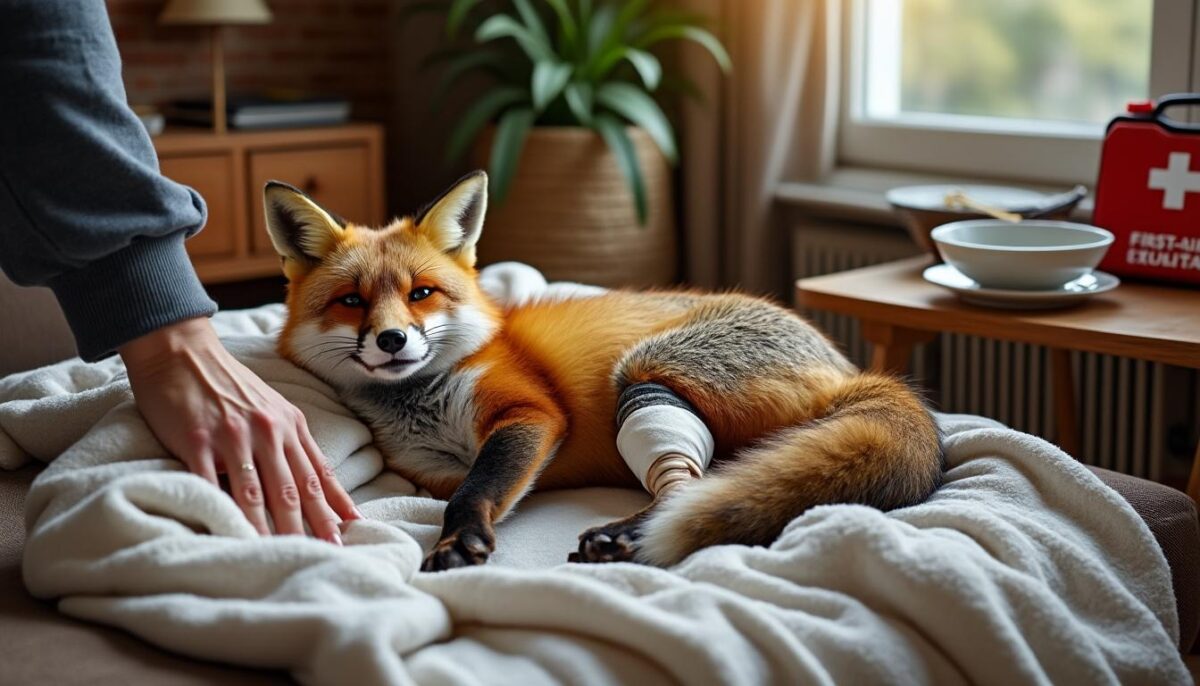
Is it risky to take a wounded wild animal home?
Hi, it’s Judith. Taking an injured wild animal into your home is often risky, both legally and in terms of health, and it’s best to quickly entrust it to a specialized center to avoid potential danger.
To do immediately
- Observe whether the animal is truly in distress before any intervention.
- Avoid all direct contact without protection to limit health risks.
- Never feed or give water to an injured animal.
- Contact a care center or the LPO without delay for appropriate support.
- Transport carefully, using a cardboard box and gloves, to an authorized facility.
It is important to know that possessing a injured wild animal home is illegal without permissionWe’re not just talking about respecting the wild animal legislationbut also to protect your health. Indeed, wildlife can carry diseases — health risks very real — and the animal’s stress can worsen its injuries. To fully understand the support adapted to these animals, it is necessary to favor professionals who have the skills necessary for their recovery, often with a direct link to a veterinary researchTo learn more about the steps to take, you can consult this practical guide or even advice from the LPO.
Why keeping the animal at home is a real risk
When a wild animal is injured, helping it is a natural reaction. But there are many common mistakes: unnecessary travel, unsuitable food, excessive stress… All these interventions can jeopardize the animal’s survival.interaction with wildlife This often impacts the chances of recovery. Furthermore, some animals, such as birds of prey or small mammals, can unintentionally transmit infections or cause injuries. Animal welfare requires adherence to strict protocols that are not always well known to the general public.
How can we judge if an animal is in real distress?
Before touching the animal, observe it. visible manifestation (Drooping wings, visible wounds, inability to stand) is a clear sign. Otherwise, the bird may simply be learning to fly or move around. Refer to expert recommendations because, for example, a fledgling on the ground is very rarely abandoned. Leaving the animal undisturbed is often the best approach.
The correct way to handle an injured wild animal
- Step 1: Protect your hands with sturdy gloves, avoid direct contact to limit the risk of bites and disease transmission.
- Step 2: Calm the animal by gently covering it with a thick cloth and place it in a closed and ventilated cardboard box, taking care to avoid it falling during the transfer.
- Step 3: Contact a specialist organization or the LPO (League for the Protection of Birds) as soon as possible; they will guide you through the next steps. support and appropriate veterinary research.
Special case of young wild animals
Young animals, especially birds, should not be automatically taken in. Often, their parents are nearby and still caring for them. A common mistake is to assume abandonment when this is not the case. Once returned to the same spot or to a makeshift nest, the parents will be reunited with their young. It should also be noted that for mammals, too much direct contact with humans can lead to abandonment by the mother. Caution is therefore advised.
Table: Risks and precautions related to the care of an injured wild animal
| Appearance | Risks | Recommended precautions |
|---|---|---|
| Human contact | Bites, scratches, infections | Wear gloves, minimal contact |
| Transportation | Stress on the animal, worsening of injuries | Use a well-ventilated cardboard box, avoid shaking it. |
| Food/drink | Choking, digestive problems | Do not give anything without veterinary advice. |
| Legality | Sanctions, confiscation | Contact an authorized healthcare center |
| Stress | Deterioration of health | Isolate the animal in a quiet place, avoid exposure |
To better understand the implications and role of specialized centers, you can consult this article on care centers and also discover a complete list of tips to avoid making crucial mistakes during an intervention here
Is it legal to keep an injured wild animal at home?
No, keeping and transporting wild animals without authorization is prohibited. Only wildlife rehabilitation centers are authorized to house them.
What should I do if I find a baby bird on the ground?
Don’t necessarily pick it up. It’s often followed by its parents. If it’s truly in danger, discreetly place it in a safe spot nearby or put it back in a nest if possible.
What are the health risks associated with injured wild animals?
Wild animals can transmit diseases such as rabies or leptospirosis. It is essential to protect yourself with gloves and avoid direct contact.
Can I feed or water an injured wild animal?
No, unless specifically instructed by a specialist. It can cause choking or worsen their health.
Who should I contact to help an injured wild animal?
Contact a wildlife rehabilitation center or the League for the Protection of Birds as soon as possible; they will tell you what to do next.
Thank you for your interest, Judith. It would be kind of you to leave a comment at the end of the article. Thank you all.