Animal First Aid: 3 guidelines for assessing urgency
Hello, this is Judith. To assess how urgent the situation is, first check your pet’s consciousness, breathing, and whether there is significant bleeding, then call a veterinarian if any of these signs are abnormal. In the event of an animal injury or severe pain, it’s better to seek professional advice promptly than to wait for the condition to worsen.
What to do right away
- Observe from a distance to see whether your pet reacts, is breathing normally, and can stand.
- Look for signs of distress: difficulty breathing, pale or bluish gums, seizures, loss of consciousness, or sudden weakness.
- Call a veterinary clinic if there is heavy bleeding, suspected poisoning, or severe pain.
- Protect yourself and keep your pet safe: an injured animal may bite reflexively. Move hazards away and limit its movements.
- Do not give any human medication or induce vomiting unless instructed to do so by a veterinarian.
This animal first aid is intended to stabilize the situation, not replace a veterinary consultation. To round out your knowledge, also see the order of steps to take in an emergency and three tips for staying on track.
Assessing the urgency: three essential signs
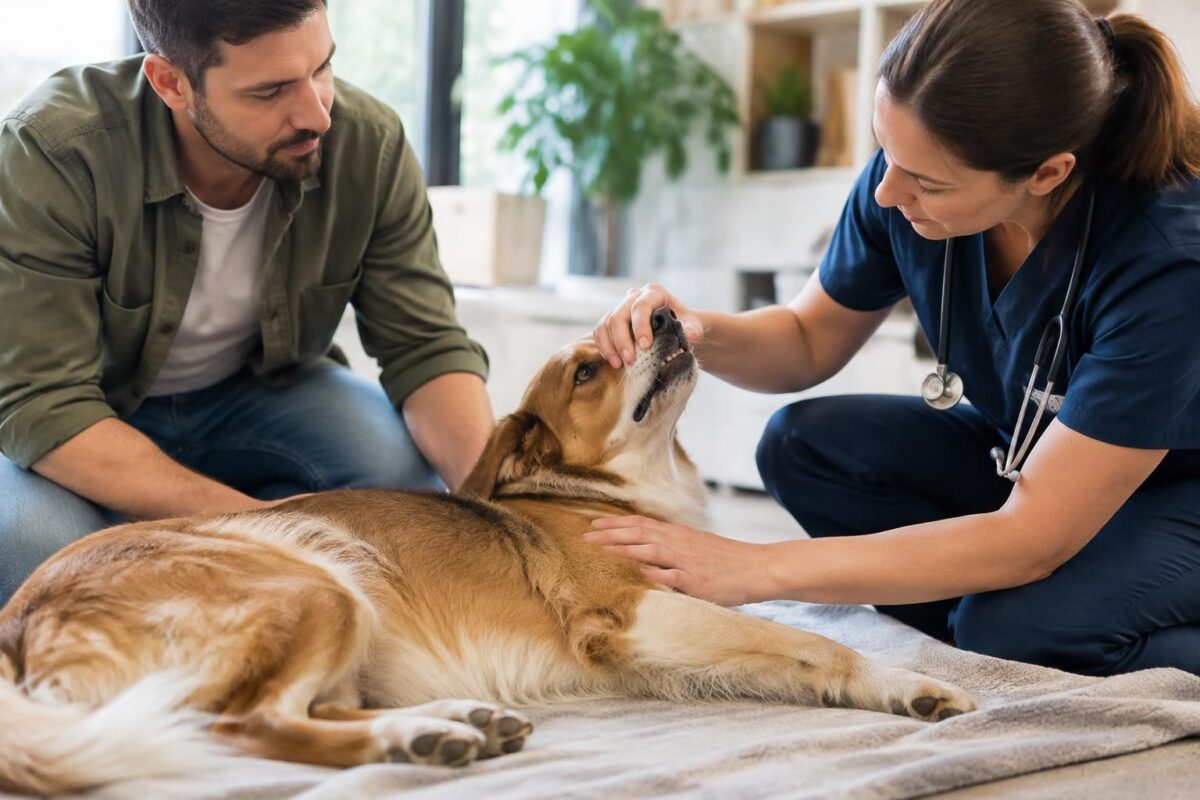
Start by looking at the animal without handling it. A dog panting after exertion is not in the same situation as a dog struggling to breathe while at rest; in cats, breathing with the mouth open is especially concerning.
Consciousness and behavior
Call your pet gently and see whether it responds to your voice or a movement. Loss of consciousness, marked disorientation, or a prolonged seizure warrant an immediate call to the veterinarian.
Breathing and circulation
Look for chest movements and check the color of the gums without forcing the mouth open. Difficulty breathing, bluish mucous membranes, or very labored breathing are signs of distress that cannot wait.
Bleeding and pain
If a wound is bleeding, place a clean gauze pad or cloth over it and apply continuous pressure. Do not remove an embedded object or keep lifting the pad to check the wound: call the clinic and follow its instructions.
| Sign observed | Immediate response |
|---|---|
| Difficulty breathing or loss of consciousness | Call an emergency veterinarian immediately. |
| Heavy bleeding | Apply pressure with a clean cloth and arrange transport. |
| Suspected ingestion | Move the animal away from the substance and keep the packaging for the veterinarian. |
| Minor wound, alert animal, and normal breathing | Ask for advice and monitor the situation without giving medication. |
The duration or intensity of a sign matters, but so does your pet’s overall condition. If you’re unsure whether to monitor your pet or leave for the clinic, describe the situation accurately to a professional rather than attempting home treatment.
Mistakes that can make a veterinary emergency worse
A rushed action can add risk to the original injury. For example, a bandage that is too tight can restrict circulation, while an ice-cold bath can be dangerous in the event of heatstroke.
- Do not give paracetamol or ibuprofen: these medications can be toxic to animals.
- Do not put your fingers in the mouth of an animal that is having a seizure or choking.
- Do not induce vomiting if an animal has swallowed a substance unless instructed to do so by a veterinarian.
- Do not immobilize a limb with a tight bandage or handle a suspected fracture.
- Do not cool an overheated animal suddenly: call the clinic to find out what to do during the journey.
If you suspect poisoning, note the product’s name, the possible amount ingested, and the time it happened. This information will help the veterinary team decide what to do.
A simple three-step procedure
- Observe and make the area safe. Assess consciousness, breathing, and bleeding from a distance. Reduce noise and avoid unnecessary handling.
- Call and follow instructions. Describe the signs, species, size, and circumstances. Do not give medication or food without professional advice.
- Transport your pet carefully. Prepare a blanket or suitable carrier, limit movement, and let the clinic know you’re on your way.
If an unconscious animal is breathing, keep its airways clear without pulling on its tongue, and ask the veterinarian how to move it. Cardiopulmonary resuscitation requires precise techniques: follow a professional’s instructions over the phone if you have not been trained.
Putting together an animal first aid kit
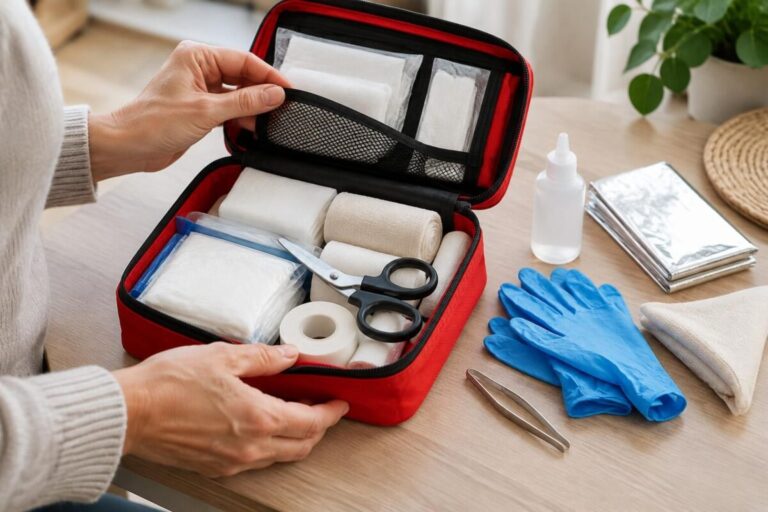
A useful first aid kit can help with minor needs and prepare you for transport, but it is not a substitute for veterinary care. Keep it accessible and regularly check that its contents are clean and in good condition.
- Sterile gauze pads and gauze rolls;
- disposable gloves and round-tipped scissors;
- saline solution and an antiseptic suitable for animals;
- a thick towel and an emergency blanket;
- contact details for your regular veterinarian and an emergency clinic.
A ready-to-go first aid kit, an emergency number saved in your phone, and a route planned in advance can reduce hesitation when every minute seems to count. The best preparation is to ask your veterinarian which actions are appropriate for your pet.
When should I call a veterinarian in an emergency?
Call immediately if your pet has difficulty breathing, loses consciousness, has heavy bleeding, seizures, severe pain, or may have been poisoned. If in doubt, describe the signs to a clinic for guidance.
What should I do if my pet has swallowed a toxic substance?
Move your pet away from the substance, keep the packaging, and note the time and possible amount ingested. Do not induce vomiting or give your pet anything to eat or drink unless instructed to do so by a veterinarian.
Can I give my pet human medication?
No. Paracetamol and ibuprofen, among other medications, can be toxic. Any medication must be prescribed by a veterinarian.
How do I apply pressure to a bleeding wound?
Place a clean gauze pad or cloth over the wound and apply continuous pressure. If the bleeding is heavy, the wound is deep, or an object is embedded, call a clinic immediately and do not remove the object.
Take good care of your pet, and feel free to share your observations in the comments. — Judith