Dogs Eager to Eat: How to Calm Them Without Punishment
Hello, Judith here.
To calm a dog that eats too fast, slow down their access to food and reward calm behavior, without yelling or taking their bowl away.
Dogs that rush their meals sometimes gulp down their food in a few seconds. A predictable routine and suitable tools can help them take their time, while reducing the risks associated with eating too quickly.
Good habits to adopt
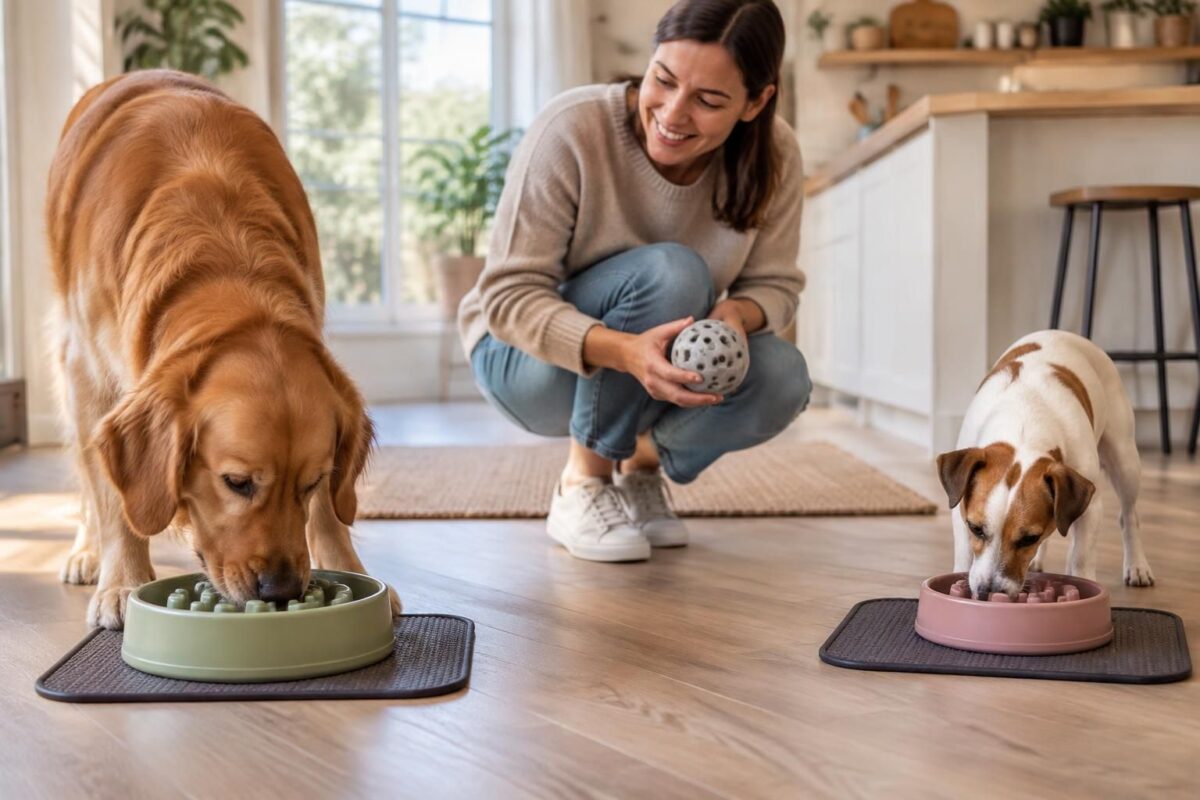
- Try a slow feeder bowl suited to your dog’s size and muzzle.
- Divide their daily food allowance into smaller meals, based on their needs and their veterinarian’s advice.
- Offer simple food-search games, such as hiding a few pieces of kibble in a quiet room.
- Feed dogs separately if competition around the bowl makes them rush.
- Stay calm near them and avoid touching their food while they eat.
A dog may also become agitated because they’re excited or anxious: tips to help an overexcited dog calm down can complement this approach. If their hunger seems new or unusual, also check that their diet meets their needs, using these pointers on possible causes of weight loss in dogs.
Why some dogs gulp down their meals
Rushing may stem from an old habit, intense excitement at mealtime, or the presence of another animal. A dog that has had to compete for food in the past may gulp down their meal even when they now live in a peaceful home.
Imagine Nala, who finishes her bowl before her human has had a chance to sit down. Scolding her won’t teach her to eat slowly; it’s more likely to add tension to a moment that’s already emotionally charged.
Look for signs without overreacting
Notice whether your dog chews very little, coughs, regurgitates, or seems very agitated during and just after a meal. These signs deserve attention, especially if they keep recurring, but eating quickly alone isn’t enough to conclude that there’s a medical problem.
A sudden change in appetite, weight loss, or digestive problems warrant veterinary advice. The goal is to slow down eating while checking that the amount and type of food are right for them.
Choosing a way to slow down eating
The best solution is one your dog can use without becoming overly frustrated. Start simple, then adjust based on their behavior: a device that’s too difficult may discourage them instead of calming them.
| Method | Best used when | What to watch out for |
|---|---|---|
| Slow feeder bowl | Your dog eats very quickly from a regular bowl. | Choose a stable model that’s easy to clean and suited to their muzzle. |
| Food-search game | They enjoy sniffing and exploring their surroundings. | Start with an easy activity and keep an eye on them. |
| Smaller meals | A long wait between meals seems to make them very excited. | Divide their total food allowance without increasing the daily amount. |
| Separate meals | The presence of another animal triggers competition. | Give each dog a separate, quiet space. |
Food-search games turn part of mealtime into a sniffing activity. For a dog who’s new to this kind of exercise, scattering a few pieces of kibble on a clean mat is enough: there’s no need to make the task difficult on the first day.
Preventing digestive risks also means keeping an eye on your dog
Slowing down meals can help prevent gulping and related issues, such as swallowing air or regurgitating in some dogs. It can’t guarantee that all digestive illnesses will be avoided: a rapidly swelling abdomen, unusual restlessness, unsuccessful attempts to vomit, or weakness require urgent veterinary care.
Also avoid sudden changes to their diet and objects that could break or be swallowed. A suitable bowl, a quiet space, and discreet supervision provide a safer foundation than punishment.
A 3-step process to calm your dog without punishment
- Create a peaceful setting. Feed your dog somewhere they won’t worry about being disturbed. If another animal approaches their bowl, calmly separate them before serving the food.
- Make the meal a little slower. Try a slow feeder bowl or a simple food-search game. If your dog gets frustrated, make the activity easier rather than scolding them.
- Reward calm moments. With positive reinforcement, reward calm waiting before putting the bowl down, with a gentle word or a suitable treat. Learning to manage frustration takes time: a few seconds of calm is already a good start.
If your dog’s eating speed doesn’t decrease, note how long the meal takes, the signs you observe, and the circumstances, then share this information with your veterinarian. They can check that a sudden increase in appetite or related symptoms aren’t due to a medical cause.
Frequently asked questions about dogs that rush their meals
Is a slow feeder bowl suitable for all dogs?
It can help many dogs slow down, as long as you choose a model suited to their muzzle and size. Supervise the first few uses and choose an easier version if your dog gets discouraged or frustrated.
Should I take the bowl away if my dog eats too fast?
No. Taking it away or scolding them can increase tension around food. It’s better to adjust the device, offer them a quiet space, and gradually teach them to wait using positive reinforcement.
How many meals should I give each day?
This depends in particular on the dog’s age, health, and lifestyle. Dividing the daily food allowance into smaller meals can help some dogs, but keep the total recommended amount the same and ask your veterinarian for advice if you’re unsure.
When should I call a veterinarian?
Ask for advice if your dog’s appetite changes suddenly, they lose weight, or they regurgitate often. A swollen abdomen, unsuccessful attempts to vomit, or weakness require an urgent veterinary visit.
Take good care of your companion, and feel free to share your observations in the comments. — Judith