Gardening and Care: What to do when faced with an injured animal
Hi, it’s Judith. If you find an injured animal in your garden, the priority is to secure it and provide first aid immediately to prevent the situation from worsening. This simple action can save a life, while respecting the natural habitat and regulations. animal protectionHere’s what needs to be done immediately.
- Assess the injury quickly and avoid stressing the animal.
- Never touch a wild animal without protection; avoid common mistakes
- Isolate the animal in a quiet and secure place
- Protect the wound with a clean, loosely applied bandage.
- Contact a veterinarian or wildlife rehabilitation center
These initial actions are essential to stabilize the situation and take into account the injury management in an appropriate manner, without compromising the safety of anyone, including your own.
A wrong move can worsen the animal’s condition. or put you in danger. Care must respect biological specificities and health risks, particularly in natural environments.
First aid adapted to the injured animal
Caring for an injured animal in a garden requires emergency and gentleness. First, observe without touching, if possible, to avoid increasing its stress and to assess the severity of the situation. The safety measures should be implemented in areas with loud noises and away from other animals.
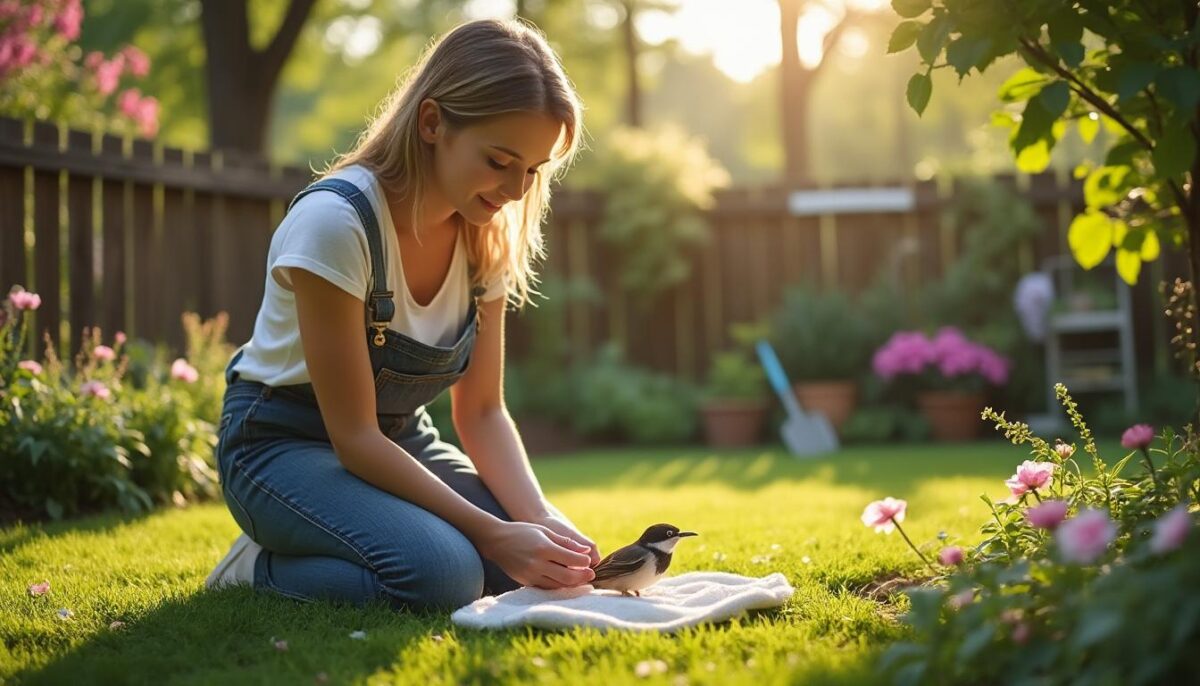
In many cases, an improvised bandage made from clean fabric will limit bleeding. For a bird, for example, immobilization is essential, while for a small mammal, limiting movement may be sufficient.
If it’s a wild animal, it’s often best not to intervene too much yourself, but to keep the animal calm and call in specialists for the transfer. But if it’s a domestic dog or cat, a more direct and quicker assessment of the injuries is possible before a veterinary visit.
3-step procedure for safe intervention
- Step 1: Secure the animal and yourself. Gloves are mandatory, remain calm, and avoid frightening or moving the animal abruptly.
- Step 2: Apply first aid according to the type of injury: stop bleeding, keep the animal warm, prevent dehydration.
- Step 3: Contact a professional (veterinarian or animal protection center) for appropriate care and safe transfer.
Do not underestimate the strength of a small animal in distress: panic and pain can cause unexpected reactions. A common mistake is to try to handle the animal too quickly or to attempt to clean a wound without any medical expertise.
Common Examples
If it’s an injured birdIt is necessary to check if it can fly, avoid feeding or watering it without advice, and protect it from predators. Wing fractures or signs of shock are often observed.
If it’s a small mammalLike a hedgehog or a rabbit, it is important to restrict its movements as much as possible and put it in a box with air holes, comfortable and quiet.
| Type of animal | Frequent injuries | Immediate actions | Precautions |
|---|---|---|---|
| Bird | Wing fractures, impact | Immobilize, isolate, avoid feeding without advice | No direct contact without gloves |
| Small mammal | Wounds, shock, fractures | Keep calm, restrict movement | Gentle handling, well-ventilated box |
| Dog/Cat | Wounds, bleeding, fractures | First aid, emergency veterinary care | Direct control possible, infection vigilance |
Why protect your garden to avoid these accidents?
The garden is often a refuge and natural habitat for many animals. Keeping the space clean, limiting access to pesticides and toxic products, and avoiding sharp waste are simple preventative measures.
Understanding the importance of care and safety Managing wildlife in the immediate environment helps reduce calls to animal emergency services. Often, gentle and thoughtful management preserves local wildlife and limits preventable injuries.
To learn more, discover why some animals often get sick because of a unsuitable diet and how human attitude directly influences their health in the garden.
What should you do if the animal refuses to let you approach?
Do not force contact, create a safe perimeter, and alert a professional to avoid further stress and injury.
How can you tell if your pet needs a veterinarian?
Serious injuries, heavy bleeding, inability to move, or obvious signs of pain indicate an urgent need for medical attention.
Should we always intervene when faced with an injured wild animal?
Not always. Often, the best solution is to contact a specialist center that knows the appropriate management and risks associated with the species.
Can human medications be used to treat an injured animal?
Never use without veterinary advice. Some products are toxic to animals and can worsen the situation.
What are the essential safety measures to take during the intervention?
Wear gloves, control your movements, protect the animal from other animals in the garden, and remain calm in all circumstances.
Thank you for your interest, Judith. It would be kind of you to leave a comment at the end of the article. Thank you all.