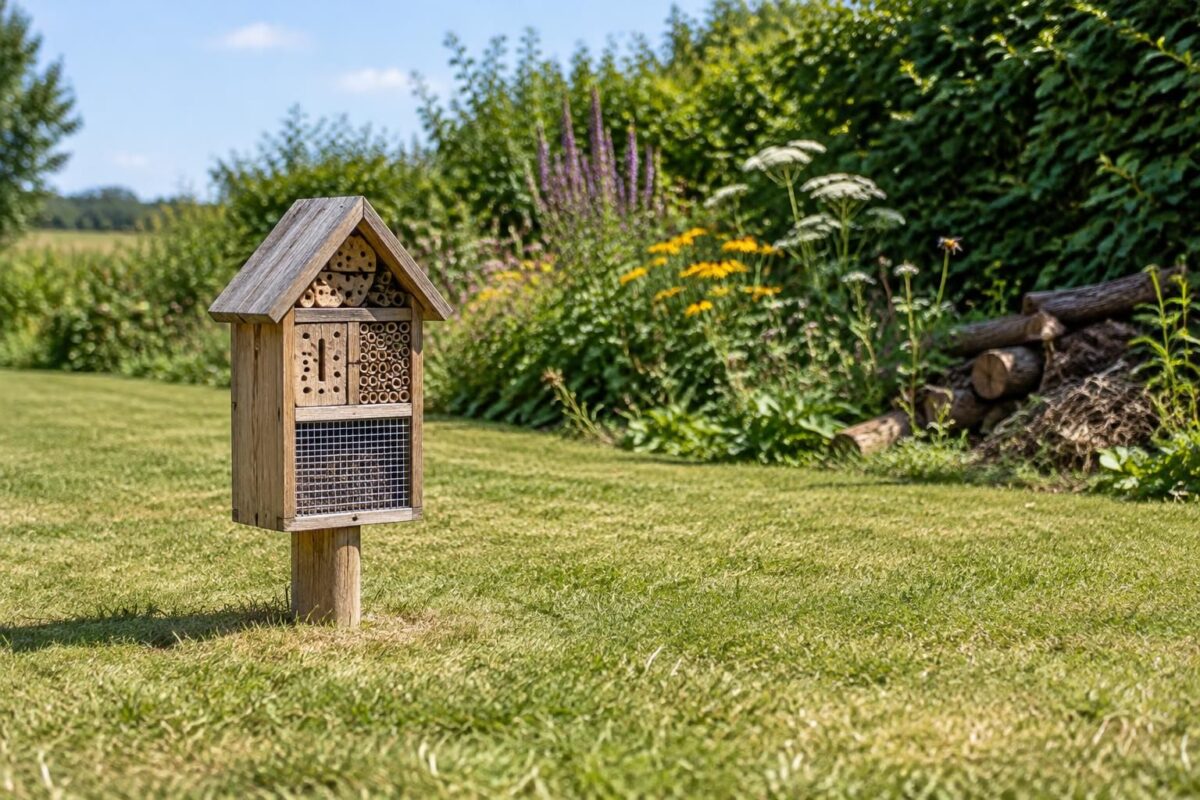
Helpful wildlife: why a poorly placed shelter is useless
Hello, this is Judith. A poorly placed shelter often stays empty: to help beneficial wildlife, place it in the sun, sheltered from the wind and near flowers.
A refuge alone cannot replace natural habitats, but it can support pollinators and other beneficial insects if its location and materials meet their needs. A few simple choices can prevent it from becoming a decorative feature with no value for biodiversity.
Things to do right away
- Face the opening south or southeast to make the most of the morning sun.
- Secure the shelter firmly to a wall or stable support, with its back facing the prevailing winds.
- Place it close to nectar-rich flowers, ideally no more than a few dozen metres away.
- Raise it at least 30 cm off the ground to protect it from splashes and ground moisture.
- Check that the wood is untreated, unpainted and raw, and that the holes are smooth.
A good shelter for garden wildlife is part of a living environment rather than something that works on its own. To also support species that don’t nest in cavities, find out why an overly tidy garden may lack resources.
Why a poorly placed insect shelter stays empty
Insects need warmth, peace and food nearby. Placed in the shade, exposed to gusts or far from flowering plants, a shelter has little to offer: females may simply choose another nesting site.
Imagine an insect hotel fixed under an eave, behind a dense hedge. It is protected from the rain, but gets little sun and is far from flowers: despite its attractive appearance, it may remain unoccupied.
The right location also depends on the species you want to attract. Solitary bees seek dry, warm cavities, while insects that overwinter in vegetation need fallen leaves, stems and quiet corners.
A suitable location: sun, stability and food
Face the cavities south or southeast and protect the shelter from prevailing winds. A wall, sturdy fence or sparse hedge can provide wind protection without casting the front into shadow.
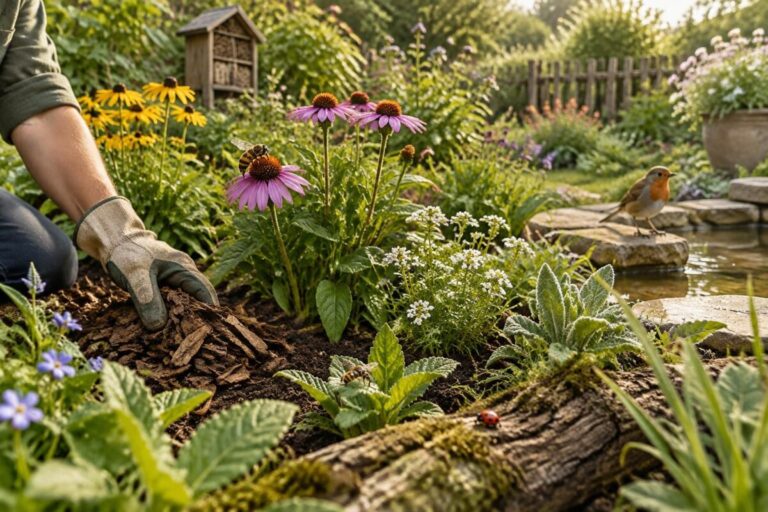
Nearby flowers are just as important. Native plants that bloom at different times provide nectar and pollen for pollinators; a small, shallow water source with stones can complete this wildlife-friendly setup.
Avoid damp places, spots where the shelter may wobble and locations exposed to heavy rain. An overhanging roof helps keep the tunnels dry, which is important for larval development.
Natural materials, not a random assortment of decorations
For solitary bees, neatly cut hollow stems and hardwood logs drilled with smooth holes can work well. A range of diameters, around 2 to 10 mm, can accommodate different local species; each tunnel should be closed at the back.
Not all materials serve the same inhabitants. Loose straw or pine cones don’t guarantee a suitable refuge for bees, and may provide hiding places for other small animals without serving the intended purpose.
| Material | Wildlife it supports | What to check |
|---|---|---|
| Hollow stems | Solitary bees | Clean ends and a closed back |
| Hardwood logs | Cavity-nesting insects | Untreated wood, smooth holes |
| Fallen leaves and dry stems | Small overwintering wildlife | Keep a quiet corner of the garden |
Avoid paints, varnishes, glues and treated wood: their components can expose insects to harmful substances. A modest shelter made from clean, carefully chosen materials is better than a large, overcrowded structure.
Three steps to install a refuge without turning it into a trap
- Choose which species to welcome. If your goal is to help solitary bees, opt for suitable cavities near flowering plants. To support overwintering wildlife, also preserve areas of vegetation and fallen leaves.
- Prepare a dry, stable location. Face the front south or southeast, raise the shelter off the ground and protect it from the wind without hiding it in a dark spot.
- Observe without disturbing. Look for tunnels that may have been sealed, but don’t move the structure or clean it during winter. Let nesting cycles run their course undisturbed.
A useful shelter isn’t measured by its size or appearance, but by how well it meets the needs of local species. And if no insects move in, that doesn’t necessarily mean it has failed: flowers, hedges and wild corners also provide valuable refuges.
Practical questions about shelters for beneficial wildlife
Which way should an insect shelter face?
Face its opening south or southeast to make the most of the morning sun, while protecting it from prevailing winds and rain.
How far from flowers should I place the refuge?
Place it near native nectar-rich plants, ideally no more than a few dozen metres away. This makes it easier for insects to find nectar and pollen nearby.
Should I clean the shelter every year?
Avoid routine cleaning and don’t touch the structure while wildlife is overwintering. Remove a damaged element only if you can do so without disturbing its occupants.
Is an insect hotel enough to support biodiversity?
No. It complements garden habitats, but doesn’t replace hedges, flowers, hollow stems and areas of preserved vegetation.
Thanks for reading! If this topic speaks to you, please feel free to leave me a comment at the bottom of the article. — Judith