Emergency care: does the towel help or make things worse?
Hello, Judith here.
A clean towel can help apply pressure to stop bleeding or calm an animal, but if used incorrectly, it can interfere with breathing, worsen an injury, or delay veterinary care.
In an emergency, fabric is never a substitute for veterinary care. Everything depends on the injury and how the towel is placed.
Do this right away
- Move away any hazards and make sure you can approach the animal without putting yourself at risk.
- Call a veterinary clinic or emergency veterinary service as soon as the situation appears serious.
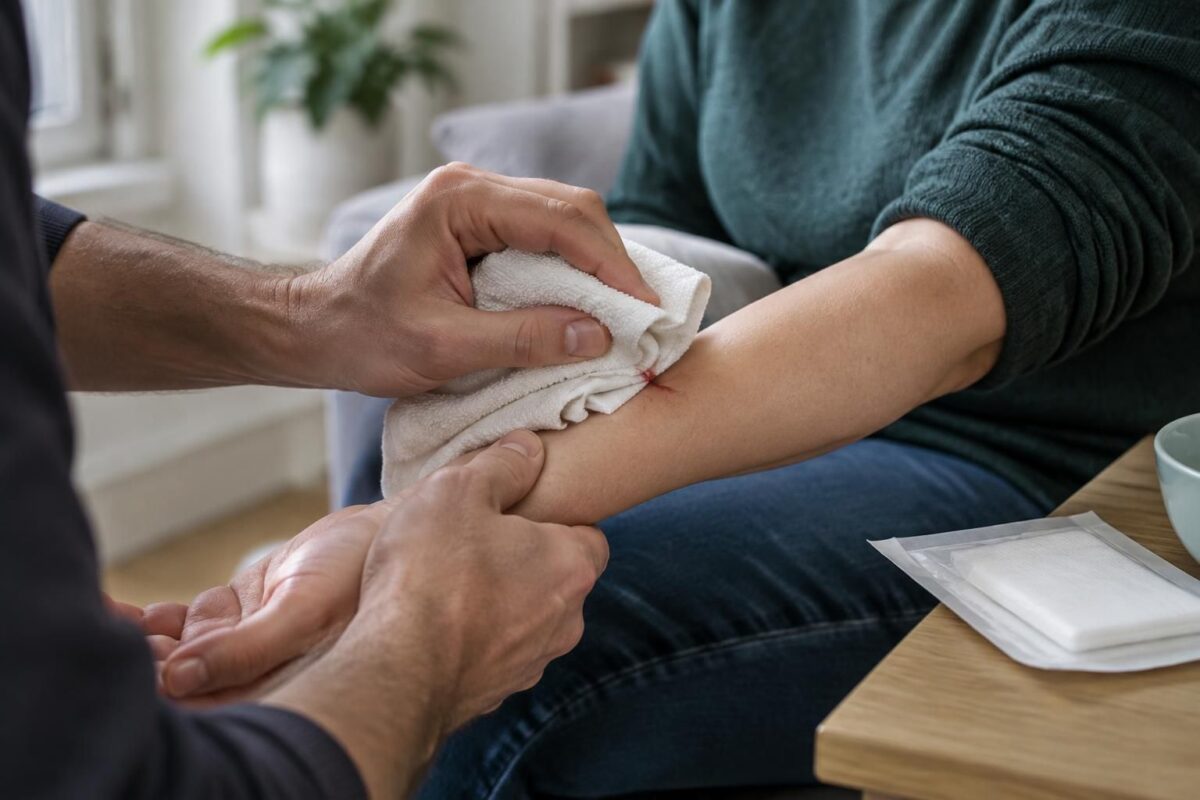
- For bleeding, place a clean cloth on the wound and maintain steady pressure.
- Keep the animal calm and limit its movements while you prepare for transport.
- Never wrap the towel around the neck, muzzle, or a limb so tightly that it constricts.
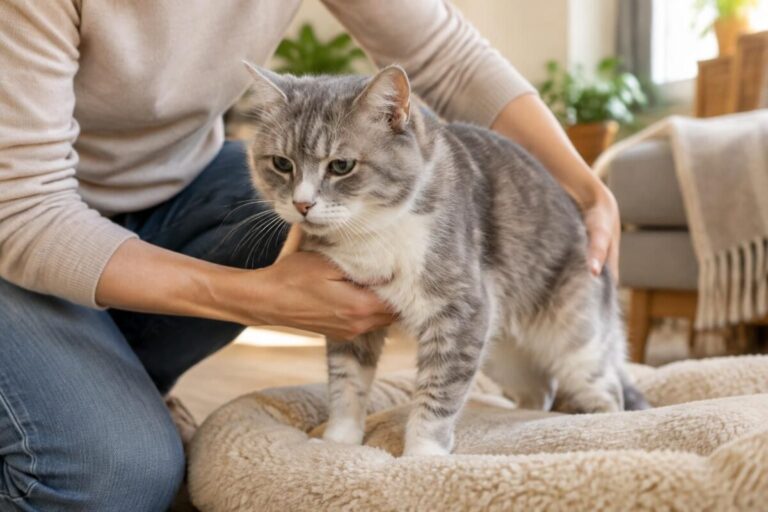
A towel can be useful for gently moving a panicked cat or protecting a wound during transport, but it must be clean and must not cover the nose. To review the basics of first aid for animals or check what should be in a first-aid kit, also see these tips on essential emergency-care supplies.
Towels and emergency care: the right use depends on the injury
The trap is believing that a cloth can do everything. A clean towel can absorb blood or be used as support, but it must not suffocate the animal, constrict a limb, or hide an injury that needs prompt care.
Imagine a dog that has cut its paw while out for a walk. A clean towel placed over the wound with firm, continuous pressure can help while you call the veterinarian. On the other hand, a tightly knotted cloth can cut off circulation and make treatment more difficult.
What a towel can do — and what it must not do
| Situation | Safe use | What to avoid |
|---|---|---|
| Minor or severe bleeding wound | Place a clean cloth over the wound and maintain pressure. | Repeatedly removing the cloth to check or tying something tightly around the limb. |
| Frightened animal | Use the cloth as support for transport, without covering the muzzle. | Wrapping the head or interfering with breathing. |
| Burn | Cool the area with cool water, then ask a veterinarian for advice. | Rubbing, applying ice or butter, or placing a cloth directly over a hot burn. |
| Suspected fracture | Gently support the animal to limit movement during transport. | Trying to straighten or tightly splint the limb. |
| Choking or seizures | Move dangerous objects away and call a veterinarian promptly. | Putting your hand or a towel in the mouth, or restraining the animal’s movements. |
For a burn, cool water is preferable to leaving a wet towel in place: the cloth can retain heat or stick to the damaged skin. The priority is to cool the area without rubbing, then get veterinary advice.
Bleeding, burns, or choking: the responses that matter
A towel does not play the same role in every emergency. For bleeding, steady pressure with a clean cloth can help while you wait for the veterinarian; for choking, it has no place in the mouth and could make the blockage worse.
If the animal has a seizure, move furniture and objects away from it without restraining it or trying to pull its tongue. After the seizure, keep it calm and call the veterinarian, especially if the seizures last a long time, recur, or the animal does not quickly regain awareness.
A simple three-step procedure
- Make the area safe. Move hazards away, approach slowly, and avoid handling a painful area. An injured animal may bite out of fear, even if it is usually gentle.
- Help without constricting. If there is bleeding, hold a clean cloth over the wound. For a burn, cool it with cool water; if you suspect a fracture, limit movement rather than attempting a complicated immobilization.
- Hand things over to the professionals. Call the veterinarian, describe the signs you have observed, and follow their instructions. A towel can help with transport, but it is no substitute for a diagnosis or an appropriate dressing.
A clean cloth, properly applied pressure, and good hygiene can be helpful. But in cases of severe pain, difficulty breathing, heavy bleeding, or loss of consciousness, emergency veterinary care must not be delayed.
Useful questions about using a towel in a veterinary emergency
Can you use a towel to stop bleeding in an animal?
Yes, if it is clean: place it over the wound and maintain continuous pressure. If the bleeding is heavy or does not slow down, contact a veterinarian immediately.
Should you wrap an injured animal in a towel?
It can help you move or calm the animal, especially if it is small, but its nose and mouth must remain uncovered. Do not wrap the cloth tightly, and stop if the animal has trouble breathing or becomes more panicked.
Is a wet towel suitable for a burn?
It is better to cool the burn with cool water rather than cover the area with a cloth. Do not apply ice or home remedies, and promptly ask a veterinarian for advice.
What should you do if an animal is choking?
Do not blindly put a towel or your fingers into its mouth. Call a veterinary clinic in an emergency and follow its instructions, as the appropriate actions vary depending on the animal and the situation.
Take good care of your companion, and feel free to share your observations in the comments. — Judith